
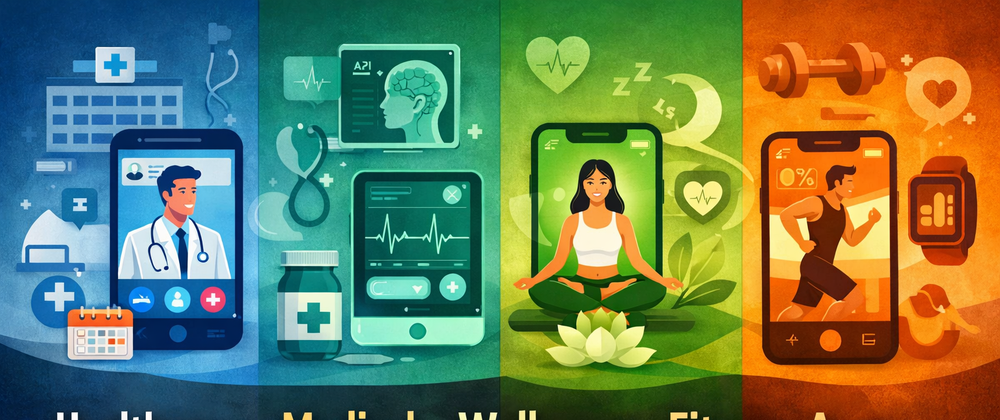

Many founders and businesses approach app development with a great idea but confusion about which category their app actually belongs to.
Is it healthcare? Medical? Wellness? Or fitness?
This confusion matters because each category requires different features, regulations, integrations, budgets, and development approaches. Choosing the wrong direction can lead to compliance issues, higher costs, or poor product-market fit.
This guide helps businesses clearly understand the differences so they can confidently plan their app development journey.
Why Choosing the Right Category Matters Before Development
Your app category affects:
Required compliance and legal approvals
Development complexity and timeline
Technology stack and integrations
Monetization strategy
Target users and marketing strategy
Investment requirements
Making the right decision early saves both time and cost.
- Healthcare Apps Definition (App Development Perspective) Healthcare apps help users access healthcare services or manage health-related information, but they do not directly diagnose or treat patients. These apps act as service connectors between patients and healthcare providers. Purpose & Use Cases Doctor appointment booking Telehealth consultations Hospital management systems Health record access Pharmacy delivery platforms Target Users Patients Hospitals & clinics Doctors Healthcare providers Required Features Appointment scheduling Video consultations Digital prescriptions Health record management Secure messaging Compliance & Regulations HIPAA (US), GDPR (EU), NDHM guidelines (India) Secure patient data handling required Technology & Integrations EHR/EMR integrations Video consultation APIs Payment gateways Pharmacy integrations Monetization Models Consultation fees Subscription plans Hospital partnerships Commission per appointment Development Complexity Medium to High due to data privacy requirements. Market Trends & Projections The global mHealth (mobile health) apps market – a proxy for healthcare and adjacent apps – is growing rapidly; one forecast estimates growth from ~$82B in 2025 to ~$103B in 2026 (~26% CAGR) as remote care and wearable data integration expand. Other reports project multi-billion dollar expansion by 2030 across remote patient monitoring, telemedicine and chronic disease support. Healthcare apps are becoming foundational in digital transformation of care.
Healthcare Case Study: Teladoc Health
Overview: Global telehealth platform connecting patients with doctors remotely.
Business Model: Consultation fees + enterprise healthcare partnerships.
Key Features
On-demand doctor access
Video consultation
Prescription services
Health monitoring
Target Users: Patients seeking remote healthcare access.
Growth Metrics: Serves millions of users worldwide with rapid telehealth adoption post-pandemic.
Why It Fits Healthcare Category: Enables healthcare access without acting as a diagnostic tool.
Development Lessons
Reliable video infrastructure is critical
Trust & security drive adoption
Doctor onboarding is essential
- Medical Apps Definition Medical apps are software tools that diagnose, treat, monitor, or manage specific diseases or conditions often functioning as part of clinical workflows or medical devices. They usually require regulatory clearance (e.g., FDA, MHRA) because they affect clinical care decisions. These apps often qualify as medical devices software. Purpose & Use Cases Remote patient monitoring Diagnostic tools Clinical decision support Electronic medical records Target Users Doctors Hospitals Medical professionals Patients with chronic conditions Required Features Medical-grade data tracking Diagnostic assistance Real-time monitoring Clinical reporting Compliance & Regulations Strict compliance required FDA approvals (US) CDSCO approvals (India) Medical certifications Technology & Integrations IoT health devices Medical hardware integrations AI diagnostics Secure cloud infrastructure Monetization Models Licensing to hospitals SaaS subscriptions Device partnerships Development Complexity Very high due to regulations and accuracy requirements. Market Trends & Projections There are tens of thousands of medical apps globally, with rapid growth in monitoring and diagnostic tools reflecting increased smartphone use in clinical contexts.
Regulatory scrutiny is a defining factor, influencing both cost and time to market.
Medical Case Study : Practo
Overview: Practo started as appointment booking but evolved into a broader medical ecosystem.
Business Model
Doctor listings & bookings
SaaS tools for clinics
Pharmacy services
Key Features
Doctor discovery
Medical record storage
Online consultation
Prescription services
Target Users
Patients & healthcare providers across India.
Growth Metrics
Millions of monthly users across Indian cities.
Why It Fits Medical Category
Supports clinical workflows and patient treatment management.
Development Lessons
Provider network matters more than technology
Local healthcare regulations matter
Trust-building is key
- Wellness Apps Definition Wellness apps support holistic wellbeing and lifestyle improvement including sleep, stress, nutrition, and mindfulness without diagnostic or treatment claims. They focus on motivation, habit formation, and general health insights. They focus on preventive and lifestyle improvements. Purpose & Use Cases Meditation Stress management Sleep improvement Habit building Mindfulness Target Users Working professionals Students Mental wellness seekers Required Features Guided sessions Mood tracking Sleep programs Content streaming Compliance & Regulations Minimal compared to medical apps, unless medical claims are made. Technology & Integrations Audio/video streaming Personalization engines Wearable integrations (optional) Monetization Models Subscription-based access Premium content Corporate wellness programs Development Complexity Low to Medium. Market Trends & Projections The global Wellness Management Apps Market was valued ~USD 26B in 2025 and is projected to exceed ~USD 80B by 2035 (12% CAGR).
Within wellness apps, fitness remains a major sub-segment, but mental health and sleep tracking are fast-growing areas.
Wellness Case Study: Headspace
Overview: Meditation and mindfulness app.
Business Model: Subscription model + corporate wellness plans.
Key Features
Guided meditation
Sleep sounds
Mental wellness programs
Target Users: Stress-prone individuals & corporate employees.
Growth Metrics: Millions of subscribers globally.
Why It Fits Wellness Category
Focuses on mental well-being without medical intervention.
Development Lessons
Content quality drives retention
Subscription model works well
Personalization increases engagement
- Fitness Apps Definition Fitness apps are digital tools aimed at physical activity, training, and performance tracking (e.g., exercise routines, workout logs, activity tracking). They are a sub-segment of wellness but often stand alone in app store taxonomy. They focus on exercise and physical performance. Purpose & Use Cases Workout programs Activity tracking Diet tracking Coaching plans Target Users Gym-goers Athletes Weight-loss seekers Fitness beginners Required Features Workout tracking Diet logging Trainer videos Wearable integrations Compliance & Regulations Minimal, unless medical claims are made. Technology & Integrations Wearables (Apple Watch, Fitbit) AI workout recommendations Social features Monetization Models Subscription workouts Premium plans Equipment partnerships Development Complexity Low to Medium. Market Trends & Projections Fitness apps saw billions of downloads in recent years, and top sub-categories like workout and nutrition continue strong growth.
Fitness app revenue is expanding with wearables and social features boosting engagement.
Fitness Case Study: Cult.fit
Overview: Popular Indian fitness platform offering workouts, gyms, and wellness programs.
Business Model
Membership subscriptions
Online training programs
Offline fitness centers
Key Features
Live & recorded workouts
Personal trainers
Diet programs
Fitness tracking
Target Users
Urban fitness-conscious users.
Growth Metrics
Millions of app downloads with nationwide expansion.
Why It Fits Fitness Category
Primarily focused on workouts and fitness programs.
Development Lessons
Hybrid offline + online models work well
Community engagement boosts retention
Trainer quality matters
Category Comparison: Understanding the Difference in Practical Terms
Instead of comparing features in a table, here’s how each app category differs in real business scenarios:
If your app’s goal is…
Connecting patients with doctors or healthcare services → It falls under Healthcare apps.
Helping doctors diagnose, monitor, or treat patients → It is a Medical app.
Improving mental or lifestyle well-being without medical treatment → It is a Wellness app.
Helping users exercise, lose weight, or track workouts → It is a Fitness app.
Compliance & Risk Level Comparison
Medical apps require strict medical compliance and approvals. Highest regulatory burden.
Healthcare apps need strong data privacy and patient information protection.
Wellness & Fitness apps have minimal regulation unless medical claims are made.
Development Complexity Comparison
Medical apps → Highest complexity due to clinical accuracy & device integrations.
Healthcare apps → Medium to high complexity due to secure systems and integrations.
Wellness & Fitness apps → Easier and faster to build, focused on user experience.
Monetization Differences
Healthcare & Medical apps earn through consultations, hospital partnerships, or SaaS licensing.
Wellness & Fitness apps usually grow via subscriptions, coaching programs, and premium content.
Typical Users Comparison
Healthcare apps serve both patients and providers.
Medical apps mainly serve doctors, hospitals, or chronic patients.
Wellness apps target lifestyle improvement users.
Fitness apps target exercise and weight management users.
How Businesses Should Choose the Right App Category
Before starting development, ask:
Does the app diagnose or treat patients? → Medical
Does it connect users to healthcare services? → Healthcare
Does it improve mental or lifestyle well-being? → Wellness
Does it improve physical fitness? → Fitness
Also consider:
Compliance costs
Market competition
Development budget
User acquisition strategy
Many successful startups start with wellness or fitness and later expand into healthcare services. Healthcare + Wellness apps show strongest growth due to remote care and mental wellness demand.
Final Section: How to Choose the Right Category for Your App
Start With the Core Value Proposition
Ask: “Is this app suggesting healthier habits, or making clinical decisions that affect patient care?”
Define Your Target User
Is it for general wellbeing users, clinicians, or patients with a condition?
Examine Compliance Requirements
If your app guides treatment, prepare for medical device regulations (FDA, CE, etc.). If not, positioning in wellness or fitness can be simpler.
Map Business Model to Category
B2B clinical integration aligns with healthcare/medical; direct-to-consumer coaching fits wellness/fitness.
Be Precise in Messaging
App stores, investors, and users need clarity using accurate category language avoids confusion and sets correct expectations.
Final Thought: Build in the Right Direction
Choosing the right app category is the first strategic decision before development begins. It defines product scope, investment needs, and long-term scalability.
If you're planning to build an app but unsure about positioning, architecture, or compliance requirements, consulting an experienced mobile app development partner early can prevent costly mistakes.
Have an app idea but unsure where it fits? Consult an app development expert and validate your direction before building.







Top comments (0)