

Search has changed dramatically over the last few years. Ranking a single page for a handful of keywords is no longer enough to build lasting visibility. Modern search engines and AI-powered search experiences now evaluate how well an entire website demonstrates expertise on a topic. This shift has changed the way successful SEO campaigns are planned and executed.
Businesses looking for the best AI SEO services are beginning to realize that long-term growth does not come from publishing isolated articles. Instead, it comes from creating connected content that answers user questions at every stage of their journey. The strongest AI SEO agencies understand this evolution and build complete content ecosystems that strengthen authority, improve discoverability, and create sustainable organic growth.
Why Individual Pages No Longer Deliver Long-Term Results
There was a time when businesses could create one optimized page for every keyword and expect strong rankings. That strategy worked because search engines relied heavily on keyword matching and backlinks.
Today's search landscape is much more sophisticated. AI systems evaluate relationships between topics, entities, user intent, structured information, and overall website expertise. A single article rarely provides enough context for search engines to view a brand as an authoritative source.
Instead of asking whether one page deserves to rank, AI increasingly evaluates whether an entire website demonstrates deep knowledge of a subject.
This is why professional agencies no longer build SEO campaigns around isolated pages. They build knowledge hubs that support each other naturally.
What Is a Content Ecosystem?
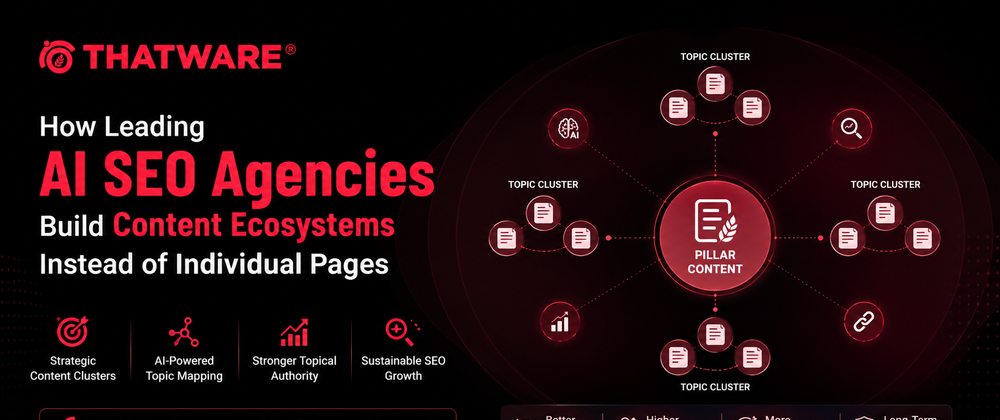
A content ecosystem is a collection of strategically connected pages that collectively cover an entire topic.
Rather than publishing disconnected blog posts, agencies create a central pillar supported by multiple detailed resources that answer related questions, solve specific problems, and address different user intentions.
Each page contributes additional context while strengthening the authority of the entire website.
For example, instead of creating one article about AI SEO, a complete ecosystem might include pages covering technical SEO, semantic search, structured data, entity optimization, topical authority, AI search visibility, content optimization, and search intent analysis.
Every article supports the others through logical internal linking and shared topical relevance.
This structure helps both users and AI systems understand the depth of expertise behind a website.
Why AI Search Rewards Topical Authority
Google's evolving algorithms and AI-generated search experiences are becoming better at understanding expertise instead of simply matching keywords.
When AI generates answers, it looks for trusted sources that consistently demonstrate knowledge across an entire subject.
This is where topical authority becomes valuable.
Instead of producing hundreds of unrelated articles, leading agencies focus on building complete topic clusters that answer every important question users may have.
This approach sends stronger trust signals than publishing random keyword-focused content.
The result is greater visibility, improved rankings, and stronger brand recognition across traditional search as well as AI-powered search experiences.
The Methodology Behind Leading AI SEO Agencies
One characteristic separates experienced agencies from those simply following trends.
They have a clear methodology.
Professional teams begin by understanding how search engines currently interpret a business. This involves more than running a technical crawler.
They evaluate entity recognition, semantic relationships, topical coverage, structured data implementation, content quality, internal linking, and AI visibility.
From there, they develop a roadmap that prioritizes authority rather than content volume.
Businesses searching for a professional AI SEO company for businessesshould always ask about this methodology. Experienced professionals can explain every stage of their process clearly, including why each decision supports long-term growth.
Vague explanations, generic promises, and buzzwords usually indicate a lack of strategic depth.
Building Content Around User Intent
Every search begins with a question.
Leading AI SEO agencies spend significant time understanding why users search instead of simply identifying what they search.
Different users have different goals.
Some want information.
Some compare products.
Others are ready to make a purchase.
A successful content ecosystem addresses every stage of this decision-making process.
Informational articles educate readers.
Comparison guides simplify decisions.
Case studies build credibility.
Service pages demonstrate expertise.
FAQs answer common concerns.
Together, these pages create a complete experience that satisfies users while strengthening topical authority.
Technical SEO Still Matters
Exceptional content alone cannot build authority if search engines struggle to interpret it.
Modern AI SEO requires technical precision.
Schema markup helps search engines understand entities.
Internal linking creates meaningful relationships between pages.
Structured navigation improves crawl efficiency.
Optimized metadata provides additional context.
Fast loading pages improve user experience.
Technical SEO is no longer just about fixing errors.
It has become an essential part of helping AI systems understand a website accurately.
Content Ecosystems Create Stronger Business Results
Many companies measure SEO success through rankings alone.
Professional agencies look much deeper.
A successful content ecosystem generates qualified visitors who engage with multiple pages before becoming customers.
Visitors spend more time exploring related content.
Bounce rates often decrease.
Conversion opportunities increase naturally.
Brands also become more visible across multiple search experiences instead of relying on a handful of high-volume keywords.
This creates a more stable organic growth strategy that continues delivering value as search algorithms evolve.
Businesses interested in developing a complete content ecosystem strategy for SEO often discover that authority grows much faster when every page contributes to a larger knowledge framework instead of competing independently.
Warning Signs to Watch Before Hiring an Agency
Not every agency advertising AI SEO follows modern best practices.
Be cautious if an agency guarantees rankings.
Search algorithms involve countless variables that no company can control completely.
Similarly, avoid providers that refuse to explain their process.
Transparency reflects confidence.
Professional agencies openly discuss their methodology, expected timelines, reporting standards, and optimization priorities.
Reporting should also focus on meaningful business outcomes.
Traffic numbers and impressions alone tell only part of the story.
The metrics that matter include qualified leads, conversions, topical authority, brand visibility, and long-term organic growth.
The Future Belongs to Connected Content
As AI continues transforming search, websites that organize information intelligently will outperform those publishing disconnected articles.
Content ecosystems help businesses demonstrate expertise, improve user experience, and create stronger relationships between pages.
This strategy aligns naturally with how modern AI systems evaluate trust, relevance, and authority.
The objective is no longer publishing more pages.
The objective is creating better-connected knowledge that serves users comprehensively.
Businesses that embrace this approach today will be far better positioned for the future of search.
In an increasingly AI-driven digital landscape, sustainable SEO success belongs to brands that prioritize expertise, transparency, and thoughtful strategy over shortcuts. ThatWare has built its reputation by focusing on these principles, helping businesses create intelligent content ecosystems that strengthen authority, improve AI search visibility, and deliver measurable long-term growth.





Top comments (0)