
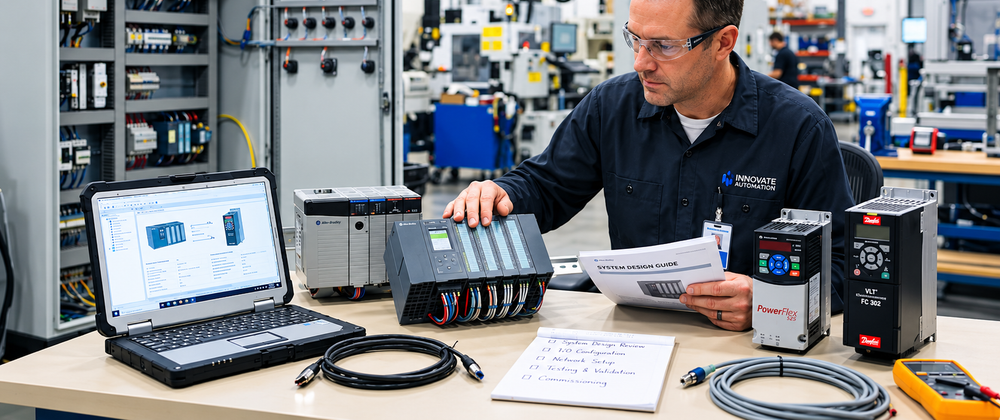

Choosing the right automation equipment is important for keeping your facility running efficiently. PLCs, drives, and controllers all play different roles in industrial operations, so the right choice depends on your machinery, production requirements, compatibility, and budget.
Whether you are replacing an existing component or upgrading your control system, understanding what to look for can help you make a better purchasing decision. Businesses can also compare new, used, and surplus options when looking for industrial equipment for sale.
Start With Your Facility’s Automation Requirements
Before buying a PLC, drive, or controller, first understand what your facility actually needs. Look at the machines, production processes, and existing control systems that the equipment will support.
Consider factors such as:
The number of inputs and outputs required
Communication and networking requirements
Processing and control needs
Future expansion plans
It is also important to check the equipment already installed at your facility. Choosing components that work with your existing system can make installation and maintenance easier.
Check Compatibility
Always verify the manufacturer, model number, voltage, communication protocol, and technical specifications before purchasing. A component may look suitable but still be incompatible with your existing system.
Choosing the Right PLC for Your Application
A PLC controls and monitors industrial machines and processes. PLCs are available in different sizes and configurations, from compact systems for smaller applications to larger systems designed for complex industrial operations.
When choosing a PLC, consider the number of I/O points, processing requirements, communication options, programming needs, and expansion capabilities.
For facilities maintaining existing automation systems, finding the correct replacement model or module can be particularly important. VB Industrial Supply offers PLCs, controllers, automation components, and other industrial parts for different applications.
How to Choose the Right Industrial Drive
Industrial drives help control the speed, torque, and operation of motors. The right drive depends on the motor and the application it will be used for.
Before purchasing a drive, consider:
Motor horsepower and voltage
Load and operating requirements
Required speed control
Communication and control features
Variable frequency drives are commonly used for controlling AC motors and can be found in many industrial applications.
Consider the Operating Environment
Your facility's environment also matters. Temperature, dust, moisture, available space, and other conditions can affect equipment selection.
Make sure the drive or controller is suitable for the environment where it will operate. This can help avoid compatibility and installation problems later.
What to Look for in Controllers and Automation Parts
PLCs and drives are only part of an industrial control system. Controllers, communication modules, power supplies, sensors, circuit boards, and other electrical components may also be required.
When comparing products, check the exact part number, manufacturer, specifications, condition, and availability. This is particularly important when you are replacing a component in an existing system.
VB Industrial Supply provides a range of automation and electrical products, including PLCs, drives, controllers, sensors, and other industrial equipment for sale. Customers can compare available products based on their application and requirements.
New, Used, or Surplus: Which Should You Choose?
New equipment can be a good option when you need current specifications, a new installation, or a product directly suited to a new system. However, new components are not always the only practical choice.
Used and surplus automation equipment may be useful for repairs, maintenance, replacements, and older systems. Businesses maintaining legacy equipment may need specific components that are difficult to find as new products.
Before buying used or surplus equipment, check its condition, part number, specifications, compatibility, warranty, and return policy. The lowest price is not always the best value if the equipment does not meet your requirements.
Businesses Can Also Sell Their PLCs and Automation Equipment
Industrial equipment is not only something businesses purchase. Many companies also have excess PLCs, drives, controllers, electrical components, and other equipment that they no longer need.
If you have surplus or unused inventory, you may be able to Sell PLC Parts instead of keeping them in storage. Manufacturers, contractors, maintenance departments, and other businesses may have equipment left over from projects, upgrades, or facility changes.
VB Industrial Supply is also ready to buy and sell equipment. Businesses and suppliers can contact the company with part numbers, inventory lists, photos, or equipment details to discuss available surplus products.
This can be a useful option for businesses looking to recover value from excess or obsolete industrial inventory.
Make Your Automation Purchase With Confidence
Choosing the right PLC, drive, or controller starts with understanding your facility's requirements. Compatibility, specifications, operating environment, equipment condition, budget, and future needs should all be considered before making a purchase.
New equipment may be appropriate for some applications, while used or surplus components can be practical for repairs and existing systems.
Whether you need PLCs, drives, controllers, or other industrial parts, VB Industrial Supply provides options for industrial buyers. If you also have surplus automation equipment to sell, the company is ready to review your available inventory and discuss a potential purchase.






Top comments (0)