
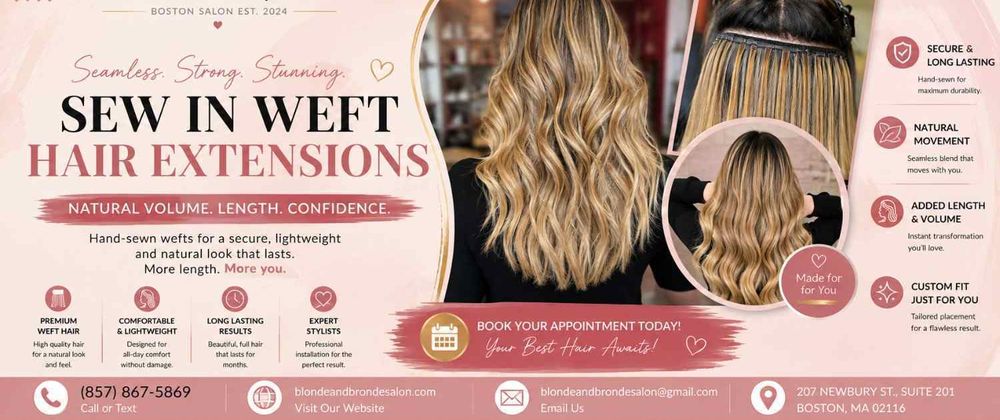

Hair extensions should enhance your natural beauty by adding length, volume, and movement. However, not every installation creates the seamless finish people expect. Sometimes, sew in weft hair extensions can look bulky, feel too heavy, or create an uneven shape that makes the added hair noticeable.
This usually happens when important details such as extension density, row placement, sectioning, or blending are overlooked. Even high-quality extensions can look unnatural if they are not customized to suit your natural hair.
The good news is that a bulky appearance can often be prevented with the right installation techniques and professional guidance. Understanding what causes excessive volume and how to avoid it can help you achieve extensions that look smooth, balanced, and natural.
Why Do Sew In Weft Hair Extensions Look Bulky?
Sew-in weft extensions add hair to your natural strands using a professional attachment technique. When installed correctly, they should blend with your existing hair without creating noticeable bumps or excessive volume.
However, several installation and styling issues can affect the final appearance.
1. Using Too Much Extension Hair
One of the most common reasons extensions look bulky is using more hair than necessary.
Although adding extra wefts may seem like an easy way to achieve fuller hair, excessive density can create an unnatural shape. This is especially noticeable when someone with naturally fine or medium-density hair chooses extensions that are significantly thicker.
The goal should be to create balanced volume rather than simply adding as much hair as possible.
A professional stylist should consider:
- Your natural hair thickness and density.
- Your desired length and volume.
- The weight of the extension hair.
- Your scalp comfort.
- Your everyday styling preferences.
Choosing the appropriate amount of hair helps create a more natural result while reducing unnecessary weight.
2. Incorrect Weft Placement
Placement has a significant impact on how extensions look and feel.
When wefts are installed too close to the hairline, crown, or sides, they may become visible when you move your hair or change your parting. Incorrect placement can also create uneven volume, making one area look thicker than another.
Professional installation involves understanding the natural shape of the head, hair growth patterns, and areas where the extensions need to remain concealed.
The rows should be positioned strategically to provide fullness while allowing your natural hair to cover the attachment points.
3. Poor Sectioning During Installation
Clean and even sectioning creates the foundation for a smooth installation.
If the natural hair is divided into uneven sections, the wefts may sit incorrectly. This can lead to visible bumps, uneven tension, or an inconsistent shape.
Professional sectioning helps distribute the extension weight appropriately and creates a more balanced finish.
It also allows the stylist to work with your natural hair density instead of forcing the same installation pattern onto every client.
4. Choosing the Wrong Extension Density
Extension density refers to how thick or full the extension hair is.
If your natural hair is fine but your extensions are extremely thick, the difference can become noticeable. Your natural hair may struggle to blend with the added length, creating a heavy appearance around the ends.
For a seamless finish, extension density should complement your existing hair.
A consultation helps determine whether you need subtle fullness, moderate volume, or a more dramatic transformation.
5. Skipping Professional Blending
Even correctly installed extensions can look unnatural without proper blending.
For example, if your natural hair is shoulder-length and your extensions are much longer, the transition between the two can look obvious. The result may appear disconnected instead of flowing naturally.
A customized haircut helps create a smoother transition.
Depending on your hair type and desired style, your stylist may recommend:
- Soft, face-framing layers.
- Long, blended layers.
- Customized shaping around the sides.
- Subtle adjustments to the ends.
The objective is to make your natural hair and extensions look like one complete hairstyle.
How to Avoid a Bulky Look With Sew In Weft Extensions
Achieving natural-looking extensions requires careful planning before, during, and after installation. These practical tips can help you get a more balanced result.
1. Start With a Professional Consultation
Before choosing extensions, schedule a consultation with an experienced stylist.
Your natural hair condition, thickness, length, and lifestyle all influence which extension method will work best.
During the consultation, discuss:
- How much length you want to add.
- Whether you prefer natural fullness or dramatic volume.
- Your usual hairstyles.
- Your hair's current condition.
- How much time you can dedicate to maintenance.
A personalized recommendation helps prevent problems caused by choosing extensions based only on appearance.
2. Match the Extension Color and Texture
Color and texture matching are essential for natural-looking results.
Extensions that are too warm, cool, light, or dark compared with your natural hair can create a noticeable difference. Texture mismatches can also make the added hair look separate from your own.
For the best blend, consider:
- Color: Match the extensions to your current hair color, including highlights and lowlights.
- Texture: Choose a texture that works with your natural hair pattern.
- Density: Select an appropriate amount of hair for your natural thickness.
- Length: Choose a length that allows a smooth transition.
- Quality: Invest in quality extension hair that suits your styling needs.
A professional color and extension consultation can help you select the right combination.
3. Choose the Right Number of Wefts
More wefts do not automatically mean better results.
The number of rows and amount of extension hair should depend on your natural hair density, head shape, and desired outcome.
Using too many wefts may create unnecessary weight, while using too few may not provide the fullness you want.
A skilled stylist evaluates the overall balance before deciding how much hair to install.
4. Prioritize Proper Row Placement
Correct row placement helps keep extensions discreet and comfortable.
The stylist should consider how your hair naturally falls, where you normally part it, and whether you like wearing your hair up or down.
Strategic placement helps prevent visible attachment points and allows the extensions to move more naturally.
5. Get a Customized Haircut
Blending is the finishing detail that can transform the appearance of extensions.
A professional haircut helps connect the natural hair with the extension length. It can also remove unnecessary bulk and create movement throughout the hairstyle.
Avoid cutting your extensions at home. Incorrect layering or thinning can make the hair look uneven and difficult to style.
Common Mistakes That Make Sew In Weft Extensions Look Unnatural
Even well-installed extensions can lose their appearance when the wrong products, styling habits, or maintenance practices are used.
Here are some mistakes to avoid:
| Mistake | Why to avoid it |
|---|---|
| Installing too much hair | Creates excessive volume and weight |
| Choosing the wrong density | Makes natural hair difficult to blend |
| Incorrect row placement | Can make attachment points visible |
| Skipping professional blending | Creates an obvious difference in length |
| Using heavy styling products | Can weigh down the hair and cause buildup |
| Ignoring maintenance | May lead to tangling and uncomfortable attachment points |
| Brushing too aggressively | Can cause unnecessary pulling and damage |
If your extensions already look bulky, avoid trying to solve the problem by adding more hair. Have a professional assess the installation first.
How to Maintain Sew In Weft Hair Extensions
Proper maintenance helps your extensions remain smooth, manageable, and natural-looking.
Brush Carefully
Use a suitable extension brush and gently work from the ends toward the roots. Hold your hair near the attachment area while brushing to reduce pulling.
Avoid brushing aggressively, especially when the hair is wet.
Wash Your Hair Properly
Use a gentle shampoo and suitable conditioner recommended by your stylist.
Cleanse your scalp carefully without rubbing or twisting the wefts. Apply conditioner mainly to the mid-lengths and ends, avoiding excessive product near attachment points.
Rinse thoroughly to prevent product buildup.
Dry the Attachment Areas
After washing, gently remove excess water with a towel.
Make sure the attachment areas and roots are thoroughly dried. Leaving these areas damp for extended periods can contribute to tangling and hygiene problems.
Use a heat protectant before blow-drying or styling with hot tools.
Protect Your Hair While Sleeping
Before going to bed, make sure your extensions are completely dry.
A loose braid or gentle ponytail can help reduce tangling overnight. A silk or satin pillowcase may also reduce friction.
Schedule Regular Maintenance
Natural hair continues to grow after extensions are installed. As it grows, the attachment points move farther away from the scalp.
Regular professional maintenance helps your stylist assess the rows, check for tangling, and determine when adjustments or removal are needed.
Your maintenance schedule should depend on the installation method, natural hair growth, and the condition of your extensions.
Why Professional Installation Matters
Beautiful extensions require more than good-quality hair. The installation technique, weight distribution, placement, and blending all contribute to the final appearance.
Professional stylists evaluate your natural hair before recommending an extension method. This helps ensure that the selected extensions complement your hair rather than overwhelm it.
At Blonde and Bronde Salon, personalized consultations help clients explore extension options based on their hair type, desired fullness, length, and lifestyle.
If you are searching for Hair Extensions Boston, look for a salon that prioritizes customized installation, natural blending, and proper aftercare guidance.
The right approach should provide beautiful volume without unnecessary bulk or discomfort.
Frequently Asked Questions
1. Why do my sew-in weft extensions look bulky?
Sew-in weft extensions may look bulky because of excessive extension hair, incorrect row placement, poor sectioning, or insufficient blending. A professional assessment can help identify the cause.
2. How many wefts do I need for natural-looking extensions?
The number depends on your natural hair thickness, desired length, extension density, and head shape. A stylist can recommend the appropriate amount during a consultation.
3. Can sew-in weft extensions look natural on thin hair?
They can be suitable for some people with fine hair, provided the installation is customized. The stylist should carefully assess natural hair strength and choose an appropriate extension weight.
4. How can I hide my sew-in weft extensions?
Correct placement, suitable sectioning, and sufficient natural hair coverage help keep the attachment points concealed. Professional blending also helps create a seamless appearance.
5. Can I remove bulk from my sew-in weft extensions?
A professional stylist can assess whether the bulk comes from excessive hair, placement, or the haircut. They may recommend reshaping or adjusting the installation where appropriate.
6. How often do sew-in weft extensions need maintenance?
Maintenance depends on your natural hair growth, installation method, and extension condition. Follow your stylist's recommended schedule rather than waiting until the rows feel uncomfortable.
7. Are sew-in weft extensions supposed to feel heavy?
Extensions should feel secure and comfortable, not painful or excessively tight. Persistent pulling, soreness, or scalp discomfort should be evaluated by a professional.
Conclusion
Sew-in weft extensions should enhance your natural hair, not overpower it. A bulky appearance is often linked to incorrect placement, excessive density, poor sectioning, or a lack of professional blending.
Choosing the right extension weight, matching the texture and color, and following an appropriate maintenance routine can make a significant difference.
With proper planning and professional installation, sew in weft hair extensions can provide beautiful length, balanced volume, and natural movement.
The most important thing is to choose an extension plan that works with your natural hair and supports its condition.
Book Your Hair Extension Consultation at Blonde and Bronde Salon
Thinking about adding length or fullness to your hair?
At Blonde and Bronde Salon, we offer personalized consultations to help you explore beaded sew-in weft extensions and find an approach that complements your natural hair.
Visit our salon on Newbury Street in Boston to discuss your hair goals and learn more about professional extension services.






Top comments (0)