

Why HVAC Is the Largest Hidden Cost in Short-Term Rentals
Heating, ventilation, and air conditioning are the single largest controllable operating expense for most short-term rental properties. Unlike fixed costs such as mortgage payments, insurance, and platform fees, HVAC consumption can swing dramatically based on guest behavior, climate conditions, and the efficiency of the existing system. The bills that arrive at the end of each month often surprise hosts because the underlying drivers of consumption are largely invisible until they show up as charges.
The hidden nature of HVAC waste makes it particularly difficult to address through traditional management. Guests routinely leave climate systems running at maximum settings while sightseeing or sleeping, set thermostats to extreme values out of habit, and rarely consider energy efficiency during their stay. A property running its air conditioning at sixty-five degrees while empty for ten hours is consuming significant energy that produces no benefit at all. Across hundreds of nights per year and across multiple units in a portfolio, these inefficiencies accumulate into thousands of dollars of avoidable expense.
How Smart Sensors Detect Real Occupancy Patterns
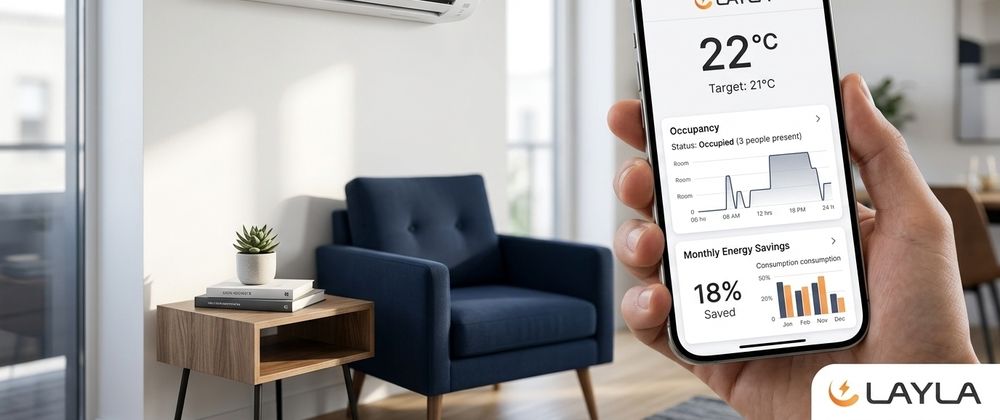
Smart sensors transform HVAC management by knowing when a property is actually occupied rather than relying on the booking calendar or guest behavior. Booking calendars assume continuous occupancy from check-in to check-out, but in reality guests are often away from the property for substantial portions of their stay. They sightsee, dine out, attend events, and spend time outside in ways that leave the property empty for hours at a time. Without sensor data, the HVAC system has no way to recognize these absences.
Modern occupancy sensors using PIR or radar-based detection identify these real-world absence patterns in real time. When the sensor confirms that no one has been present in the monitored space for a defined period, the system can intelligently shift HVAC operation to an eco-friendly mode that maintains safe temperature ranges without consuming the energy required to keep the space at full guest comfort levels. When occupancy returns, the system ramps the climate back to the guest's preferred setting before they even notice the difference.
What an Eco Mode Actually Does
Eco mode is not simply turning off the HVAC system, which would create discomfort and risk humidity issues in unoccupied spaces. Instead, it intelligently widens the acceptable temperature range when no one is present. A summer cooling setpoint of 72 degrees might be allowed to drift up to 78 degrees when the space is empty, eliminating the energy cost of maintaining the lower setpoint without compromising the property's condition. A winter heating setpoint of 70 might be allowed to drop to 65, achieving similar savings.
When occupancy is detected, the system immediately resumes guest-preferred operation, restoring the previous temperature within minutes. Guests almost never notice the brief transition because they are typically away from the unit during the eco-mode periods. The cumulative effect of these intelligent setpoint adjustments across many absence windows is the energy savings that internal testing has shown can exceed thirty percent of typical HVAC consumption. Layla's Eco Mode for HVAC automation integrates with most mini-split, central AC, and smart thermostat systems to deliver these savings without manual configuration.
Compatible HVAC Systems and Setup Requirements
Not every HVAC system can integrate with smart automation, but the supported categories cover most modern short-term rental properties. IR-compatible mini-split systems, common in apartment-style rentals worldwide, integrate seamlessly because the smart sensor learns the unit's IR remote signals and replicates them through its built-in IR transmitter. Central HVAC systems controlled through smart thermostats from Nest, ecobee, Honeywell, and similar brands integrate through API or local protocol connections.
Older systems without IR remotes or smart thermostat
compatibility can often be upgraded with relatively modest investment to gain access to automation benefits. The economics typically justify the upgrade within months because the energy savings exceed the upgrade cost rapidly. For hosts evaluating new HVAC equipment, choosing systems that support smart automation should be a primary consideration alongside conventional factors like efficiency ratings and capacity. The recurring savings from automation compatibility often exceed the value of marginal efficiency improvements in the equipment itself. Layla's smart AC control integrates with most modern HVAC systems through IR or smart thermostat protocols.
The Business Case Beyond Direct Energy Savings
While direct energy cost reductions are the most visible benefit of HVAC automation, the broader business case extends to several less-visible but meaningful improvements. Equipment longevity improves because HVAC systems experience less wear when they spend less time running at maximum output, extending the useful life of expensive compressors and air handlers. Maintenance costs typically drop in parallel because lower runtime means fewer service calls and longer intervals between component replacements.
Guest comfort actually improves rather than declining, which surprises many hosts at first. Properties using smart automation reach guest-preferred temperatures faster on arrival because the system anticipates the booking and pre-conditions the space appropriately. During occupancy, the system maintains stable temperatures rather than the wide swings that often happen when guests adjust thermostats reactively. The result is a more comfortable stay, better reviews, and often slightly higher booking rates because consistently comfortable properties tend to receive more repeat bookings and word-of-mouth recommendations.
How Multi-Property Hosts Maximize Automation Benefits
For hosts operating multiple short-term rental units, the case for HVAC automation compounds significantly. Energy savings of thirty percent on each property add up to substantial portfolio-wide reductions. Centralized monitoring through a single dashboard provides visibility into HVAC performance across the entire portfolio, surfacing units that are underperforming or experiencing unusual consumption patterns that might indicate equipment problems requiring attention.
Smart sensors also enable consistent guest experience standards across properties. A multi-property host can configure all units to use similar temperature setpoints, response patterns, and eco-mode thresholds, ensuring that guests booking different properties in the portfolio receive comparable comfort experiences. This consistency reinforces brand identity for hosts operating multiple units under unified management and reduces the risk of poor reviews from properties where the climate control was poorly configured. Multi-property dashboards also dramatically reduce the operational time required to manage HVAC settings, which is one of the highest-frequency host activities in any portfolio.
Getting Started With HVAC Automation at Your Property
Deploying HVAC automation at an existing rental is straightforward in most cases. Start by confirming that the existing system is compatible with the chosen smart sensor platform, which is typically straightforward for any mini-split or smart thermostat installed in the past several years. Install the sensor in a central location with good visibility to typical occupancy patterns. Configure the eco-mode parameters during initial setup, choosing temperature ranges that match the local climate and the property's thermal characteristics.
After deployment, monitor energy consumption for the first month and compare against historical bills to verify that savings are materializing as expected. Most hosts see immediate improvements within the first billing cycle and continue to refine settings over the first quarter to optimize the balance between comfort and savings. Automate energy savings with Layla across your portfolio and start capturing the operational improvements that have become standard among professional short-term rental operators.
Frequently Asked Questions
Q1: How much can I really save on HVAC with smart automation?
A: Internal testing shows up to 30 percent savings on HVAC costs, depending on climate, property size, occupancy patterns, and existing system efficiency.
Q2: Will my guests notice or be uncomfortable from eco mode?
A: Most guests do not notice because eco mode activates only when the space is empty and the system returns to guest-preferred temperatures before they return.
Q3: Does my mini-split AC work with smart automation?
A: Most modern mini-split systems with IR-compatible remotes work seamlessly with smart sensor IR-based automation.
Q4: What if my HVAC is older and not smart-thermostat compatible?
A: Upgrading to a compatible smart thermostat or adding an IR-controllable system typically pays for itself within months through energy savings.
Q5: Can I monitor and adjust HVAC from anywhere?
A: Yes. Smart sensor apps allow remote monitoring and adjustment of HVAC settings from anywhere with internet access.







Top comments (1)
AI-powered HVAC automation is becoming a smart solution for rental properties because it can optimize heating and cooling based on occupancy, weather conditions, and energy usage. This not only improves tenant comfort but also helps reduce electricity costs over time. Property owners can further manage their utility expenses by regularly reviewing energy consumption and checking their KE Duplicate Bill Website records to monitor billing trends and identify unusual usage patterns.