
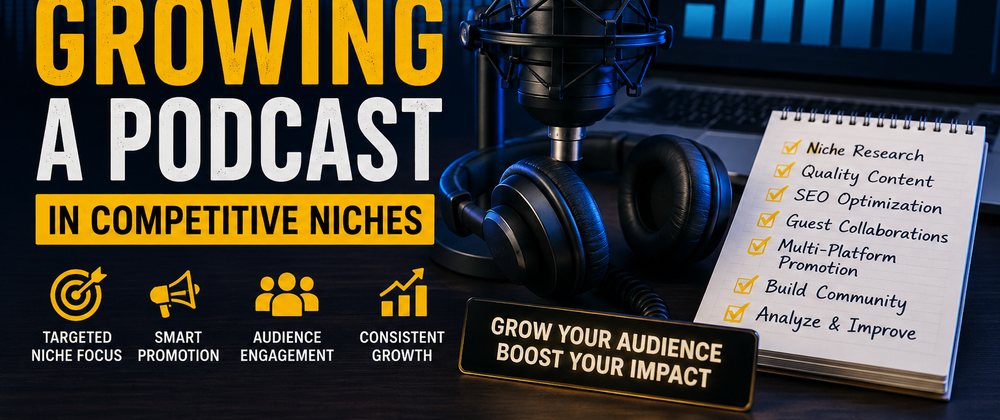


Podcasting has become one of the most powerful content formats in the digital world. From education and business to entertainment and storytelling, millions of podcasts compete for listener attention across platforms like Spotify, Apple Podcasts, and YouTube. But while starting a podcast is easy, growing one in a competitive niche is extremely challenging.
In crowded categories, creators often struggle with visibility, audience retention, and consistent growth. Success requires more than just publishing episodes—it requires strategy, branding, marketing, and audience psychology.
This guide explores proven techniques for growing a podcast in competitive niches and building long-term audience engagement.
Understanding Competition in Podcast Niches
Some podcast categories are highly saturated, such as:
Business and entrepreneurship
Personal development
True crime
Health and fitness
Technology and marketing
In these niches, thousands of new episodes are published every day. This makes it difficult for new or small creators to stand out.
To succeed, podcasters must focus on differentiation, consistency, and strategic promotion rather than just content creation.
1. Define a Clear and Specific Podcast Positioning
One of the biggest mistakes podcasters make is choosing a broad topic. A general podcast struggles to attract a loyal audience because it lacks focus.
Instead of targeting a wide category, narrow down your niche.
For example:
Instead of “Business Podcast” → “Business Growth Strategies for Freelancers”
Instead of “Fitness Podcast” → “Home Workouts for Busy Professionals”
A specific focus helps attract a highly targeted audience and improves discoverability.
2. Create High-Value and Actionable Content
In competitive niches, average content gets ignored. Listeners expect real value from every episode.
High-performing podcasts usually include:
Practical tips
Real-world examples
Expert interviews
Step-by-step guidance
Problem-solving discussions
Your goal should be to make every episode useful enough that listeners want to share it.
3. Focus on Strong Episode Titles and SEO Optimization
Podcast discoverability depends heavily on how episodes are titled and optimized.
Instead of vague titles like:
“Episode 10: Marketing Talk”
Use clear and searchable titles like:
“How to Increase Your Sales Using Social Media Marketing”
Search-friendly titles help podcasts appear in search results and recommendations.
4. Strategic Marketing Is Essential for Growth
Even great podcasts fail without proper marketing. Promotion is just as important as content creation.
This is where working with a professional podcast marketing agency for strategic audience growth and promotion can make a significant difference. These agencies specialize in:
Audience targeting strategies
Social media promotion
Podcast SEO optimization
Paid advertising campaigns
Growth analytics
Professional marketing support helps podcasts grow faster in competitive niches.
5. Use Multiple Content Platforms for Distribution
Relying only on podcast platforms limits your reach. Successful podcasters distribute content across multiple channels.
Key platforms include:
YouTube (video podcasts)
Instagram (short clips and reels)
LinkedIn (professional audience)
TikTok (viral short content)
Blog websites (transcripts and SEO content)
Repurposing content helps attract audiences from different platforms.
6. Leverage Guest Appearances for Growth
Guest appearances are one of the fastest ways to grow a podcast audience.
When you invite guests:
You gain access to their audience
You improve content variety
You build authority in your niche
Similarly, appearing as a guest on other podcasts helps increase exposure.
Networking within your industry is a powerful growth strategy.
7. Optimize Audio Quality and Production
Even if content is strong, poor audio quality can turn listeners away.
Focus on:
Clear voice recording
Noise reduction
Professional editing
Balanced sound levels
Listeners associate audio quality with credibility.
8. Build a Strong Podcast Brand Identity
Branding helps your podcast stand out in a crowded market.
Important branding elements include:
Podcast name
Logo design
Intro/outro music
Visual style
Tone of communication
A strong brand builds recognition and trust over time.
9. Engage With Your Audience
Audience engagement is often overlooked but plays a major role in growth.
You can engage listeners by:
Responding to comments
Asking for feedback
Creating Q&A episodes
Running polls and discussions
When listeners feel connected, they are more likely to stay loyal.
10. Consistency Builds Audience Trust
Consistency is one of the most important growth factors in podcasting.
Listeners are more likely to subscribe when they know:
When new episodes will be released
What type of content to expect
That the podcast is reliable
Whether you publish weekly or biweekly, consistency is more important than frequency.
11. Use Podcast SEO for Discoverability
Podcast SEO is often ignored but extremely powerful.
To improve visibility:
Use keywords in episode titles
Write detailed show notes
Add transcripts for search engines
Optimize podcast descriptions
Search engines and podcast platforms index this information to recommend content.
12. Create Shareable Short Clips
Short-form content is one of the fastest ways to grow a podcast audience today.
You can repurpose episodes into:
30–60 second highlights
Motivational quotes
Educational snippets
Behind-the-scenes clips
These clips perform well on social media and attract new listeners.
13. Collaborate With Other Creators
Collaboration helps expand your reach without large marketing budgets.
You can collaborate through:
Joint episodes
Interview swaps
Co-hosted discussions
Cross-promotions
Collaboration introduces your podcast to new audiences organically.
14. Analyze Performance Metrics Regularly
Data helps improve podcast performance.
Important metrics include:
Listener retention
Episode downloads
Audience growth rate
Engagement levels
By analyzing data, you can understand what content works best.
15. Focus on Storytelling
Even in educational podcasts, storytelling improves engagement.
Good storytelling:
Keeps listeners engaged longer
Makes content more memorable
Builds emotional connection
Instead of simply sharing information, present it in a story format.
16. Build a Loyal Community
Successful podcasts are not just content platforms—they are communities.
You can build community through:
Private Facebook groups
Discord servers
Email newsletters
Live sessions
A strong community increases loyalty and long-term retention.
17. Monetization Can Support Growth
While monetization is not the primary goal early on, it helps sustain podcast growth.
Common monetization methods include:
Sponsorships
Affiliate marketing
Paid subscriptions
Exclusive content
Revenue allows reinvestment in marketing and production.
18. Stay Updated With Industry Trends
Podcasting trends change quickly. Staying updated helps maintain competitiveness.
Current trends include:
Video podcasts
AI-assisted editing
Short-form content marketing
Interactive podcast formats
Adapting to trends helps maintain relevance.
Final Thoughts
Growing a podcast in a competitive niche requires a combination of strategy, consistency, creativity, and marketing. Simply producing episodes is not enough—successful podcasters focus on branding, audience engagement, distribution, and optimization.
Every element, from content quality to promotional strategy, plays a role in building long-term success.
For faster growth and professional support, many creators also work with a Podcast Marketing Agency specializing in audience growth strategies for competitive podcast niches to scale their reach effectively.





Top comments (0)