

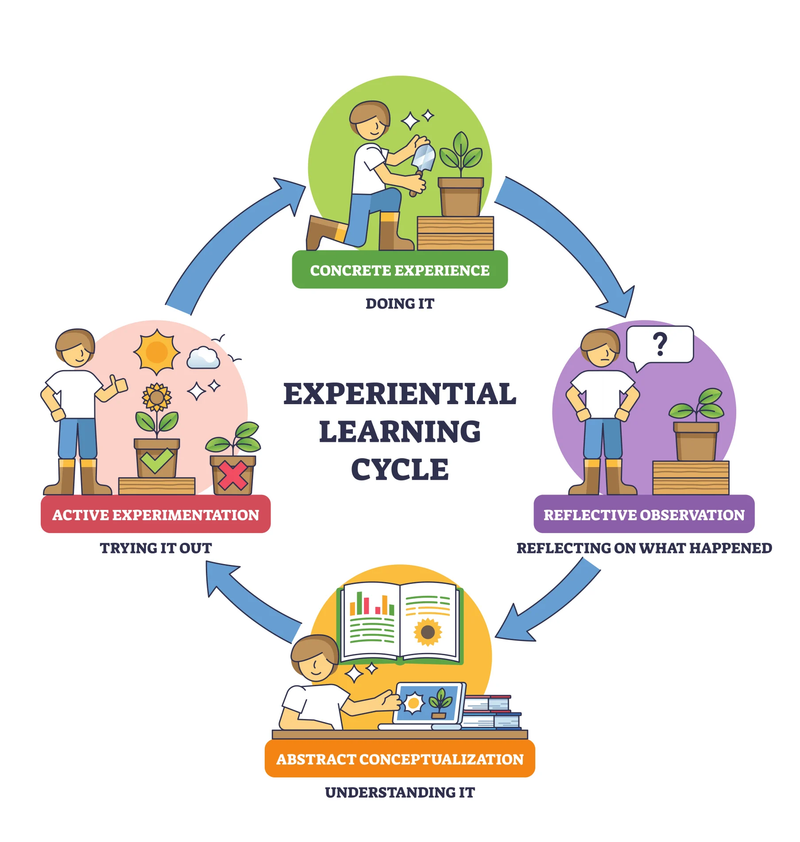
Why do some plants grow successfully in one location but struggle in another? Before deciding that sunlight explains the difference, scientists must first examine what actually happens. Careful observation provides the foundation for investigating questions about the natural world.
Observation Creates the Starting Point for Scientific Inquiry
Scientific investigations often begin when researchers notice something unexpected, repeated, or different from established expectations. These observations encourage questions that can be investigated through measurements, comparisons, and carefully planned experiments.
For example, a biologist might notice that certain flowers attract more insects during particular hours. Instead of immediately assuming temperature explains this pattern, the researcher records flowering times and insect activity.
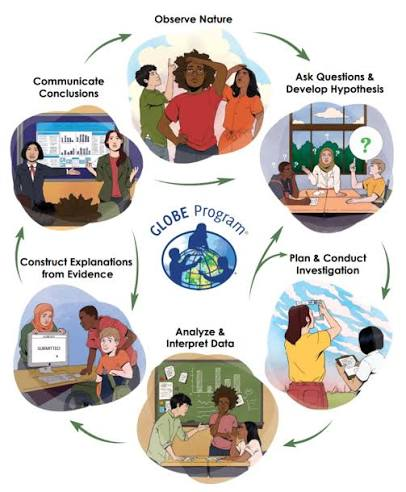
Reliable observation requires consistency because changing measurement methods can produce misleading comparisons. Researchers may use instruments, photographs, field notes, or repeated measurements to document what happens under different conditions.
The American Society of Human Genetics describes observation as an important early step in scientific investigation. Its scientific-method guidance explains how observations can lead researchers towards testable questions and hypotheses.
Turning Observations Into Testable Explanations
After collecting initial observations, scientists develop a hypothesis that offers a possible explanation. A useful hypothesis makes predictions that researchers can examine through further observation or experimentation.

Suppose a researcher notices that flowers receive more insect visits during warmer afternoons. One possible hypothesis suggests that temperature influences insect activity, but other explanations remain possible.
Scientists can test this idea by recording temperature and insect visits across several days. They might also compare different flower species, locations, weather conditions, and observation periods.
Careful investigation requires researchers to consider evidence that challenges their expectations. If observations repeatedly contradict a hypothesis, scientists may revise their explanation or investigate another possibility.
Understanding the Limits of Observation
Observation provides valuable information, but it does not automatically reveal the mechanisms behind natural events. Researchers must distinguish between what measurements directly show and what they believe those measurements might explain.

For instance, noticing fewer birds near a forest edge does not establish that nearby roads caused their absence. Habitat changes, food availability, predators, and seasonal movement could also influence bird populations.
Researchers improve confidence by repeating observations across different locations and periods. Independent studies can reveal whether an apparent pattern remains consistent beyond one particular environment or research group.
Scientific instruments also have limitations, including measurement errors, restricted detection ranges, and differences in precision. Researchers should describe these limitations because they influence how confidently results can be interpreted.
Observation therefore supports scientific reasoning by keeping explanations connected to measurable reality. A confident conclusion becomes more reasonable when repeated evidence supports it and competing explanations receive serious consideration.





Top comments (0)