
Buildings and industrial structures are constantly exposed to environmental conditions, operational loads, material aging, and changing usage requirements. Over time, these factors can reduce structural performance and compromise safety. When structural members begin showing signs of distress, immediate intervention becomes necessary to prevent further deterioration. This is where RCC Jacketing, Structural Strengthening, and Structural Strengthening Services play a critical role in extending the life of existing structures while improving their load-carrying capacity and durability.
Understanding Structural Deterioration
Every structure experiences gradual wear throughout its service life. Exposure to moisture, chemical attacks, corrosion of reinforcement, excessive loading, poor construction practices, and natural aging can weaken structural elements. Cracks, spalling concrete, exposed reinforcement, and excessive deflection are often visible indicators of underlying problems. Without proper intervention, these issues can progress rapidly and lead to costly repairs or even structural failure.
Structural deterioration is particularly common in industrial plants, commercial buildings, bridges, warehouses, residential complexes, and infrastructure projects. Timely assessment and strengthening measures help restore performance while avoiding complete reconstruction. This approach is both economical and sustainable for property owners seeking long-term reliability.
What is RCC Jacketing?
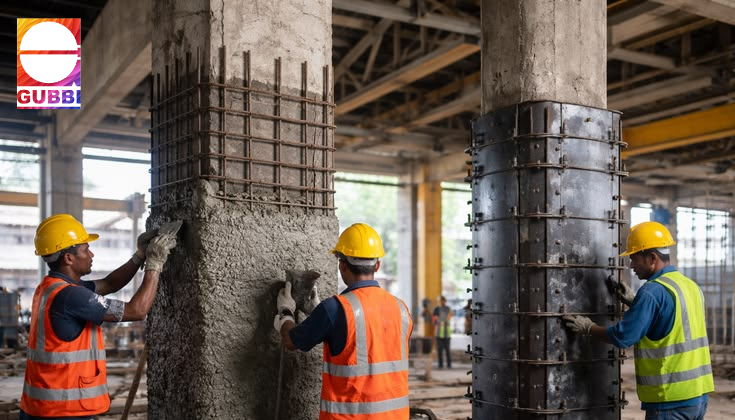
RCC Jacketing is one of the most widely used structural rehabilitation techniques for strengthening existing reinforced concrete members. The process involves increasing the size of structural elements such as columns, beams, or slabs by adding additional reinforcement and concrete around the existing section. This creates a stronger composite member capable of carrying higher loads and resisting future deterioration.
The technique is highly effective because it improves both strength and stiffness. RCC jacketing can significantly enhance the structural capacity of damaged or under-designed members while maintaining compatibility with the original structure. It is commonly applied in buildings requiring renovation, seismic upgrades, load enhancement, or rehabilitation after structural distress.
Why RCC Jacketing is Preferred in Rehabilitation Projects
One of the major advantages of RCC jacketing is its ability to restore structural performance without replacing entire components. Compared to demolition and reconstruction, the method reduces project downtime and minimizes disruption to ongoing operations. This makes it particularly suitable for occupied buildings and industrial facilities where continuity of operations is important.
The strengthening process also enhances durability by providing additional concrete cover and improved reinforcement protection. This reduces the risk of future corrosion and environmental damage. Because of its proven effectiveness, RCC jacketing remains one of the most trusted methods in structural rehabilitation and infrastructure strengthening projects.
Common Situations Requiring Structural Strengthening
Structural strengthening becomes necessary when existing structural elements can no longer meet current performance requirements. Buildings designed decades ago may not satisfy modern safety standards or increased load demands. Changes in occupancy, machinery installation, vertical expansion, or structural modifications can create additional stresses on the original framework.
Earthquake-prone regions also require strengthening solutions to improve seismic resistance. Structures affected by corrosion, fire damage, impact damage, or construction defects often need rehabilitation measures to restore safety. By implementing appropriate strengthening techniques, engineers can significantly improve the performance and service life of existing structures.
Signs That Indicate a Need for Structural Rehabilitation
Several warning signs suggest that structural strengthening may be required. Visible cracks in beams, columns, slabs, or walls often indicate stress concentrations or material degradation. Concrete spalling and exposed reinforcement are common signs of corrosion-related damage. Excessive vibrations, deflections, or uneven settlement may also signal structural concerns.
Ignoring these symptoms can allow damage to progress further and increase repair costs. Professional structural assessment helps identify root causes and determine the most suitable strengthening solution. Early intervention typically results in more economical repairs and improved long-term performance.
Benefits of Structural Strengthening Services
Professional Structural Strengthening Services offer multiple benefits beyond restoring structural capacity. Strengthening solutions improve safety, durability, and resilience while extending the useful life of valuable assets. Organizations can continue utilizing existing structures without the significant expense associated with complete replacement.
Another major advantage is sustainability. Rehabilitating an existing structure reduces construction waste and minimizes environmental impact. Structural strengthening also supports modernization projects by enabling buildings to accommodate new loads, technologies, and operational requirements. These benefits make strengthening services an increasingly popular choice across various industries.
RCC Jacketing for Columns
Columns are among the most critical structural components in any building. When columns become weakened due to corrosion, overload, or design deficiencies, their load-carrying capacity can decrease significantly. RCC jacketing provides an effective solution by increasing column dimensions and adding new reinforcement around the existing section.
The strengthened column gains enhanced axial load capacity, improved confinement, and better resistance against seismic forces. This method is commonly used in aging buildings, industrial facilities, and structures undergoing vertical expansion. Properly executed column jacketing can substantially improve structural safety and reliability.
RCC Jacketing for Beams
Beams play an essential role in transferring loads from slabs to columns and foundations. Structural damage, increased loading requirements, or design inadequacies may reduce beam performance over time. RCC jacketing strengthens beams by adding reinforcement and concrete layers around existing sections.
This enhancement increases flexural and shear capacity while reducing excessive deflections. Beam jacketing is particularly useful in commercial and industrial buildings where additional equipment or operational loads are introduced. The technique provides a cost-effective way to improve structural performance without extensive reconstruction work.
Advanced Structural Strengthening Techniques
While RCC jacketing remains highly effective, modern structural rehabilitation projects often utilize multiple strengthening methods depending on project requirements. Techniques such as carbon fiber wrapping, steel plate bonding, micro concrete jacketing, epoxy injection, and post-tensioning provide specialized solutions for different structural challenges.
Selecting the appropriate method requires careful engineering evaluation and structural analysis. Factors such as load requirements, environmental exposure, accessibility, and budget influence the final strengthening strategy. Combining different rehabilitation techniques often produces the most effective long-term results.
Importance of Detailed Structural Assessment
Successful strengthening projects begin with a comprehensive structural assessment. Engineers evaluate the condition of structural elements through visual inspections, non-destructive testing, load analysis, and material investigations. This process identifies the extent of deterioration and determines the underlying causes of structural distress.
Accurate assessment ensures that strengthening measures address actual structural needs rather than surface symptoms. It also helps optimize repair costs and improve project effectiveness. A well-planned rehabilitation strategy provides confidence that the strengthened structure will perform reliably for years to come.
Choosing the Right Structural Strengthening Partner
The success of any rehabilitation project depends heavily on technical expertise and execution quality. Structural strengthening requires specialized knowledge of engineering principles, material behavior, rehabilitation technologies, and construction methodologies. Experienced professionals can accurately diagnose structural issues and recommend practical strengthening solutions.
For organizations seeking reliable rehabilitation support, companies such as Gubbi Civil Engineers Limited bring extensive expertise in structural assessment, repair methodologies, and strengthening solutions tailored to complex infrastructure and industrial requirements. Selecting qualified specialists ensures safe, efficient, and durable rehabilitation outcomes.
Long-Term Value of Structural Strengthening
Investing in structural strengthening offers substantial long-term benefits. Strengthened structures experience improved safety, reduced maintenance requirements, and enhanced operational reliability. Property owners can maximize the value of existing assets while avoiding premature replacement costs.
As infrastructure continues to age globally, rehabilitation and strengthening solutions are becoming increasingly important. Organizations recognize that proactive maintenance and structural upgrades deliver significant economic advantages compared to reactive repairs after major failures occur. This shift has made structural strengthening an essential part of modern asset management strategies.
RCC Jacketing remains one of the most effective and widely adopted solutions for restoring and enhancing structural capacity. Combined with professional Structural Strengthening Services, it provides a practical approach to addressing deterioration, increasing load capacity, and extending the service life of buildings and infrastructure. Whether dealing with aging structures, seismic upgrades, corrosion damage, or increased operational demands, structural strengthening delivers a reliable path toward improved safety, durability, and long-term performance. With proper assessment, engineering expertise, and quality execution, rehabilitation solutions can successfully transform weakened structures into resilient assets capable of meeting future requirements.

Gubbi Civil
Posted on
Why Structural Strengthening Is Essential for Aging Buildings
For further actions, you may consider blocking this person and/or reporting abuse







Top comments (0)