
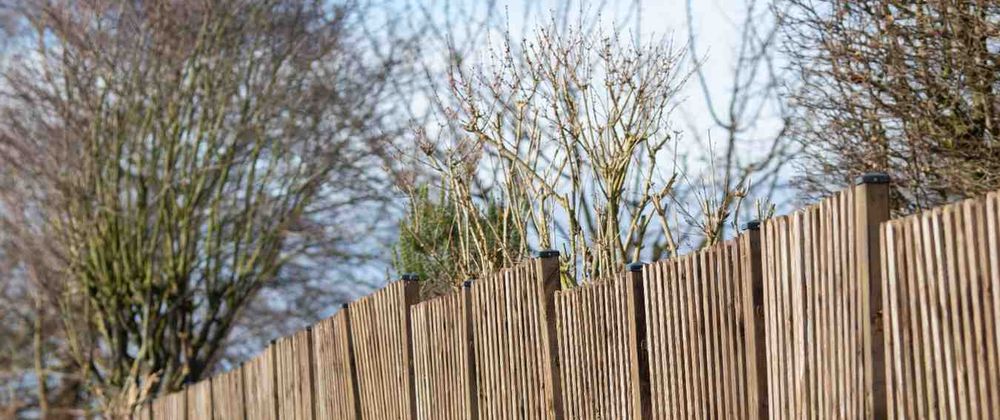

A fence estimate can look surprisingly simple until you notice that one contractor quotes a price per foot while another gives you a single project total. Why the difference? The answer often lies in the fence style, materials, height, labor, and details included in the installation. Understanding wooden fence cost per foot gives homeowners a practical way to compare options before committing to a project.
Price per linear foot is useful because it connects the size of the property with the amount of fencing required. However, it should not be treated as a universal price tag. Two fences covering the same distance can have very different costs because they may use different wood species, construction methods, board spacing, hardware, and finishing treatments.
What Does Cost Per Linear Foot Mean?
When a fence is priced per linear foot, the estimate is based on the total length of fencing being installed. If a property requires 150 linear feet, the contractor may multiply the estimated rate per foot by that distance to establish a basic project price.
This approach makes it easier to compare different fence sizes. A 100-foot fence and a 300-foot fence can be evaluated using the same general measurement.
However, wooden fence cost per foot may include different components depending on the estimate. Some quotes cover materials and installation, while others may separate labor, gates, removal, staining, or disposal. Always check what the quoted rate actually includes.
Why Fence Style Changes the Price
Not all wooden fences require the same quantity of lumber or construction effort. A simple picket fence uses spaced boards, while a privacy fence generally requires closely positioned boards to create a continuous barrier.
The construction pattern can also influence the amount of framing and labor needed. Decorative designs may involve additional cuts or installation steps.
For this reason, comparing prices solely by linear footage can be misleading. The more useful comparison is the cost per foot for a specific fence design with equivalent height and materials.
Picket Fence: A Simpler Option
Picket fencing is often associated with traditional residential landscaping. It typically consists of shorter vertical boards with visible spaces between them.
Because the boards are not usually arranged as a solid wall, fewer materials may be required compared with a full privacy fence. Its relatively open design can also make it suitable for defining boundaries without completely blocking views.
When estimating wooden fence cost, homeowners should consider whether the purpose is privacy or simply property definition. Choosing a picket style when complete privacy is unnecessary may reduce the amount of material required.
Privacy Fence: More Coverage, More Material
Privacy fencing is designed to create a stronger visual barrier. Boards are usually installed close together, and the fence is often taller than decorative boundary fencing.
Because more wood is needed to cover each linear foot, the material portion of the project can be higher. Installation may also require substantial framing and support.
The benefit is increased privacy and a more enclosed outdoor environment. For homeowners whose primary goal is blocking views from neighboring properties or nearby spaces, the additional investment may be worthwhile.
Shadow-Box Fencing and Its Construction
Shadow-box fencing is constructed with boards arranged in an alternating pattern on opposite sides of the rails. This creates a similar appearance from both sides and allows some airflow while maintaining a substantial visual barrier.
The design uses more boards than a very basic fence, which can influence wooden fence cost. Installation can also require careful positioning to maintain consistent spacing and appearance.
This style may be attractive for properties where both sides of the fence are visible. However, homeowners should compare its material requirements with simpler privacy designs before choosing it based solely on appearance.
Board-on-Board Fencing
Board-on-board fencing uses overlapping boards to minimize gaps. This construction creates a highly private appearance and can help reduce visibility through the fence as boards naturally shift or contract over time.
Because the boards overlap, more lumber may be necessary than for a straightforward spaced design. That additional material contributes to the overall project price.
For homeowners seeking strong privacy, the added expense may provide meaningful value. For those primarily interested in decorative property boundaries, a less material-intensive style may be more economical.
Horizontal Wood Fencing
Horizontal fencing has become popular for homeowners looking for a contemporary appearance. Instead of traditional vertical boards, the boards run horizontally across the fence structure.
The design can create a clean, modern aesthetic, but construction details can affect wooden fence cost. Proper framing, board alignment, support, and spacing are important to achieving the desired appearance.
The price should therefore be assessed based on the complete installation rather than assuming that changing the direction of the boards automatically makes the project cheaper or more expensive.
How Height Influences Cost Per Foot
Fence height is one of the easiest ways to change the amount of material required. A four-foot fence and a six-foot fence covering the same linear distance do not require the same amount of wood.
Taller fencing may require larger or longer posts and can involve additional structural considerations. It can also take longer to install.
If privacy is not necessary, selecting a shorter fence may help control the project budget. On the other hand, choosing a height that does not provide adequate privacy can result in modifications later, potentially increasing your long-term expenses.
Wood Species and Material Pricing
The type of wood is another important component of wooden fence cost. Different species have different purchase prices, appearances, durability characteristics, and maintenance needs.
Pressure-treated lumber is commonly selected for practical fencing applications. Cedar is often chosen for its natural appearance and resistance characteristics. Other wood varieties may be selected when appearance or specific performance qualities are a priority.
When comparing materials, look beyond the initial purchase price. A wood type that costs more initially may have characteristics that fit your environment or maintenance preferences better.
Posts, Rails, and Hardware Matter Too
Fence boards are only one part of a wooden fence. Posts provide structural support, rails connect the framework, and screws, nails, brackets, hinges, and latches hold everything together.
These components can represent a meaningful portion of wooden fence cost, particularly when a project requires stronger structural support or numerous gates.
Ask whether posts, rails, fasteners, and gate hardware are included in the quoted per-foot rate. If they are listed separately, add them to your total project estimate rather than assuming the advertised rate represents the final amount.
How Gates Affect the Per-Foot Estimate
A fence with several access points may cost more than a simple enclosure even if the total linear footage is identical.
A single pedestrian gate requires framing and hardware. A larger gate for vehicle access may require additional reinforcement and more substantial hinges and latches.
Because gates are often priced separately, homeowners should identify all access points before requesting an estimate. Otherwise, the initial price per foot may appear attractive while the final project total is significantly higher.
Does Terrain Change the Price?
The condition of the installation area can influence labor requirements. Flat, open ground is generally easier to work on than steep slopes, rocky soil, heavily wooded areas, or properties with extensive landscaping.
Fence lines may need to be adjusted around trees, retaining walls, drainage areas, or other obstacles. Difficult access can also increase the time needed to transport and position materials.
Consequently, two properties requiring exactly 200 linear feet of fencing can have different wooden fence cost figures even when the same fence style is selected.
Installation vs. Materials: Read the Estimate Carefully
A price per foot can refer to materials only, installation only, or a combination of both. This distinction is essential when comparing quotes.
Suppose one estimate includes lumber, posts, labor, hardware, and cleanup while another covers only the fence materials. The first quote will naturally appear more expensive.
Look for a written breakdown that identifies what is included. Ideally, the estimate should clarify fence length, height, wood type, style, gates, removal, finishing, labor, and cleanup.
How to Compare Different Fence Quotes
The best way to compare wooden fence cost is to make the specifications as similar as possible.
Start with the same total linear footage. Then request pricing for the same fence height, wood type, style, number of gates, and finishing requirements.
Ask whether old-fence removal, site preparation, disposal, staining, sealing, and cleanup are included. Once these details are standardized, the differences between estimates become much easier to understand.
A slightly higher quote may provide better value if it includes services that another estimate charges separately.
Estimating a 100-Foot Fence
A 100-foot fence provides a simple example of how per-foot pricing works. If a contractor estimates a certain rate per linear foot, multiplying that rate by 100 gives a basic starting point.
However, this calculation is not necessarily the final project total. Gates, unusual terrain, removal of an existing fence, premium lumber, finishing, and special construction requirements can all increase the amount.
The calculation is therefore best used as a planning tool rather than a guaranteed final price.
Planning for Long-Term Value
The lowest wooden fence cost per foot may not always produce the best long-term value. A fence is exposed to rain, sunlight, wind, humidity, temperature changes, and everyday wear.
Maintenance can include cleaning, staining, sealing, painting, board replacement, and hardware adjustments. These future requirements should be considered when comparing different designs.
A slightly more substantial initial investment may make sense if it provides the appearance, privacy, durability, and maintenance characteristics you expect.
Common Mistakes When Comparing Prices
One common mistake is assuming that every price per foot means the same thing. It does not. Another is comparing different fence heights or wood species as though they were identical products.
Homeowners may also forget to include gates, removal, finishing, or difficult site conditions. These omissions can make an early estimate seem much lower than the eventual project price.
Before making a decision, request a detailed written quote and ask questions about anything that is unclear.
Conclusion
Understanding wooden fence cost per linear foot can make fence planning considerably easier, but the number should always be viewed in context. Fence style, wood species, height, posts, rails, hardware, gates, labor, terrain, and additional services can all change the final price.
A useful comparison starts with identical specifications. Measure the fence line accurately, select the desired style and height, identify the wood type, count the gates, and clarify whether installation and finishing are included. By looking beyond a single per-foot figure, you can build a more realistic budget and choose a wooden fence that fits both your property and your priorities.
FAQs
Is price per linear foot enough to compare fence estimates?
No. It is a useful starting point, but you should also compare fence height, wood species, style, gates, installation, hardware, removal, finishing, and cleanup. A lower rate may exclude several important expenses.
Why can two wooden fences of the same length have different prices?
They may use different wood types, heights, designs, construction patterns, or hardware. Property conditions and labor requirements can also vary considerably between installation sites.
Are gates normally included in a per-foot fence price?
Not necessarily. Gates are often treated as separate items because they require additional framing, hinges, latches, and installation work. Always confirm this when reviewing an estimate.
Can choosing a simpler fence style reduce the overall budget?
Yes. Designs that use fewer boards, simpler framing, less decorative detailing, or shorter heights may reduce material and labor requirements. The amount saved depends on the specific project.







Top comments (0)