

Life can present situations where facts are unclear, important information is difficult to obtain, or concerns require a careful investigation. A private investigator in Orange County can help individuals and organisations gather relevant information through lawful and professional methods. Whether dealing with a personal dispute, suspected dishonesty, or a business-related issue, an Orange County private investigator can help verify facts and provide greater clarity when reliable evidence is needed.
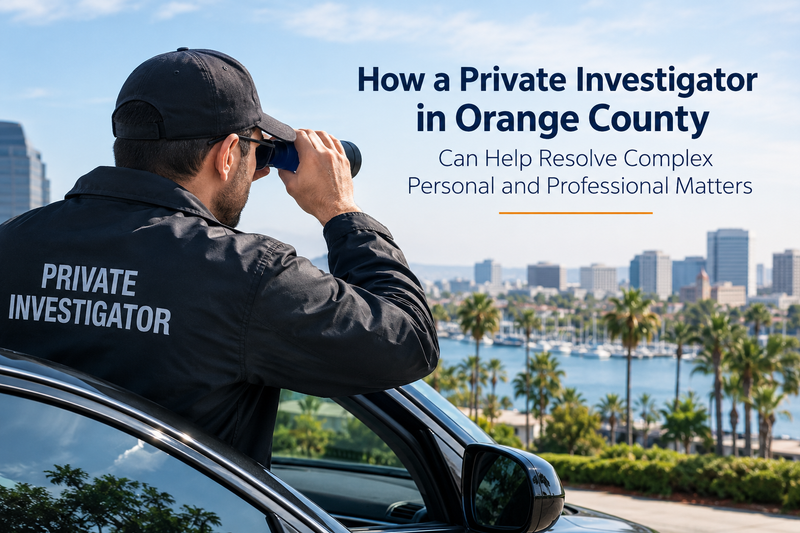
Professional investigations are not simply about finding answers. They involve patience, attention to detail, discretion, and a structured approach to examining information. From verifying identities to documenting activities, experienced investigators can help clarify circumstances that may otherwise remain uncertain.
Understanding the Role of a Private Investigator
A private investigator helps clients obtain and verify information relating to specific concerns. Depending on the case, this may involve reviewing public records, conducting lawful surveillance, interviewing relevant individuals, or examining available documentation.
Unlike assumptions based on rumours or incomplete information, professional investigations focus on verifiable facts. Investigators assess the information available, identify potential gaps, and determine which methods may be appropriate for the situation.
A qualified investigator also understands the importance of confidentiality and legal boundaries. Privacy laws, restrictions on surveillance, and rules governing access to personal information must be considered throughout the investigation.
Common Situations That May Require Investigative Support
1. Locating Missing Individuals
Finding someone who has lost contact with family members, old friends, or business associates can be challenging. People may move to another city, change their contact information, or become difficult to reach through ordinary channels.
A missing person investigator may use lawful public-record research, address history checks, and other permitted investigative techniques to identify potential leads. The approach depends on the circumstances, the available information, and any applicable legal restrictions.
These services may be useful when someone wants to reconnect with a relative, locate an old acquaintance, or establish contact with an individual for a legitimate legal or personal reason. Cases involving immediate danger should be reported to the appropriate emergency services or law enforcement agency.
2. Investigating Suspected Fraud
Fraud can affect individuals, families, and businesses. Misleading statements, questionable transactions, and inconsistent documentation may create concerns that require further examination.
A professional investigator can help organise relevant information, review accessible records, and document findings that may assist a client or their legal representative. In business settings, investigations may also help identify inconsistencies in reported activities or suspected misconduct.
The objective is to establish what the available evidence supports rather than confirm a suspicion without sufficient proof. Any findings should be presented clearly, with a distinction between verified facts and information that remains uncertain.
3. Supporting Family and Relationship Matters
Personal relationships sometimes involve difficult questions about trust, financial honesty, or undisclosed activities. When concerns cannot be resolved through direct communication, some individuals consider seeking independent investigative assistance.
A relationship investigation may involve lawful observation, documentation of relevant activities, or verification of specific information. The appropriate approach depends on the client's concerns and the legal requirements governing the situation.
Investigators should not encourage harassment, unauthorised access to private accounts, or intrusive conduct. Their role is to gather relevant information within lawful boundaries, allowing clients to assess their circumstances with greater clarity.
4. Conducting Background Research
Background investigations can help verify information before entering into a business arrangement, professional relationship, or other significant commitment.
Depending on the purpose and applicable regulations, an investigator may examine public records, business affiliations, professional history, or other legally accessible information. Certain background checks are subject to specific consent, disclosure, and consumer-reporting requirements, so the proposed investigation must be evaluated accordingly.
Careful verification can help identify inconsistencies that deserve further attention. However, a person's history should never be judged solely on an unverified allegation or an incomplete record.
Why Local Knowledge Matters in Orange County
Orange County includes a diverse range of residential communities, commercial districts, and business environments. Understanding local geography and the practical challenges of working across different areas can help investigators plan their activities efficiently.
A local private detective may be familiar with public-record resources, regional travel considerations, and the procedures involved in documenting information across multiple locations. This knowledge can support better planning, particularly when a case involves several people or requires research from different sources.
Local familiarity is valuable, but it should complement professional competence rather than replace it. Investigators still need appropriate training, sound judgement, accurate documentation, and a clear understanding of relevant laws.
How Investigators Gather and Verify Evidence
Reliable investigative work generally follows a structured process rather than relying on a single source of information.
Initial consultation: The investigator discusses the client's concerns, identifies the main questions, and determines whether the requested work is lawful and appropriate.
Information review: Existing documents, timelines, photographs, correspondence, and other supplied materials may be assessed to identify useful leads.
Research and investigation: Depending on the assignment, this may include public-record searches, permitted surveillance, interviews, or verification of relevant details.
Evidence documentation: Observations and findings should be recorded accurately, with dates, relevant context, and supporting materials where appropriate.
Final reporting: The investigator provides a clear summary of the work completed, the information discovered, and any limitations affecting the conclusions.
This process helps clients understand not only what was found but also how confidently the findings can be interpreted.
Choosing the Right Investigative Professional
Selecting an investigator requires more than comparing prices. Clients should look for relevant experience, transparent communication, appropriate licensing where required, and a willingness to explain the proposed investigative methods.
It is also helpful to ask about expected costs, reporting procedures, confidentiality practices, and realistic timeframes. No professional should guarantee a particular outcome before the facts have been established.
Clients considering Kinsey Investigations can use an initial discussion to explain their circumstances and understand whether the available investigative services are suitable for their needs. As with any provider, the scope of work, fees, and applicable legal requirements should be clarified before proceeding.
The Importance of Confidentiality and Ethical Conduct
Investigations often involve sensitive personal or commercial information. Responsible professionals must handle such material carefully, restrict access where appropriate, and communicate findings only through suitable channels.
Ethical conduct also means respecting legal limits. Investigators cannot lawfully access every record, enter every property, or obtain private communications simply because a client requests it. Certain information may require consent, a court order, or involvement from law enforcement.
Clients should therefore choose professionals who explain these limitations clearly. An investigation is most useful when its methods are lawful and its results can be assessed objectively.
Related Reading: Investigative Support in Brentwood
Readers interested in how investigative services can help locate individuals may also find this related article useful: How a Private Investigator in Brentwood Can Help You Find.
The article provides an additional perspective on locating people and understanding the role professional investigators can play when ordinary searches do not produce clear results. Although local circumstances differ, the same general principles apply: establish the available facts, follow appropriate investigative procedures, and respect privacy and legal requirements.
Conclusion
Professional investigative services can provide valuable assistance when personal concerns, suspected fraud, background questions, or missing-person enquiries require reliable information. By using structured research, lawful investigative techniques, and careful documentation, an investigator can help clients better understand complicated situations.
Choosing the right professional means prioritising experience, discretion, transparent communication, and ethical conduct. With a clearly defined objective and realistic expectations, investigative support can help individuals and organisations make more informed decisions based on evidence rather than speculation.
Frequently Asked Questions
1. What does a private investigator in Orange County do?
A private investigator may conduct lawful surveillance, locate individuals, research public records, verify information, investigate suspected fraud, and document findings for personal or professional matters.
2. When should someone hire a private investigator?
Hiring an investigator may be appropriate when important information cannot be verified through ordinary means, a person needs help locating someone, or a concern requires independent fact-finding.
3. Are private investigators allowed to conduct surveillance?
Surveillance may be permitted in certain circumstances, but investigators must follow applicable privacy, trespassing, recording, and surveillance laws. The legality depends on the methods used and the specific situation.
4. How much does a private investigator cost in Orange County?
Costs vary according to the investigation's complexity, required hours, travel, specialist resources, and reporting needs. Requesting a written estimate and clarification of additional expenses can help avoid misunderstandings.
5. How can I choose a reliable investigator?
Review relevant experience, verify licensing requirements, ask about investigative methods and confidentiality, and request a clear explanation of fees and deliverables. Avoid providers who promise guaranteed results or propose unlawful methods.







Top comments (0)