
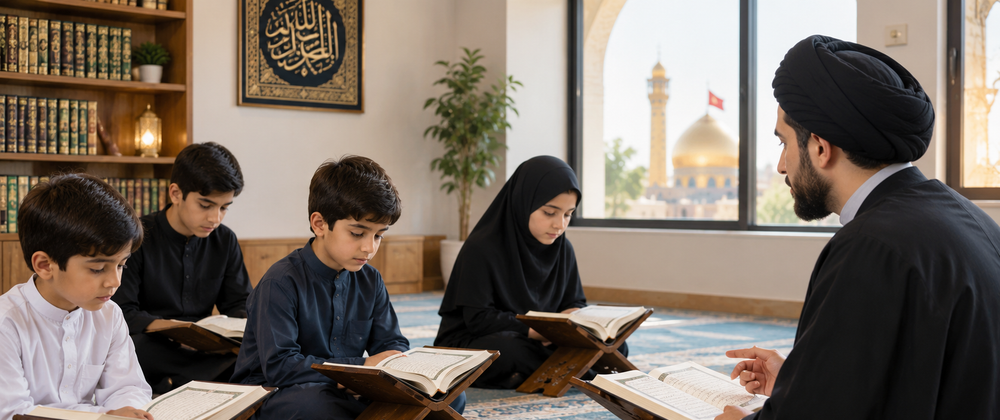

Learning to recite the Quran correctly requires more than simply recognizing Arabic letters. Students need to develop accurate pronunciation, understand basic Tajweed rules, practice proper articulation, and build fluency through regular reading.
Shia Quran classes can provide structured guidance for students who want to improve their Quran recitation. Depending on the learner's level, lessons may begin with Arabic letters and basic reading before progressing to Makharij, Tajweed, fluency, and more advanced recitation skills. Online Shia Quran programs commonly use individual lessons and teacher feedback to support this process.
Starting With Correct Arabic Pronunciation
Correct pronunciation is one of the foundations of Quran recitation. Students who are still developing their reading skills may have difficulty distinguishing between Arabic letters that have similar sounds.
Shia Quran classes can help students practice:
Arabic letter recognition
Letter sounds
Short and long vowels
Joining letters
Word pronunciation
Common pronunciation mistakes
Teachers can listen to students recite and provide immediate corrections. This type of direct feedback allows learners to identify mistakes and practice the correct pronunciation repeatedly.
Learning Makharij Step by Step
Makharij refers to the articulation points from which Arabic letters are pronounced. Understanding these points can help students produce letters more accurately.
During Quran recitation lessons, teachers may demonstrate how particular letters are formed and then ask students to repeat them. Students can gradually develop better control over difficult sounds through repeated practice.
This is especially useful for beginners because pronunciation habits developed early can influence their reading as they progress to longer passages.
Understanding Tajweed Rules
Tajweed provides rules and principles for accurate Quran recitation. Students can learn these rules progressively rather than attempting to memorize everything at once.
Depending on the curriculum and level, lessons may cover areas such as:
Noon Sakinah and Tanween
Meem Sakinah
Qalqalah
Madd
Ghunnah
Idgham
Ikhfaa
Iqlab
Izhar
Waqf and stopping rules
Online Shia Quran courses commonly include Tajweed as part of recitation training, with students applying the rules during actual Quran reading.
Practicing Through Regular Recitation
Knowing a Tajweed rule is different from applying it while reading. Students need regular practice to turn theoretical knowledge into a natural part of their recitation.
A teacher may ask the learner to read selected verses aloud and then correct specific mistakes. Repeated practice can help students become more comfortable with pronunciation, rhythm, and fluency.
Consistent practice is particularly important for students who have difficulty maintaining accuracy when reading longer passages.
Receiving Individual Teacher Feedback
One-to-one classes can give students more opportunities to recite during each lesson. Instead of waiting for a turn in a large group, the learner can read directly to the teacher and receive immediate feedback.
A teacher may correct:
Letter pronunciation
Tajweed application
Unnecessary pauses
Incorrect stopping points
Reading speed
Fluency problems
Personalized feedback can also help the teacher adjust the difficulty of lessons according to the student's current ability. Several Shia Quran learning programs describe one-to-one instruction as part of their approach to recitation and Tajweed education.
Building Fluency and Confidence
Some students know the basic pronunciation rules but read slowly because they are unsure about unfamiliar words or longer verses. Regular guided reading can help them become more comfortable.
Teachers can gradually increase the amount of Quran students read during lessons. The focus can move from individual words to complete verses and eventually longer passages.
As students become more familiar with the text and receive consistent corrections, they may develop greater confidence in reading aloud.
Helping Children Develop Good Reading Habits
Children often benefit from structured lessons that introduce Quran reading gradually. Beginners may start with foundational material before moving into complete Quran recitation.
Lessons can include:
Learning Arabic letters
Practicing letter combinations
Reading simple words
Learning basic Tajweed
Reading short Surahs
Practicing longer passages
Child-focused Shia Quran programs may combine foundational reading, Tajweed, and guided recitation according to the student's age and ability.
Supporting Adults Who Want to Improve
Adults who learned Quran reading earlier in life may still want to correct pronunciation or improve Tajweed. Structured classes can provide an opportunity to review the fundamentals without assuming that every learner has the same level of knowledge.
An adult student may begin with an assessment of current reading skills. The teacher can then focus lessons on specific weaknesses instead of repeating material the student already understands.
This makes the learning process more focused and allows students to work toward practical recitation goals.
Developing Consistent Practice Outside Class
Progress in Quran recitation does not depend only on class time. Students can benefit from practicing between lessons.
A simple routine might include:
Reviewing the previous lesson
Practicing difficult letters
Reading a small section daily
Revising recently learned Tajweed rules
Recording recitation for self-review
Marking areas that require teacher feedback
Regular practice helps reinforce what students learn during their classes.
How Progress Can Be Monitored
Improvement in Quran recitation can be monitored through regular teacher assessments. Instead of focusing only on how much Quran has been completed, teachers can evaluate specific skills.
Skill
What Can Be Observed
Pronunciation
Accuracy of Arabic letters
Makharij
Correct articulation points
Tajweed
Application of relevant rules
Fluency
Smooth and consistent reading
Waqf
Appropriate stopping and continuation
Confidence
Ability to recite independently
This approach gives students a clearer understanding of their progress and shows which areas still need practice.
Conclusion
Shia Quran classes can help students improve Quran recitation by providing structured lessons, pronunciation practice, Tajweed instruction, regular reading, and direct teacher feedback. The learning process can begin with basic Arabic reading and gradually progress toward fluent and accurate Quran recitation.
Whether the learner is a child, beginner, or adult seeking to improve existing skills, consistent practice and appropriate guidance are important. A structured learning plan allows students to work on their specific weaknesses while gradually developing greater accuracy, fluency, and confidence in Quran recitation.






Top comments (0)