
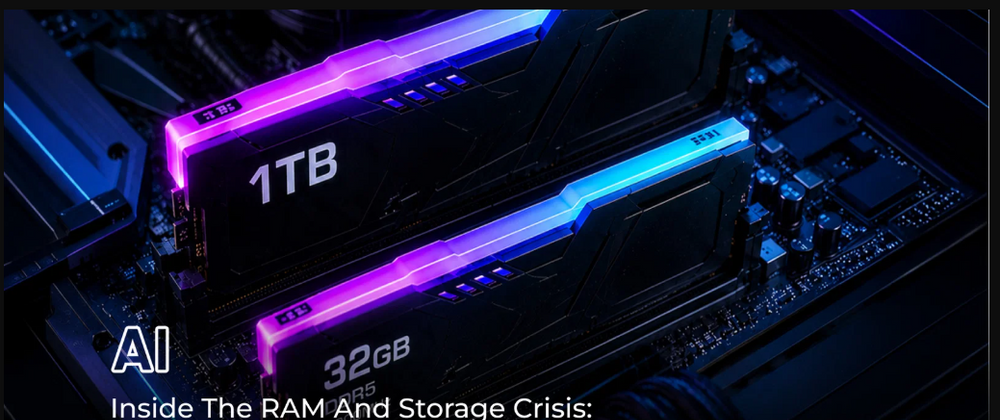

The AI Boom Is Creating a Global RAM and Storage Crisis
Artificial intelligence is transforming industries at an extraordinary pace. From chatbots and autonomous systems to advanced data analytics and generative AI, businesses are investing heavily in computing infrastructure to keep up with demand. But behind this technological revolution is another story that is receiving less attention: the growing pressure on the global supply of RAM and storage.
The rapid expansion of AI infrastructure requires enormous amounts of memory and storage. Data centers supporting AI workloads depend on advanced memory technologies, including high-bandwidth memory (HBM), alongside conventional DRAM and NAND-based storage. As chip manufacturers focus more resources on these high-demand products, the supply available for consumer electronics can become increasingly constrained.
Why AI Needs So Much Memory
AI systems process massive datasets and perform billions of calculations. Unlike traditional computing workloads, many AI applications require large amounts of high-speed memory to move data quickly between processors and storage.
Modern AI accelerators rely heavily on HBM because it can deliver extremely high bandwidth. At the same time, data centers require substantial quantities of conventional DRAM and enterprise storage to handle models, databases, applications, and constantly growing datasets.
This combination is creating a new challenge for the semiconductor industry. Manufacturers must balance the increasing requirements of AI companies with demand from traditional markets such as laptops, smartphones, servers, gaming systems, and personal computers.
Consumer Technology Could Feel the Impact
The effects of the memory crunch may eventually reach ordinary consumers. When semiconductor manufacturers prioritize products with strong demand and higher margins, the supply of conventional memory and storage components can become tighter.
That can contribute to higher prices for RAM modules, SSDs and other storage products. Manufacturers of laptops, smartphones and other electronic devices may also face higher component costs, potentially influencing retail prices.
For consumers planning a PC upgrade, building a new computer, or purchasing additional storage, changing memory prices could therefore become an important consideration. Even products that have traditionally become cheaper as technology advances may experience periods of price pressure.
The Semiconductor Industry Faces a Balancing Act
Expanding semiconductor production is not an overnight solution. Building and equipping advanced fabrication facilities requires enormous investment, specialized technology, skilled workers, and significant time.
Memory manufacturers also need to decide where production capacity will generate the greatest returns. The rapid growth of AI infrastructure makes advanced memory particularly attractive, encouraging companies to invest in technologies designed for data centers and AI accelerators.
However, the industry still needs to serve traditional customers. PCs, smartphones, automotive systems, networking equipment, and countless other products depend on memory chips. A prolonged imbalance between supply and demand could therefore affect multiple technology markets simultaneously.
Will the Memory Shortage Continue?
The duration of the current pressure depends on several factors, including AI investment, semiconductor production capacity, consumer demand, and manufacturers' ability to expand output.
If AI infrastructure spending continues at a rapid pace, demand for advanced memory could remain strong. New manufacturing capacity may eventually help ease supply constraints, but bringing additional production online takes time.
There is also the possibility that demand patterns will change. Improvements in AI hardware efficiency, changes in data-center investment, or a slowdown in technology spending could reduce pressure on memory supply.
What This Means for the Future
The RAM and storage market highlights an important reality about the AI revolution: the impact of artificial intelligence extends far beyond software and algorithms.
Every AI model requires physical infrastructure, and that infrastructure depends on semiconductors, memory, storage, processors, networking equipment, and enormous amounts of electricity. As AI adoption accelerates, competition for these resources is likely to influence the broader technology supply chain.
For consumers and businesses alike, memory prices and availability may become increasingly important factors when planning technology purchases. For semiconductor manufacturers, meanwhile, the challenge will be finding the right balance between meeting the extraordinary requirements of AI and maintaining reliable supply for the rest of the technology ecosystem.
The AI boom may be driving the next generation of computing, but it is also exposing just how dependent that future is on the availability of something as fundamental as memory and storage.
For more information, please visit www.techdogs.com
For Media Inquiries, Please Contact:
LinkedIn | Facebook | X | Instagram | Threads | YouTube | Pinterest







Top comments (0)