
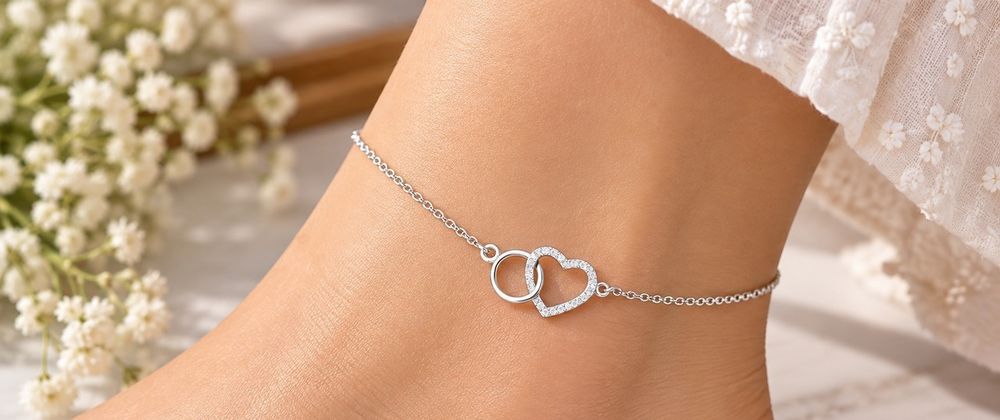

Silver Payal: Understanding Chain Structures, Decorative Elements and Modern Design
Introduction
Silver payal is a distinctive form of jewellery in which the smallest design details can make a noticeable difference. From delicate linked chains to elaborate ornamental patterns, payal designs vary in their structure, visual weight and decorative character. Understanding these differences helps buyers look beyond appearance and appreciate how each design is put together.
Modern jewellery collections offer a wide variety of silver payal designs. Some feature simple chains with minimal decoration, while others incorporate small charms, textured links, ornamental drops or traditional-inspired details. Although these designs may serve a similar purpose, their construction can create very different visual effects.
For anyone exploring silver payal, learning about chain structures, decorative components and finishing techniques can make product comparisons more useful. Instead of choosing a design solely because it looks attractive in a photograph, buyers can understand what gives each piece its individual character.
1. Understanding the Basic Structure of Silver Payal
Before comparing decorative styles, it helps to understand the basic components of a payal.
A typical chain-style payal consists of connected links that form a flexible structure. Depending on the design, it may also include a clasp, connecting rings, decorative elements or additional chains.
Each component contributes to the appearance and function of the finished piece.
The links determine the overall pattern and influence how the payal moves. The fastening mechanism helps secure it, while decorative elements introduce visual interest. The finishing process affects the surface appearance and the way light reflects from the metal.
Some designs keep these elements simple and understated. Others use several components to create a more ornamental look.
When browsing silver jewellery, understanding this structure provides a useful starting point for evaluating not only payal but also other chain-based jewellery.
2. Fine-Link Payal Designs
Fine-link payals are characterised by relatively small, delicate-looking links. Their appearance depends on the shape of the individual links, the spacing between them and the consistency of the chain.
A closely connected chain may create a smooth, continuous line, whereas a more open structure can make the individual links easier to distinguish.
Fine-link designs often rely on proportion rather than elaborate decoration. Since the chain itself is the main feature, the quality of its formation becomes particularly important.
Look for links that appear evenly shaped and consistently connected. Product photographs may help reveal whether the chain has a uniform pattern, although close-up views are more useful than distant images.
It is also worth checking the listed dimensions and material information. A delicate appearance does not automatically indicate a particular level of strength, and chain thickness alone cannot establish durability.
The overall design should be evaluated alongside its construction details and the manufacturer's product information.
3. Geometric and Patterned Chain Structures
Some payal designs use repeating shapes to create a distinctive chain pattern. These may include rounded links, elongated forms, flattened sections or combinations of different shapes.
The arrangement of these elements determines the visual rhythm of the chain.
A repeating pattern of similar links can produce a consistent, organised appearance. Alternating shapes introduce contrast, while changes in link orientation can make a chain appear more intricate.
Geometric structures are interesting because the pattern can become the main decorative feature without requiring additional charms or pendants.
When examining a patterned payal, consider whether the shapes are evenly arranged and whether the connections appear integrated into the overall design. Inconsistent spacing may interrupt the pattern, while a well-proportioned structure creates a more cohesive appearance.
These principles also apply to other chain-based jewellery. For instance, silver chains for women can feature different link structures that influence their visual character in similar ways.
4. Charm Payals and Decorative Attachments
Charm-style payals incorporate additional elements attached to the main chain. These may take the form of small geometric pieces, floral shapes, abstract ornaments or other decorative details.
The main chain provides the structure, while the charms create points of visual interest.
The arrangement of these attachments can significantly change the appearance of the jewellery. Evenly spaced charms create a regular pattern, while a concentrated group of decorative elements produces a focal point.
The size and shape of the attachments also matter. Small details may create a subtle effect, whereas larger components can become the defining feature of the design.
From a construction perspective, the connection between each charm and the chain deserves attention. Buyers should examine available photographs to understand how the elements are attached and whether the design includes multiple connecting rings.
The decorative components should appear proportionate to the chain rather than overwhelming its basic structure.
5. Bell-Inspired Details and Sound-Producing Elements
Some traditional-inspired payal designs incorporate small bell-like ornaments or other components intended to produce sound during movement. Other designs use similar shapes purely as decorative elements.
These two approaches may look similar in photographs, so it is important not to assume that every bell-shaped detail produces an audible sound.
The size, shape, material and construction of an ornament can affect its appearance and function. The arrangement of several small elements may create a fuller decorative pattern, while a single accent can produce a more restrained look.
Sound-producing components also introduce additional considerations when evaluating a product. Buyers who specifically want this feature should check the product description rather than relying only on the photograph.
For those who prefer a quieter, more understated design, a chain without moving ornaments may be more suitable.
Understanding the distinction between decorative shapes and functional components helps buyers identify what a particular design actually offers.
6. Surface Finish: Polished, Textured and Contrasting Details
Surface finishing can influence the entire character of a silver payal, even when its basic chain structure remains unchanged.
A polished finish creates a smooth, reflective appearance. Textured surfaces introduce variation, while engraved details can make patterns more visible.
Some designs combine different finishes to create contrast. For example, a textured decorative element may stand out against a smoother chain.
The effect depends on how the finishes are distributed. If the contrast is subtle, the design may appear understated. Stronger differences in texture can make individual components more prominent.
Surface finish also affects how jewellery appears in photographs. Reflective metal may produce bright highlights, while a matte surface can reveal the shape of a component more clearly.
When comparing products online, look for close-up photographs and read the description carefully. A silver-coloured appearance alone does not establish whether a piece is made from solid silver, sterling silver or a plated material.
Clear material information is an important part of making an informed purchase.
7. Symmetry and Asymmetry in Payal Design
Symmetry is frequently used in jewellery design because it creates a sense of order. A payal with evenly spaced links or regularly repeated ornaments may appear balanced and consistent.
Asymmetrical designs take a different approach. They may feature a single decorative section, irregularly spaced charms or a combination of elements that do not repeat uniformly.
Neither approach is inherently superior. The choice depends on the intended design and the visual effect it creates.
Symmetry can make a pattern feel structured, while asymmetry can introduce contrast and draw attention to a particular detail.
When examining a payal, consider whether the arrangement feels intentional. A deliberately asymmetrical design can look distinctive, but accidental inconsistencies in link spacing or finishing may detract from the overall appearance.
This distinction is especially useful when comparing highly decorative designs, where several components must work together to create a coherent result.
8. Clasps and Connecting Components
A payal's clasp is a small component, but it plays an important role in the overall construction.
Different designs may use spring-ring clasps, lobster clasps or other fastening mechanisms. The appropriate choice depends on the product's design and construction.
Connecting rings also deserve attention because they join the clasp to the chain. In a design with several decorative attachments, additional connection points may be present.
When product information is available, examine the fastening mechanism and look for clear photographs of the relevant components. The description may also explain whether the payal includes an extension chain or another adjustment feature.
Do not assume that every payal is adjustable or that every clasp works in the same way.
The quality of a fastening component cannot always be determined from photographs alone, but checking the available details can help buyers understand the product before ordering.
A well-considered design integrates these functional components into the overall appearance rather than treating them as unrelated additions.
9. How Decorative Density Changes a Design
Decorative density refers to how many ornamental elements appear within a particular section of jewellery.
A payal with a low decorative density may feature a simple chain with occasional accents. A more elaborate design may include closely spaced charms, patterned links or multiple layers of detail.
This difference affects the way the eye moves across the piece.
A relatively simple design allows the chain structure to remain the main focus. A densely decorated design creates more visual activity and may draw attention to individual motifs.
Neither approach requires a particular level of craftsmanship by default. A simple chain can demand careful construction, while an elaborate design requires decorative elements to be arranged and connected consistently.
When choosing between different designs, consider the relationship between the main chain and the ornamental details. The strongest designs usually maintain a clear visual structure, even when they include many decorative components.
10. Single-Strand and Multi-Strand Payal Designs
Single-strand payals use one main chain structure, while multi-strand designs incorporate two or more connected or layered chains.
A single strand can emphasise the shape of the links and the simplicity of the overall design. Multi-strand constructions introduce additional lines, creating greater visual complexity.
The relationship between the strands matters. Closely aligned chains may create a layered appearance, whereas strands with different patterns can introduce contrast.
Multi-strand designs also contain more connection points, which makes it useful to examine how the chains are joined and how the clasp is constructed.
Photographs taken from different angles may help reveal whether the strands remain separate or are connected at multiple points.
Buyers should also review the product's measurements and description to understand its actual structure. A photograph may make several strands appear like one broad chain, or make a layered design look more substantial than it is.
Understanding these construction differences makes product comparisons more accurate.
11. Evaluating Payal Through Online Product Images
Product photography is an important part of online jewellery shopping, particularly when small structural details define the design.
A single image may show the overall appearance of a payal without revealing the clasp, link connections or surface finish.
To gain a clearer understanding, examine all available photographs and look for the following details:
- Chain pattern: Check whether the links are uniform or arranged in a repeating design.
- Decorative attachments: Observe how charms or ornamental components connect to the chain.
- Surface finish: Look for close-up images that reveal texture and polishing.
- Fastening mechanism: Check whether the clasp is visible and whether an extension chain is included.
- Measurements: Use the stated dimensions to understand the scale of the jewellery.
Product descriptions are equally important. They may provide information about material composition, dimensions, fastening details and care instructions that cannot be confirmed visually.
If an important specification is missing, asking the seller for clarification can be more reliable than making assumptions based on appearance.
These habits are useful when comparing several designs within the silver payal collection.
12. Coordinating Payal with Other Jewellery Designs
A jewellery collection can feel cohesive when different pieces share a few design characteristics. These may include similar link patterns, polished surfaces, geometric details or a common ornamental motif.
Coordination does not require every item to match exactly. In fact, combining different forms can create a more individual collection.
For example, a payal with simple geometric links may share a design language with a bracelet featuring clean lines. A more ornamental payal might complement earrings that use similar curves or surface textures.
Shoppers can explore silver bracelets and silver earrings to compare how patterns and finishes appear across different jewellery categories.
For a collection built around related shapes, silver rings for women can offer further design inspiration.
The aim is to identify shared visual elements while allowing each piece to retain its own character.
13. Caring for Different Payal Structures
The structure of a payal can influence how it should be handled and stored.
Fine chains may tangle more easily than larger-link designs. Multi-strand constructions can require additional care to prevent the strands from becoming intertwined, while decorative attachments may need gentle cleaning around their connecting points.
Store silver jewellery in a dry place and keep separate pieces apart where possible. A soft jewellery pouch or compartment can help reduce contact with other items.
For routine cleaning, use a soft cloth suitable for the material and follow the product's care instructions. Avoid using strong chemicals without checking whether they are appropriate for the metal and any specialised surface finish.
Pay particular attention to clasps and connecting rings during routine inspection. If a component appears loose or damaged, avoid pulling on the chain or attempting to force it back into place.
Appropriate care helps preserve a payal's appearance and reduces unnecessary strain on its construction.
Conclusion
Silver payal designs vary in more ways than their overall appearance might initially suggest. Chain structures, decorative attachments, bell-inspired details, surface finishes, clasps and strand arrangements all contribute to the character of a finished piece.
Understanding these features helps buyers compare products with greater confidence. Instead of focusing exclusively on decorative appeal, shoppers can examine how the design is constructed, how its components work together and what material information is available.
For anyone exploring silver payal, paying attention to these details can make the shopping process more informed and rewarding. Whether the preference is a simple chain, a patterned structure or an ornamented design, a closer look at construction and finishing reveals what makes each piece distinctive.
Exploring the wider Mashha jewellery collection can also help shoppers discover different design approaches across silver jewellery, from understated forms to pieces featuring more elaborate decorative details.







Top comments (0)