
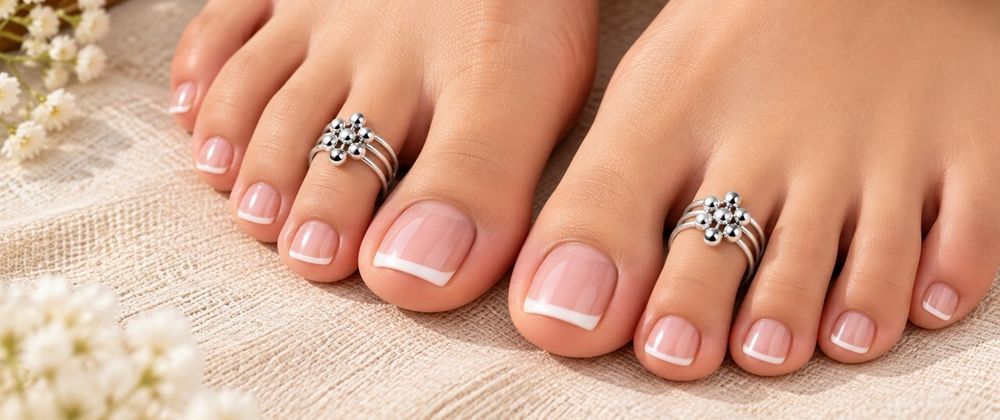

Silver Toe Rings: How Design Evolution Is Shaping Modern Foot Jewellery
Introduction
Jewellery design is not limited to necklaces, earrings or rings worn on the fingers. Foot jewellery has its own design language, shaped by proportions, ornamental patterns, materials and changing preferences. Silver toe rings are an interesting example of how a small piece of jewellery can express a wide range of design ideas, from understated minimalism to intricate decoration.
Traditionally inspired forms continue to influence modern toe ring designs, but contemporary collections often reinterpret these ideas through cleaner lines, open shapes and carefully arranged details. The result is a category of jewellery that offers variety without relying on a single visual style.
For anyone exploring silver toe rings, understanding how designs differ can make product comparisons more meaningful. Rather than judging a piece only by its overall appearance, it helps to examine its shape, ornamentation, surface finish and construction.
1. The Evolution of Toe Ring Design
Jewellery design changes as materials, manufacturing methods and personal preferences evolve. Toe rings have moved through a wide range of decorative approaches, including simple bands, engraved surfaces, open-ended shapes and designs featuring ornamental details.
Earlier design traditions often placed emphasis on visible decoration. Contemporary jewellery may retain those influences while simplifying the overall form. A detailed pattern, for instance, can be reduced to a few engraved lines, while an elaborate ornamental shape may be translated into a clean geometric outline.
This does not mean that modern designs are always simpler or traditional designs are always elaborate. Both approaches can coexist in contemporary collections.
The important difference is often the way individual elements are arranged. Some designs draw attention through their surface details, while others rely on the shape of the band itself.
When browsing silver jewellery, comparing different categories can help reveal how the same design principles are adapted for different parts of the body.
2. Minimalist Toe Rings: The Importance of Simple Forms
Minimalist jewellery demonstrates how a small number of design elements can create a distinctive appearance. In toe rings, this approach may involve a smooth band, a subtle curve or a simple open-ended structure.
Because these designs contain relatively little ornamentation, their proportions become particularly important. The width of the band, the smoothness of the edges and the shape of the opening all contribute to the finished appearance.
A narrow band may look delicate, while a broader band can create a stronger visual presence. A gently curved profile can produce a softer appearance than a sharply defined geometric form.
Minimalism also makes surface quality easier to notice. Uneven edges, inconsistent polishing or poorly finished connections may be more visible when a design has few decorative elements.
For shoppers, the lesson is simple: an understated design still requires careful execution. Its appeal depends on the quality of its proportions and finishing rather than the number of decorative features it contains.
3. Intricate Patterns and Ornamental Details
At the opposite end of the design spectrum are toe rings with decorative surfaces, repeated motifs or raised ornamental elements.
These designs use detail to create visual interest. Engraved lines may form symmetrical patterns, while small shapes can be arranged into floral, geometric or abstract compositions.
Intricate designs can also create contrast between polished and textured areas. This contrast helps individual elements stand out without requiring different materials or colours.
However, decorative complexity should be balanced with the size of the jewellery. When too many details are crowded into a small area, the individual shapes may become difficult to distinguish.
A well-designed ornamental toe ring gives each element enough space to remain visually clear. The pattern should appear intentional rather than excessively busy.
Shoppers who appreciate decorative jewellery may also enjoy exploring silver earrings, where similar ideas involving engraving, symmetry and surface texture can be used on a larger design scale.
4. Geometric Shapes and Contemporary Design
Geometric design provides another way to create distinctive toe rings without relying on elaborate ornamentation.
Circles, parallel lines, angular edges and repeated shapes can form the basis of a modern design. Some pieces use a single geometric element, while others combine several shapes to create a more complex pattern.
Open-ended bands are particularly interesting from a design perspective because the gap becomes part of the overall form. Depending on its shape and proportions, the opening can create a subtle detail or become the main visual feature.
Geometric toe rings can also use asymmetry. A design might place a decorative element slightly off-centre or combine a curved band with an angular accent.
These choices influence how the jewellery is perceived. Symmetry often creates a structured appearance, while asymmetry can make a design feel more experimental.
When comparing geometric toe rings, examine how the shapes connect and whether the overall composition feels balanced.
5. Open-Ended Designs and Adjustable Structures
Open-ended toe rings have a distinct design characteristic: the band does not form a completely closed circle. Depending on the construction, some open designs may allow limited adjustment.
However, an open-ended shape should not automatically be considered adjustable or suitable for every size. The amount of flexibility depends on the product's construction and material.
Repeatedly bending a metal band can weaken it, particularly when the design is not intended for frequent adjustment. Excessive pressure may also distort decorative details or affect the finish.
Before purchasing, check whether the product description specifies an adjustable design or provides sizing guidance. If the ring is not described as adjustable, avoid assuming that it can be reshaped safely.
From a design perspective, the opening also influences the visual character of the piece. A narrow gap creates a more continuous appearance, while a wider opening can become a prominent design feature.
This demonstrates how a functional structural decision can also contribute to the aesthetics of jewellery.
6. Surface Finishes and the Character of Silver
Surface finish can significantly influence the appearance of a toe ring.
A polished finish creates a smooth, reflective surface. Matte finishes produce a softer visual effect, while engraved or textured surfaces introduce additional detail.
Some designs combine more than one finish. A polished outline around a textured centre, for example, can make the decorative pattern easier to distinguish.
The effect of a finish also depends on the shape of the jewellery. Curved surfaces reflect light differently from flat surfaces, while recessed patterns may create shadows that make a design appear more detailed.
When examining product photographs, look for close-up views that show the surface clearly. A single distant photograph may not reveal whether a pattern is engraved, raised or simply part of the lighting effect.
It is also important to check material information. A silver-coloured appearance alone does not confirm that a piece is made from solid silver or sterling silver.
A careful review of product details can help buyers distinguish between visual appearance and verified material information.
7. How Motifs Create a Visual Identity
A motif is a recognisable design element that can be repeated or adapted across different jewellery pieces. Common design inspirations include flowers, leaves, circles, abstract curves and geometric patterns.
In toe rings, motifs must be adapted to a relatively small surface. This requires careful decisions about scale and detail.
A large, complex motif may need to be simplified to remain clear. A smaller repeating pattern may work better when each element is separated by enough space.
Motifs can also establish a connection between different jewellery categories. A curved floral element in a toe ring might be echoed by a similar shape in a pair of earrings or a ring.
This does not require identical designs. Shared shapes, textures or proportions can create a visual relationship between pieces while allowing each item to maintain its own identity.
For example, silver rings for women may feature ornamental or geometric details that complement the design language of a toe ring.
The aim is to recognise a common visual theme rather than make every piece look exactly alike.
8. Material and Construction: Looking Beyond Appearance
Design and construction are closely connected. Even an attractive toe ring needs appropriate finishing and a structure suited to its intended use.
When evaluating a product, consider the following details:
- Material description: Check whether the listing identifies sterling silver, another silver alloy or a plated material.
- Edge finishing: Smoothly finished edges can reduce the likelihood of uncomfortable contact.
- Structural consistency: Look for evenly formed bands and clearly finished decorative elements.
- Adjustment information: Confirm whether the ring is fixed-size or designed to allow limited adjustment.
- Care guidance: Check whether the seller provides instructions for cleaning and storage.
Product photographs can help, but they cannot always establish the exact metal composition or strength of a piece. Written product specifications are therefore important.
A decorative design should not be judged solely by its complexity. A simple toe ring with consistent construction may be a better choice than a highly detailed piece with unclear material information.
9. Choosing Between Delicate and Statement Designs
Delicate and statement toe rings represent two different approaches to visual expression.
Delicate designs usually rely on narrow profiles, subtle patterns or small decorative elements. Statement designs may use broader bands, larger motifs or more prominent surface textures.
Neither category is inherently more fashionable. The choice depends on personal preference and the design features a buyer finds appealing.
It can be helpful to compare pieces according to their visual proportions rather than relying only on labels such as minimalist, traditional or contemporary.
For instance, a band with a simple outline may still have a strong visual presence if it is relatively broad. Conversely, a detailed design may look understated when the motifs are small and evenly spaced.
The most useful approach is to examine the actual dimensions, shape and finish of the product.
This also makes online shopping more reliable because descriptive terms can vary between sellers.
10. Understanding Product Photography Before Buying
Online product photography can make it easier to compare toe ring designs, but it should be examined carefully.
An enlarged image may make a tiny decorative detail appear much larger than it would in real life. Lighting can also make polished surfaces look brighter or change how texture appears.
To develop a clearer understanding of a product, review multiple photographs whenever available. Look for different angles, close-up images and any photographs that show the jewellery's scale.
Product measurements are especially useful when comparing narrow bands with broader designs. If the listing provides dimensions, use those measurements rather than relying exclusively on visual impressions.
Read the material description and sizing information alongside the images. If an important detail is missing, consider checking with the seller before ordering.
These steps help buyers make decisions based on the complete product description rather than an attractive photograph alone.
11. Caring for Different Toe Ring Designs
Toe rings can feature polished surfaces, decorative grooves, textured areas and open-ended structures. Their care requirements may therefore vary.
For routine maintenance, use a soft cloth suitable for the material. Store jewellery in a clean, dry place and keep separate pieces from rubbing against each other.
Decorative grooves can collect residue more easily than smooth surfaces, so cleaning should be gentle and appropriate for the product's finish.
Avoid applying strong cleaning chemicals without checking whether they are suitable for the metal and any additional decorative components. If the piece is plated or has a specialised surface treatment, follow the seller's care instructions.
Open-ended designs should also be handled carefully. Repeatedly forcing the band wider or narrower may weaken the structure or alter its original shape.
Good maintenance helps preserve the appearance of jewellery, while careful handling reduces unnecessary stress on its construction.
12. Building a Jewellery Collection Around Design Preferences
A jewellery collection can be developed around a particular design preference rather than a single occasion or trend.
Someone who enjoys clean lines may prefer simple bands, geometric shapes and smooth finishes. A person drawn to decorative jewellery may prefer engraved surfaces, floral motifs and more elaborate patterns.
There is no need to follow one design category exclusively. Combining different levels of detail can create a collection that feels more individual.
For example, a simple toe ring can be paired conceptually with a more decorative piece of jewellery elsewhere, while a textured toe ring may share a surface finish with a bracelet or ring.
Exploring Mashha can help shoppers compare jewellery categories and identify the shapes, finishes and design details they prefer. The wider silver jewellery collection also offers a useful starting point for understanding how different designs express a common material in different ways.
The goal is not to collect every available style. It is to recognise which design elements consistently appeal to you and make informed choices accordingly.
Conclusion
Silver toe rings demonstrate how a small piece of jewellery can contain a surprising amount of design thought. Minimalist bands, geometric shapes, decorative motifs, textured finishes and open-ended structures all create different visual experiences.
Understanding these differences makes it easier to compare products and identify the details that matter most. Material descriptions, proportions, surface finishing and construction deserve as much attention as the overall appearance.
For anyone exploring silver toe rings, looking closely at design can turn a simple purchase into a more informed decision. Whether the preference is for understated forms or intricate ornamentation, the most satisfying choice is one whose design, construction and product information align with the buyer's expectations.






Top comments (0)