
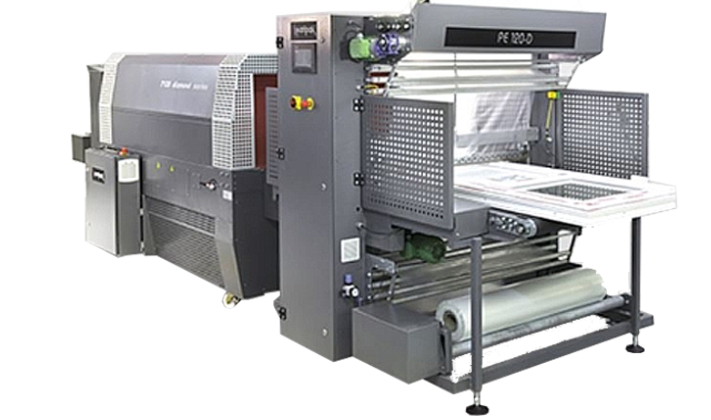

Modern manufacturing and distribution facilities need packaging processes that can keep up with production demands while maintaining consistent quality. Whether a business packages beverages, household goods, printed materials, or consumer products, the right equipment can help streamline operations, improve pack presentation, and prepare products for storage and transportation. Selecting suitable machinery requires understanding the product dimensions, packaging materials, production volume, and level of automation required.
An industrial shrink wrapper helps businesses enclose individual products or groups of items in heat-shrinkable film. When controlled heat is applied, the film contracts around the package, creating a neat outer covering that can support bundling, handling, and product presentation. Choosing the appropriate system can make a meaningful difference in packaging consistency and overall workflow.
What Is an Industrial Shrink Wrapper?
An industrial shrink wrapping system uses film, sealing mechanisms, and controlled heat to create a finished package. Depending on its design, the equipment may wrap individual items, group several products together, or secure larger bundles for distribution.
The process typically involves feeding products into the machine, positioning the film around them, sealing the film, and applying heat through a shrink tunnel or another suitable heating system. Once the package cools, the film retains its tightened shape.
Different machine configurations suit different production environments. Semi-automatic systems may require an operator to position products or initiate packaging cycles, while fully automatic equipment can coordinate product feeding, wrapping, sealing, and discharge with less manual intervention.
Key Benefits of Industrial Shrink Wrapping
Shrink wrapping offers several advantages for businesses managing regular packaging operations.
Consistent package presentation: Controlled film application can create a uniform appearance across products. This is useful for retail multipacks, cartons, and grouped consumer goods that need a clean, organized finish.
Improved product grouping: Shrink film can hold multiple items together as a single bundle, making them easier to count, handle, store, and move through distribution channels.
Support for handling and transportation: A properly designed shrink package can help keep grouped products together and reduce exposure to dust and surface contact. However, shrink film does not replace cushioning or specialized protective packaging when products are vulnerable to impact.
Greater process efficiency: Automated packaging systems can reduce repetitive manual work and help maintain a steady flow between production and shipping operations.
Adaptability across applications: Depending on the machine and film selected, shrink wrapping can accommodate different package sizes, shapes, and production requirements.
Choosing the Right Machine Configuration
Selecting equipment begins with identifying the actual packaging task. A business wrapping small retail products may need different capabilities from a manufacturer bundling beverage containers or preparing larger industrial loads.
An industrial shrink wrapper should be evaluated according to package dimensions, expected production rate, product weight, film compatibility, and available floor space. Businesses should also consider how frequently they change product formats, since quick adjustments can reduce downtime when multiple product sizes run on the same line.
Manual, semi-automatic, and fully automatic systems each have a place in packaging operations. Lower-volume facilities may prioritize flexibility and straightforward operation, while high-volume production environments may benefit from automated infeed conveyors, product grouping mechanisms, and synchronized discharge systems.
Understanding Shrink Film and Temperature Control
Film selection is an essential part of the packaging process. Common shrink films include polyethylene (PE), polyolefin (POF), and PVC, although suitability depends on the product, package design, and operating requirements.
Polyethylene film is frequently used for heavier multipacks and industrial bundling because it can provide the strength and flexibility needed for these applications. Polyolefin films are often selected for applications requiring clear presentation and a smooth finish. The materials are not interchangeable in every situation, so businesses should confirm compatibility with the machine and the intended package.
Temperature, airflow, conveyor speed, and film thickness all influence the final result. Insufficient heat may leave the film loose or wrinkled, while excessive heat can damage the film or affect heat-sensitive products.
Conclusion
Choosing suitable shrink wrapping equipment requires a clear understanding of product characteristics, packaging materials, throughput targets, and the demands of the production line. When evaluating equipment options, a polyolefin shrink machine may also be worth considering where the selected film and application call for its specific capabilities. By matching machine capabilities with operational needs, businesses can improve packaging consistency, simplify product bundling, and support efficient distribution.






Top comments (0)