
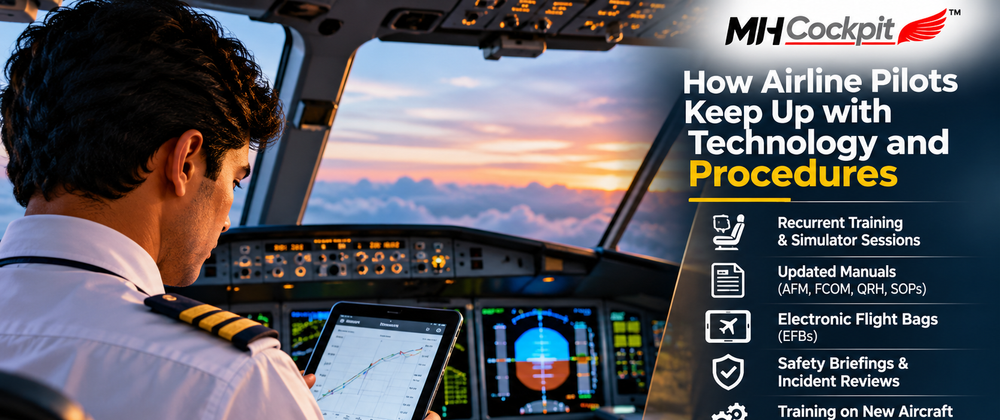

The aviation industry is constantly changing. New aircraft systems, digital navigation tools, updated safety regulations and advanced cockpit technologies are changing how airlines operate. For airline pilots, staying updated is not simply a professional choice. It is an essential part of maintaining flight safety and operational efficiency.
Unlike many other professions, pilots cannot rely only on the knowledge they gained during their initial training. They must continuously learn about new technologies, understand revised operating procedures and maintain their flying proficiency throughout their careers.
But how exactly do airline pilots keep up with these changes?
- Recurrent Training and Simulator Assessments
One of the primary ways airline pilots maintain their knowledge is through recurrent training. Airlines organise regular training programmes to ensure pilots remain familiar with aircraft systems, flight operations and emergency procedures.
Flight simulators play an important role in this process. They recreate real cockpit environments and allow pilots to practise different operational situations without exposing passengers or aircraft to risk.
Training scenarios may include:
- Engine failure during take-off.
- Hydraulic or electrical system malfunctions.
- Severe weather and windshear conditions.
- Emergency descents and cabin pressure loss.
- Rejected take-offs and abnormal landing situations.
These exercises help pilots practise decision-making, communication and checklist procedures under pressure.
- Keeping Up with Aircraft Technology
Modern commercial aircraft use advanced technology to support flight operations. Fly-by-wire controls, automated flight management systems, weather radar and advanced navigation equipment are now common features in many aircraft.
Pilots must understand how these systems operate, their limitations and the correct procedures for handling system failures.
For example, modern aircraft automation can reduce pilot workload, but it does not eliminate the need for manual flying skills. Pilots must know when to rely on automation and when manual intervention is necessary.
Aircraft manufacturers also release technical documentation and operational updates. Flight crews are expected to review applicable changes before operating their aircraft.
- Regular Updates to Flight Manuals and Procedures
Airline pilots work with several technical documents that guide their daily operations. These include the Aircraft Flight Manual (AFM), Flight Crew Operating Manual (FCOM), Quick Reference Handbook (QRH) and Standard Operating Procedures (SOPs).
These documents contain information about aircraft limitations, normal operations, emergency responses and cockpit responsibilities.
When manufacturers or aviation authorities issue relevant updates, airlines distribute revised documentation through their internal systems.
Pilots must ensure they are referring to the latest approved information rather than relying on outdated manuals or personal experience.
This is particularly important because even small procedural changes can affect how a flight crew handles a particular situation.
- Electronic Flight Bags and Digital Aviation Tools
Technology has also changed how pilots access flight-related information.
Many airlines now use Electronic Flight Bags (EFBs), generally tablet-based systems that provide access to digital aviation documents and operational information.
Depending on the airline's approved setup, an EFB may provide:
- Digital aeronautical charts.
- Weather information and forecasts.
- Navigation references.
- Aircraft performance calculations.
- Flight planning documents.
- Updated operational manuals.
These tools reduce dependence on printed documentation and help flight crews access relevant information during flight preparation.
However, pilots must also understand the limitations of digital systems and follow approved procedures if equipment becomes unavailable.
- Safety Briefings and Aviation Incident Reviews
Learning from previous incidents is another important part of pilot development.
Airlines regularly circulate safety notices, operational bulletins and information from accident investigations. These materials help flight crews understand potential risks and identify ways to prevent similar incidents.
For example, an investigation involving runway excursions may lead to additional discussions about landing performance, runway conditions, braking action and crosswind limitations.
Such reviews encourage pilots to examine operational decisions and understand how small errors can develop into larger safety problems.
The objective is not simply to study past accidents but to apply the lessons to everyday flight operations.
- Regulatory Training and Proficiency Checks
Aviation authorities establish requirements for pilot licensing, training and operational proficiency.
In India, the Directorate General of Civil Aviation (DGCA) oversees important aspects of civil aviation regulation, including flight crew licensing and training requirements.
Pilots must meet applicable regulatory and airline training requirements to continue operating commercially.
Those planning to enter the profession should also understand the educational, medical, examination and licensing requirements involved in becoming a commercial pilot.
A useful starting point is this guide to how to become a commercial pilot in India, which explains the general training and licensing pathway.
- Transition Training for Different Aircraft
Pilots who move from one aircraft type to another must complete the applicable transition training.
For instance, flying an Airbus A320 and a Boeing 737 involves different cockpit layouts, aircraft systems, automation logic and operating procedures.
A pilot's experience on one aircraft does not automatically qualify them to operate another.
Depending on the aircraft and applicable regulations, the transition process may involve theoretical instruction, computer-based learning, simulator sessions and proficiency assessments.
This ensures that pilots understand the aircraft they are assigned to operate.
Why Continuous Learning Matters in Aviation
Aviation safety depends on more than technical flying ability. It also requires situational awareness, communication, sound judgement and consistent compliance with operating procedures.
As aircraft technology develops, pilots must remain comfortable working with both automated systems and traditional flying techniques.
Continuous training also helps flight crews maintain confidence when handling unexpected situations. Rather than depending entirely on memory, pilots are trained to use approved checklists, technical documentation and established procedures.
Ultimately, staying current is a shared responsibility between pilots, airlines, aircraft manufacturers and aviation regulators.
The future of aviation will bring further developments in automation, artificial intelligence, navigation and aircraft design. Pilots who maintain a habit of continuous learning will be better prepared to understand these changes and operate safely in an increasingly technology-driven aviation industry.






Top comments (0)