

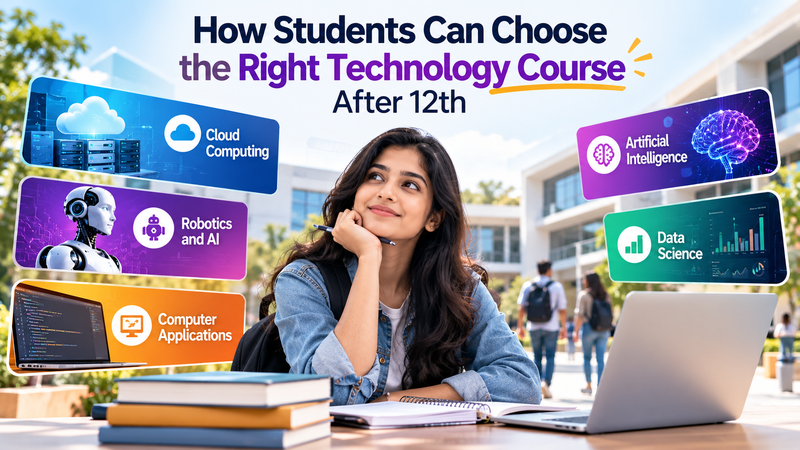
Choosing a technology course after 12th can be an important decision for students interested in computers, software, artificial intelligence, data, cloud technology, or robotics. With many degree options available, students may find it difficult to understand which course matches their interests and long-term learning goals.
Instead of choosing a course only because it is popular, students can compare the subjects, practical learning opportunities, specialization areas, and skills covered by each program.
Understand Your Interest First
The first step is to understand which area of technology interests you most.
Students who enjoy programming and computer applications may prefer a computer-focused degree. Those interested in artificial intelligence may want to explore AI and machine learning programs. Students interested in data can consider data science, while those interested in infrastructure and modern computing can explore cloud computing.
Understanding your interests can make it easier to narrow down the available options.
Explore Different Technology Degree Options
There is no single technology course that is suitable for every student. Different programs introduce students to different areas of computing and technology.
BCA in Cloud Computing
Cloud computing has become an important part of modern technology infrastructure. A BCA program focused on cloud computing can introduce students to areas such as cloud platforms, networking, databases, virtualization, and modern application environments.
Students interested in cloud technologies can explore the BCA Cloud Computing program.
BTech in Robotics and AI
Students interested in robotics, automation, artificial intelligence, and intelligent machines can explore a BTech program combining Robotics and AI.
This area can involve programming, robotics concepts, machine learning, sensors, automation, and intelligent systems.
Students interested in this field can explore the BTech Robotics and AI program.
BSc. Computer Science with AI and Machine Learning
Artificial intelligence and machine learning are important areas within modern computer science. A BSc. Computer Science program with AI and ML can help students build foundations in programming, computer science, artificial intelligence, and machine learning.
Students interested in AI-based technologies can explore the BSc. CS with AI and ML program.
BSc. Computer Science with AI and Data Science
Data plays an important role in technology, business, research, and decision-making. Students who enjoy working with data, programming, analytics, and artificial intelligence can consider a degree combining computer science, AI, and data science.
The BSc. CS with AI and Data Science program is one option students can explore.
BCA in AI and Data Science
Students looking for a computer applications degree with a focus on artificial intelligence and data can also explore BCA programs in AI and Data Science.
The BCA AI and Data Science program can be considered by students who want to build skills around programming, AI, data, and computer applications.
Compare the Subjects Before Choosing
Students should check the curriculum before selecting a technology course.
Important areas to compare include:
- Programming languages
- Computer science fundamentals
- Artificial intelligence
- Machine learning
- Data science
- Cloud computing
- Databases
- Networking
- Software development
- Practical projects
- Laboratory sessions
- Industry-oriented learning
A course title alone does not explain everything about a degree. Reviewing the subjects can help students understand what they will actually study.
Look for Practical Learning
Technology is a practical field, so students should consider how much hands-on learning is included in a course.
Projects, laboratory work, coding assignments, technical activities, and practical applications can help students understand concepts beyond textbooks.
Building projects during a degree can also help students create a technical portfolio that demonstrates their skills.
Consider the Learning Environment
The learning environment can also affect a student's experience.
Before choosing a program, students can research:
- Faculty expertise
- Laboratory facilities
- Technology resources
- Project-based learning
- Industry exposure
- Technical workshops
- Internship opportunities
- Student activities
- Learning support
These factors can provide a better understanding of what studying the course may involve.
Think About Your Long-Term Learning Goals
Students do not need to know their entire career path immediately after 12th. However, they should have an idea of the technology areas they want to explore.
| Student Interest | Course Area to Explore |
|---|---|
| Programming and applications | Computer Applications |
| Cloud technologies | Cloud Computing |
| Artificial Intelligence | AI and Machine Learning |
| Data and analytics | Data Science |
| Robotics and automation | Robotics and AI |
| AI + Data | AI and Data Science |
This type of comparison can help students identify courses that match their current interests.
Explore Technology Courses After 12th
Students who are still comparing different options can explore a broader range of IT courses after 12th.
The goal should not be to select a course simply because it is trending. Students should consider their interests, academic background, preferred learning areas, curriculum, practical exposure, and future learning plans.
Check the Complete Program Details
Before applying, students should review the complete details of the program, including eligibility, subjects, duration, curriculum, learning format, practical components, and admission information.
Exploring multiple programs can help students make a more informed comparison.
Students can also visit the MH Cognition Learning page to explore technology-focused degree programs and compare different areas of study.
Final Thoughts
Choosing a technology course after 12th is easier when students approach the decision step by step.
Start by identifying your interests, compare relevant degree programs, review the curriculum, look for practical learning opportunities, and consider the learning environment. Whether your interest is cloud computing, artificial intelligence, data science, computer applications, or robotics, selecting a course that matches your interests can provide a stronger foundation for continued learning.
The right course is not simply the one with the most popular name. It is the program that aligns with your interests and gives you opportunities to build relevant knowledge and practical skills.






Top comments (0)