

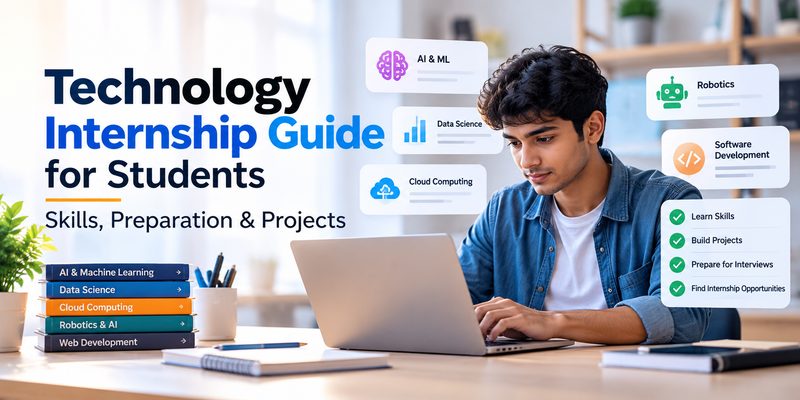
A technology internship can help students understand how classroom concepts are applied in real projects. However, knowing programming languages or completing online courses is only one part of internship preparation. Students also need a way to demonstrate what they can build, how they approach problems and what they have learned.
A well-organised portfolio can make this easier. It gives recruiters and internship coordinators a practical view of a student's skills through projects, documentation and examples of completed work.
Whether you are interested in software development, artificial intelligence, data science, cloud computing or robotics, building a portfolio before applying can help you prepare with a clear direction.
Why Do Students Need a Technology Portfolio?
A resume usually lists skills, education and certifications. A portfolio provides evidence of those skills.
For example, a student who lists Python as a skill can include a small Python application, explain its purpose and describe the libraries used. A student interested in data science can present a dataset analysis with charts and explain the findings.
A useful portfolio helps students:
- Demonstrate practical knowledge instead of only listing technical skills.
- Explain how they approach a problem and develop a solution.
- Show familiarity with tools used in their chosen technology field.
- Share project work during internship applications and interviews.
- Identify areas where they need more practice.
The objective is not to create a large collection of projects. A few relevant projects with clear explanations can be more useful than many unfinished examples.
1. Choose a Technology Area
Start by selecting one area that matches your interests and academic background. Trying to learn several unrelated technologies at the same time can make preparation difficult.
Consider these technology pathways:
Artificial Intelligence and Machine Learning
Students interested in AI and ML can begin with Python, basic statistics, data handling and introductory machine learning concepts.
Beginner project ideas:
- Build a simple spam email classifier.
- Create a basic movie recommendation system.
- Develop a model that predicts house prices using sample data.
Students exploring this field can also read this AI and Machine Learning Internship Guide.
AI and Data Science
Data science involves collecting, cleaning, analysing and presenting information. Students can start with Python, spreadsheets, SQL, data visualisation and basic statistics.
Beginner project ideas:
- Analyse student performance using a sample dataset.
- Create a sales performance dashboard.
- Explore trends in a public dataset and present the findings.
For more preparation ideas, refer to this AI and Data Science Internship Guide.
Cloud Computing
Cloud computing students can build foundational knowledge of networking, operating systems, virtual machines, storage and cloud services.
Beginner project ideas:
- Deploy a basic website using a cloud hosting service.
- Create a simple cloud-based file storage demonstration.
- Set up a basic application environment and document the deployment process.
Students can explore this Cloud Computing Internship Guide to understand relevant skills and preparation areas.
Robotics and Artificial Intelligence
Robotics combines programming, electronics, sensors and automation. Students can begin with basic circuits, microcontrollers and programming before attempting larger systems.
Beginner project ideas:
- Build an obstacle-detection prototype.
- Create a basic temperature monitoring system.
- Develop a sensor-based automatic lighting project.
This Robotics Internship Guide provides additional information about the field and its practical learning areas.
Software and Web Development
Students interested in software development can begin with programming fundamentals, HTML, CSS, JavaScript, databases and version control.
Beginner project ideas:
- Create a responsive personal portfolio website.
- Build a simple task management application.
- Develop a student record management system.
2. Include the Right Details in Every Project
A project should be easy for someone else to understand. Uploading code without an explanation makes it difficult for reviewers to evaluate your contribution.
For every project, include:
- Project title: Use a clear name that explains the purpose.
- Problem statement: Describe the problem the project addresses.
- Tools and technologies: List the programming languages, frameworks and platforms used.
- Development process: Explain the main steps you followed.
- Screenshots or demonstration: Show the application, dashboard or prototype.
- Results and limitations: Explain what works and what could be improved.
- Source code: Share the repository when appropriate, without exposing passwords, API keys or private information.
Be honest about your contribution. If a project was completed as part of a team, explain which parts you worked on.
3. Organise Your Portfolio
Students can use a personal website or a code repository platform to organise their work. The important point is to make projects easy to access and review.
A simple portfolio can contain:
- A short introduction and education background.
- Your preferred technology area.
- Technical skills you can demonstrate.
- Two or three completed projects.
- Project descriptions and screenshots.
- Links to source code or live demonstrations.
- Contact information and a downloadable resume.
Keep the layout simple. Check that project links work and that the descriptions are readable on mobile devices.
4. Connect Your Portfolio to Your Resume
Your resume and portfolio should support each other. Avoid listing tools that you have never used or describing beginner projects as professional experience.
For example, instead of writing only "Python," explain the practical work:
"Used Python and Pandas to clean a sample dataset, analyse student performance and create visual summaries."
Where possible, include a direct project link beside the relevant experience. This makes it easier for internship reviewers to verify your work.
5. Prepare for Internship Applications
Once your portfolio is ready, begin looking for opportunities that match your skills and eligibility.
Students in India can explore college placement cells, company career pages, professional networks and internship platforms. The AICTE National Internship Portal is another place to review internship opportunities across different technology streams.
Before applying, check the following:
- Eligibility requirements and academic criteria.
- Internship duration and working arrangement.
- Expected skills and project responsibilities.
- Whether the opportunity includes mentorship.
- Stipend, fees or other conditions, if applicable.
- Application deadlines and required documents.
Read the terms carefully. Be cautious of opportunities that make unrealistic placement promises or ask for unexplained payments.
6. Practise Explaining Your Projects
A portfolio may help you get an interview, but you should also be prepared to discuss the work.
Practise answering questions such as:
- What problem does your project solve?
- Why did you choose these technologies?
- What was the most difficult part?
- How did you test the project?
- What would you improve if you had more time?
- Which part did you personally develop?
Try explaining each project in simple language. A clear explanation of a small project can demonstrate understanding better than a complicated project you cannot describe.
A Simple Four-Week Portfolio Preparation Plan
| Week | Focus | Expected outcome |
|---|---|---|
| Week 1 | Choose a technology area and revise fundamentals | A clear learning direction |
| Week 2 | Select and develop a beginner project | A working project draft |
| Week 3 | Test, document and organise the project | A portfolio-ready project |
| Week 4 | Update your resume and apply for relevant internships | A completed application package |
Adjust the timeline according to your current knowledge, academic schedule and project complexity. The goal is to build a consistent preparation routine rather than rush through several topics.
Final Thoughts
A technology internship portfolio is a practical way for students to demonstrate their learning. It does not need to be complicated or contain advanced applications. Start with one technology area, complete relevant projects, document your work and keep improving your skills.
Students who want a broader overview of internship preparation can also read the Technology Internship Guide for Students: Skills, Preparation & Projects. It covers technology fields, preparation steps, project ideas and ways to approach internship opportunities.
A clear portfolio, an honest resume and the ability to explain your work can help you approach technology internship applications with greater confidence.
Frequently Asked Questions
1. How many projects should a student include in an internship portfolio?
Start with two or three relevant, completed projects. Focus on clear documentation, working demonstrations and your own contribution rather than the total number of projects.
2. Can beginners apply for technology internships?
Yes. Some internships are designed for beginners, while others require specific technical knowledge. Students should check eligibility and skill requirements before applying.
3. Is GitHub necessary for a technology internship?
GitHub is useful for sharing code and tracking project development, especially for software, AI and data-related work. However, the required platform depends on the internship role.
4. Should students include academic projects in their portfolio?
Yes. Academic projects can demonstrate technical understanding and problem-solving ability. Explain the objective, tools, development process and your individual contribution.
5. Where can students find technology internships in India?
Students can check college placement cells, company career pages, professional networks and platforms such as the AICTE National Internship Portal. Always verify the opportunity details before applying.







Top comments (0)