

Education becomes more meaningful when students can build, experiment and discover how things work. LEGO-based activities provide an engaging way to introduce science, technology, engineering and mathematics through practical challenges. LEGO STEM education helps students connect classroom concepts with real-world applications while developing creativity, logical thinking and problem-solving skills.
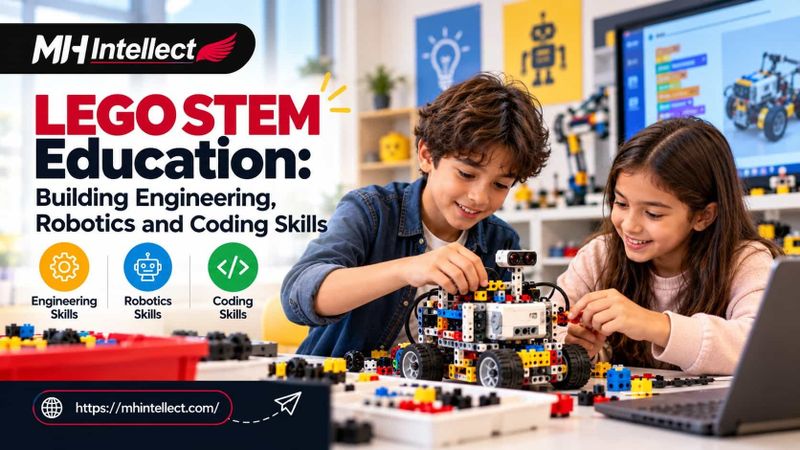
What Is LEGO STEM Education?
LEGO STEM education combines construction, engineering principles, robotics and programming to make learning interactive. Instead of only reading about scientific concepts, students build models, test their designs and observe the results. A bridge-building challenge, for example, introduces structural strength and stability, while a moving vehicle demonstrates gears, motion and mechanical relationships.
This approach encourages students to ask questions, predict outcomes and improve their designs based on evidence. When activities are connected to curriculum objectives, they become more than building exercises: they help learners understand the principles behind the models they create. Schools exploring structured STEM Education Programs can use practical activities to connect academic knowledge with meaningful learning outcomes.
How LEGO Robotics Develops Engineering Skills
Engineering involves identifying a problem, designing a solution, testing it and making improvements. With LEGO robotics for students, learners can explore this process through models that move, respond to instructions and perform specific tasks.
Students might build a bridge that supports a particular weight or create a vehicle that moves efficiently across a surface. If a structure collapses or a mechanism fails, they can investigate the cause and redesign it. These experiences demonstrate that mistakes are part of the engineering process and that successful solutions often require repeated testing.
Such challenges also encourage collaboration. Students can share ideas, divide responsibilities and explain why they selected a particular design. This combination of technical exploration and teamwork helps develop skills that are valuable across different subjects and future careers.
Introducing Coding Through LEGO Robotics
Programming becomes easier to understand when students can immediately see the results of their instructions. LEGO coding for kids introduces foundational computational thinking through visual programming, sequences, loops and conditional instructions.
For example, students can programme a robot to follow a route, stop when it detects an obstacle or respond to changes in its surroundings. When the robot does not behave as expected, learners must review their instructions, identify errors and test possible solutions. This process, known as debugging, develops logical reasoning and persistence.
Age-appropriate robotics activities can gradually progress from simple movement commands to more advanced programming challenges involving sensors, motor control and automation.
Key Benefits of LEGO-Based STEM Learning
STEM education for students can become more engaging when learners have opportunities to apply concepts through practical projects. LEGO-based activities support several important learning outcomes:
- Engineering knowledge: Explore structures, gears, motion and mechanical systems.
- Computational thinking: Develop logical sequences and practise debugging.
- Critical thinking: Investigate problems, test hypotheses and evaluate results.
- Creativity: Design original models and explore alternative solutions.
- Collaboration: Share responsibilities, communicate ideas and work towards common goals.
- Resilience: Learn from unsuccessful attempts and improve designs through testing.
These benefits are strongest when teachers encourage students to explain their decisions rather than simply follow building instructions.
Choosing the Right LEGO Learning Tools for Schools
Successful implementation requires age-appropriate resources, clear learning objectives and activities that align with the curriculum. Schools can explore STEM Education Products to understand the educational tools used in practical learning programmes.
For younger learners, the LEGO SPIKE Essential Kit for Early STEM Learning can support introductory construction, engineering and coding activities. Schools can also explore LEGO SPIKE Essential for structured, hands-on robotics and programming experiences.
These tools are most effective when integrated into planned educational activities that help students understand concepts, build confidence and develop skills progressively.
Building Future-Ready Skills Through STEM Education
LEGO-based learning offers schools a practical way to introduce engineering, robotics and coding while strengthening essential problem-solving skills. With suitable teacher preparation, curriculum alignment and progressive activities, students can move from simple construction tasks to increasingly complex engineering challenges.
MH Intellect supports schools through structured STEM education approaches that connect educational tools with practical classroom learning.
Ready to strengthen robotics and STEM learning at your school? Contact MH Intellect to explore curriculum-aligned programmes that help students build, code, experiment and develop the skills needed for a technology-driven future.






Top comments (0)