

Imagine a school where students don't simply memorise scientific concepts but use them to build, test, and improve real solutions. One group may be programming a robot, another may be designing an engineering model, while others analyse data from a technology project. For school leaders and academic coordinators, this creates an important question: how can practical learning become a consistent part of education rather than an occasional activity? This is where STEM Education can help schools connect Science, Technology, Engineering and Mathematics with real-world challenges.
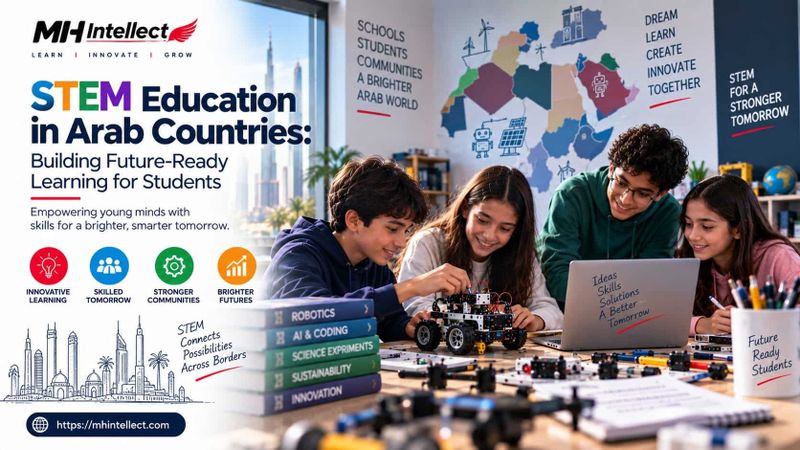
Why STEM Education Matters for Schools
Modern students need opportunities to apply what they learn. Reading about engineering principles is valuable, but designing a structure and testing whether it works can create a deeper understanding. Similarly, learning programming becomes more meaningful when students use code to control a robot or solve a practical challenge.
A structured STEM approach can help students develop problem-solving, critical thinking, creativity and collaboration through practical activities. Instead of focusing only on the final answer, students learn to investigate a problem, develop an idea, test it and improve their solution.
For schools, this means STEM can support academic learning while also helping students develop practical capabilities relevant to higher education and technology-driven careers.
Developing STEM Learning UAE Pathways
STEM Learning UAE is increasingly relevant for schools looking to connect classroom education with emerging technologies and practical innovation. Robotics, coding, artificial intelligence, IoT, engineering and digital design can all become part of age-appropriate learning experiences.
However, introducing technology into a classroom does not automatically create effective STEM learning. Schools may face challenges such as limited teacher confidence, disconnected activities, lack of progression between year groups and difficulty aligning projects with curriculum objectives.
A successful STEM programme should therefore be planned around students and the school's educational goals. Younger learners can begin with simple construction and observation activities, while older students can progress toward robotics, coding, AI, engineering challenges and more complex projects.
STEM Education Abu Dhabi and Across the UAE
STEM Education Abu Dhabi can provide students with opportunities to connect theoretical concepts with practical applications. For example, students can explore renewable energy through model-building projects, investigate automation through robotics or use sensors to collect and interpret data.
The same approach can support schools across Dubai, Sharjah and other UAE locations. The important factor is not simply the technology available in the classroom, but how effectively students use that technology to investigate questions and develop solutions.
For school leadership teams, a progressive STEM pathway can also make it easier to understand how student skills develop from one year group to another.
The Role of STEM Education in Arab Countries
The importance of STEM Education in Arab Countries extends beyond individual classroom activities. Schools across the region are preparing students for environments where digital technology, engineering, data and innovation play increasingly important roles.
A strong STEM programme can give students opportunities to practise skills through real projects while helping schools create a culture of experimentation and inquiry. However, programmes should reflect each school's curriculum, student age groups, available resources and educational priorities rather than relying on a one-size-fits-all model.
Schools can also benefit from working with a dedicated STEM implementation partner for schools that can support programme planning, implementation and long-term development.
Turning STEM Challenges Into Learning Opportunities
One of the biggest challenges for schools is moving from individual STEM workshops to a structured learning pathway. A one-day robotics activity may generate excitement, but students need continued opportunities to apply and extend their knowledge.
A practical STEM programme can include:
- Robotics and engineering design challenges
- Coding and computational thinking activities
- AI and emerging technology projects
- IoT and sensor-based investigations
- Innovation and problem-solving challenges
These activities can become progressively more challenging as students develop their knowledge and confidence.
How MH Intellect Supports Schools
MH Intellect works with schools to develop practical STEM learning experiences that connect technology with educational objectives. Rather than treating robotics, coding or AI as isolated activities, the approach focuses on creating structured learning experiences that students can build upon over time.
Schools can explore the Student's Gallery to see examples of student projects and practical learning outcomes. Schools looking to develop a broader programme can also explore STEM Education to understand how structured STEM learning can be integrated across different educational stages.
Building a Future-Ready STEM Learning Culture
The purpose of STEM is not simply to give students access to technology. It is to help them understand how things work, investigate problems, collaborate with others and develop solutions. When students repeatedly experience this process, they can develop confidence in applying knowledge to unfamiliar situations.
For schools across the UAE and wider Arab region, structured STEM learning can become an important part of creating engaging, practical and future-focused education. The combination of curriculum alignment, teacher support and hands-on projects can help schools turn STEM from an occasional activity into a meaningful learning journey.
Ready to strengthen STEM learning in your school? Book a free consultation with MH Intellect to discuss your school's STEM goals, student needs and opportunities for developing a structured, practical STEM education pathway.







Top comments (0)