

Imagine a school where students don't just listen to explanations of science or mathematics but build robots, test structures, write code, analyse data, and refine their own ideas. A school leader may want this kind of learning environment. Yet, practical challenges often arise: teachers need support, activities must connect with curriculum goals, and one-off workshops may not create measurable progress. This is where structured STEM Education Programs can help schools move from occasional activities to a consistent learning pathway. STEM Education connects Science, Technology, Engineering, and Mathematics through practical, problem-based experiences rather than teaching each subject in isolation.
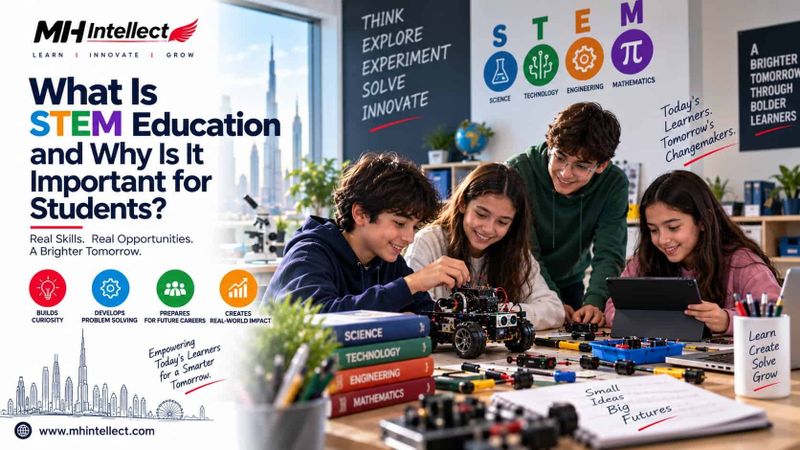
What Is STEM Education?
STEM Education encourages students to apply classroom knowledge to real-world challenges. For example, when students design a robotic vehicle, they may use mathematics to measure distance, engineering principles to construct the structure, technology to program the robot, and science to understand movement and force. This integrated approach makes learning more purposeful because students can see how different concepts work together to achieve a practical outcome. Instead of simply memorising information, students investigate, design, test, and improve solutions. Schools looking to establish this approach can explore structured STEM Education Programs designed around practical and applied learning.
Why STEM Education Matters for Students
The value of STEM learning extends beyond technical knowledge. Well-designed programmes encourage students to become active participants in the learning process. When students build a bridge, experiment with sensors, or program a robot, they encounter challenges that require them to think, test, and make decisions.
Students can develop several important capabilities through practical STEM activities, including:
- Problem-solving: Students analyse challenges, test solutions, and learn from unsuccessful attempts.
- Critical thinking: They evaluate information, identify patterns and make evidence-based decisions.
- Creativity: Open-ended projects encourage students to develop original approaches and ideas.
- Collaboration: Team-based projects help students communicate, divide responsibilities, and work toward shared outcomes.
These skills are particularly valuable for schools preparing students for higher education, technology-driven careers, and changing workplace expectations. The source material also highlights problem-solving, critical thinking, creativity, and collaboration as important outcomes of structured STEM learning.
How STEM Programs for Schools Build Future Skills
Effective STEM programs for schools should progress according to students' age, knowledge, and confidence. Younger learners can explore simple construction and science challenges, while middle school students can move into robotics, coding and engineering design. Secondary students can work with IoT systems, data collection, artificial intelligence and more complex technology-based projects.
For school leadership teams, progression is important because repeating the same type of activity does not necessarily create meaningful development. A structured programme should gradually increase complexity while maintaining the same cycle of investigation, design, testing and improvement.
Why Schools Need Structured STEM Education
A single robotics workshop can create excitement, but building a genuine STEM culture requires more than an isolated activity. Schools need curriculum alignment, age-appropriate progression, teacher support, and measurable learning outcomes. Leadership teams also need to consider whether students are genuinely applying concepts or simply following predetermined instructions.
This is where a dedicated STEM implementation partner for schools can support the wider implementation process. Rather than managing disconnected activities and vendors, schools can develop a more consistent approach that connects learning objectives, projects, technology, and teacher support.
STEM Education for Schools Across the UAE and Gulf
The need for practical STEM learning is increasingly relevant across Dubai, Sharjah, and the wider Gulf region. Schools are looking for ways to strengthen technology literacy, innovation, problem-solving and workforce readiness while maintaining meaningful educational outcomes. STEM education for schools can provide a structured pathway that connects classroom concepts with practical challenges.
A strong programme does not necessarily depend on having the most expensive laboratory. What matters is giving students meaningful problems, appropriate guidance and opportunities to test, analyse and improve their solutions.
How MH Intellect Supports Schools
School leaders often face the challenge of turning STEM ambitions into a sustainable programme. MH Intellect supports schools with practical, curriculum-aligned learning across robotics, coding, AI, IoT, engineering and innovation for different year groups. This approach helps schools move beyond one-time activities and create structured learning experiences that develop progressively.
Schools can also explore the STEM Education approach and see examples of practical student outcomes through the Student's Gallery.
Build Meaningful STEM Learning in Your School
The purpose of STEM Education is not simply to place technology inside a classroom. It is to help students understand how technology works, ask meaningful questions, solve unfamiliar problems, and create practical solutions. For schools seeking a structured pathway, the right programme can connect curriculum goals with hands-on learning and future-ready skills.
Ready to develop a structured STEM learning pathway for your school? Book a free consultation with MH Intellect to discuss your school's goals, student needs, and opportunities for practical STEM implementation.







Top comments (0)