

In 2026, product quality and safety have become major priorities for manufacturers, importers, distributors, and consumers in India. The Government of India is continuously strengthening product compliance regulations to ensure that products sold in the market meet required safety and quality standards.
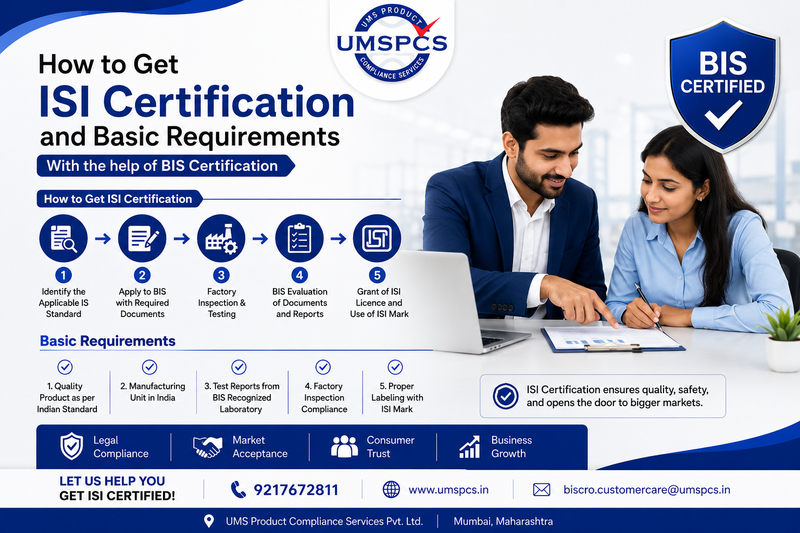
One of the most important certifications under Indian regulations is How to get ISI certification and basic reqirements. Many industrial and consumer products cannot legally be manufactured, imported, or sold in India without mandatory ISI approval from the Bureau of Indian Standards (BIS).
However, many businesses still struggle to understand the complete ISI certification process, required documents, product testing procedures, factory inspections, and regulatory obligations.
Because of the technical complexities involved, manufacturers and importers increasingly rely on professional BIS consultants to manage approvals smoothly.
In 2026, UMSPCS is becoming one of the trusted consultancy providers helping businesses across India obtain ISI certification efficiently.
What is ISI Certification?
ISI certification is issued by the Bureau of Indian Standards (BIS), India’s national standards authority responsible for product quality and safety regulations.
The ISI mark confirms that a product complies with applicable Indian Standards related to:
Product safety
Manufacturing quality
Technical performance
Consumer protection
Reliability standards
Products covered under mandatory Quality Control Orders (QCOs) require ISI certification before they can legally enter the Indian market.
(Bureau of Indian Standards)
Why ISI Certification is Important
ISI certification is important because it helps:
Ensure product quality
Build consumer trust
Improve product credibility
Meet legal requirements
Reduce safety risks
Expand market opportunities
Many distributors, retailers, e-commerce platforms, and government buyers prefer certified products because they comply with recognized Indian standards.
Read Also:- BIS FMCS Certification
Products That Require ISI Certification
Many industrial and consumer products require mandatory ISI approval.
Common categories include:
Steel products
Cement
Pipes
Electrical appliances
Gas stoves
Cables and wires
Construction materials
Household products
Industrial equipment
The government continues expanding mandatory certification requirements under new Quality Control Orders.
Who Needs ISI Certification?
ISI certification is generally required for:
Indian manufacturers
Foreign manufacturers
Importers
Brand owners
Industrial product suppliers
Businesses manufacturing or selling regulated products in India must ensure proper BIS approval.
Read Also :- BIS CRS Registration
Basic Requirements for ISI Certification
Businesses must fulfill several technical and regulatory requirements before obtaining ISI certification.
Product Must Match Applicable Indian Standard
Every product category falls under a specific Indian Standard (IS).
Businesses must first identify:
Applicable product category
Correct Indian Standard
Technical requirements
Selecting the wrong standard may delay approval.
Manufacturing Facility
Manufacturers must have a proper production facility with:
Manufacturing equipment
Quality control systems
Production capability
Internal testing arrangements
BIS authorities may inspect the factory during the certification process.
Product Testing
Products must be tested according to applicable Indian Standards.
Testing verifies:
Product safety
Technical performance
Quality compliance
Reliability standards
Products are generally tested in BIS-recognized laboratories.
Quality Control System
Manufacturers must maintain proper quality control systems to ensure consistent production quality.
This may include:
Testing procedures
Inspection records
Quality manuals
Technical documentation
Required Documentation
Proper documentation is extremely important for approval.
Common documents may include:
Factory license
Manufacturing details
Product specifications
Test reports
Trademark documents
Quality control records
Authorization letters
Incorrect documentation is one of the major reasons for certification delays.
Read more:- MTCTE Certification
Step-by-Step Process to Get ISI Certification
The ISI certification process generally includes multiple stages.
- Product Applicability Analysis Businesses first identify whether their products require mandatory ISI certification. The correct Indian Standard must also be selected.
- Documentation Preparation Manufacturers prepare technical and regulatory documents required for BIS application filing. Proper documentation reduces rejection risks.
- Product Testing Samples are submitted to BIS-recognized laboratories for testing. Testing verifies compliance with applicable standards.
- BIS Application Filing Applications are submitted through the BIS portal. Improper filing may lead to: Technical errors Application rejection Approval delays
- Factory Inspection BIS authorities may inspect the manufacturing facility to verify: Production capability Quality control systems Manufacturing consistency Internal testing facilities Proper audit preparation is very important.
- Grant of ISI Certification After successful testing and inspection, BIS grants certification approval. Manufacturers can then use the ISI mark on approved products. Importance of Factory Inspection Factory inspection is one of the most important stages of ISI certification. BIS officials may verify: Manufacturing process Quality management systems Product testing arrangements Production consistency Technical records Improper factory preparation may delay approval. Common Challenges Businesses Face Many manufacturers struggle with: Incorrect product classification Failed testing Documentation errors Factory inspection preparation Portal filing mistakes Delayed approvals Without professional guidance, these issues may significantly increase certification timelines. Why Businesses Hire ISI Consultants Professional consultants help businesses manage: Product applicability analysis Product testing coordination Documentation preparation BIS application filing Factory audit preparation Regulatory query handling Long-term compliance management This helps businesses reduce approval delays and improve compliance accuracy. Long-Term Compliance After Certification ISI certification is not only a one-time approval process. Businesses must continue maintaining: Product quality consistency Technical records Labeling compliance Quality control systems Renewal procedures Regulatory updates Authorities may conduct surveillance inspections after approval. Why Importers Need ISI Compliance Support Importers selling regulated products in India must also ensure BIS compliance. Without certification, importers may face: Customs detention Shipment rejection Legal penalties Marketplace restrictions Professional consultants help importers manage compliance efficiently. Why Businesses Choose UMSPCS UMSPCS provides BIS consultancy and regulatory compliance services for manufacturers, importers, startups, and global brands across India. The company assists businesses with: BIS ISI certification BIS CRS registration FMCS certification Product testing coordination Factory audit preparation Import compliance support WPC ETA approval CDSCO registration Regulatory documentation Businesses increasingly prefer consultants offering complete compliance solutions under one platform. Future of ISI Compliance in India India’s regulatory system is becoming stricter because of: Consumer safety initiatives Product quality enforcement Manufacturing standardization Import quality control Industrial growth Businesses must now treat compliance as an essential part of long-term business strategy. Final Thoughts ISI certification has become mandatory for many industrial and consumer products in India. The certification process ensures that products comply with required Indian safety and quality standards before entering the market. The process involves technical documentation, product testing, factory inspections, portal filing, labeling compliance, and ongoing regulatory management that can become highly complicated without professional support. Working with experienced BIS consultants like UMSPCS helps manufacturers, importers, startups, and global brands simplify ISI certification procedures and maintain smooth long-term compliance operations. For businesses planning long-term growth in India, ISI certification is now both a legal requirement and an important business advantage.
FAQs
- What is ISI certification? ISI certification confirms that products comply with Indian quality and safety standards regulated by BIS.
- Who needs ISI certification in India? Manufacturers, importers, and businesses dealing with regulated products may require ISI certification.
- Is product testing mandatory for ISI certification? Yes. Products must be tested according to applicable Indian Standards before approval.
- Why is factory inspection important in ISI certification? BIS authorities inspect manufacturing facilities to verify production capability and quality control systems.
- Which products commonly require ISI certification? Products such as pipes, cement, steel products, electrical appliances, and construction materials commonly require approval.
- Why do businesses hire ISI consultants? Consultants help businesses manage testing, documentation, factory inspections, and BIS approvals efficiently.
- Can foreign manufacturers apply for ISI certification? Yes. Foreign manufacturers exporting regulated products to India must obtain BIS approval under applicable schemes.
- What happens if products are sold without mandatory ISI certification? Businesses may face penalties, customs detention, legal action, and product restrictions.
- How can UMSPCS help businesses? UMSPCS provides consultancy support for BIS certification, product testing, documentation, and long-term compliance management.
- Why are BIS regulations becoming stricter in India? India is strengthening consumer safety, product quality, and manufacturing compliance regulations across industries. Source:- https://mtctecertification.mystrikingly.com/blog/how-to-get-isi-certification-and-basic-requirements







Top comments (0)