
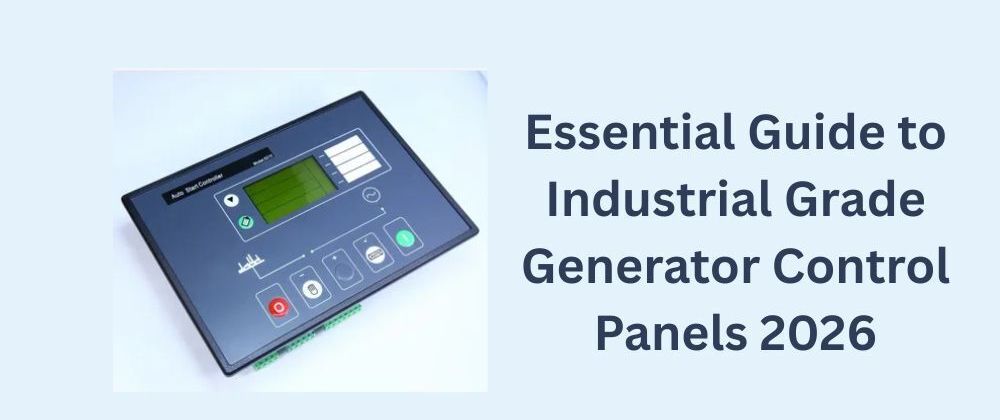

In the world of heavy industry and large-scale business, power is the heartbeat of every operation. When the main power grid fails, we rely on backup generators to keep the lights on, the machines running, and the data safe. However, a generator is just an engine without a brain. That "brain" is the Generator Control Panel.
As we move through 2026, technology has made these panels smarter, faster, and more reliable than ever before. Whether you are running a hospital, a data center, or a manufacturing plant, understanding how these panels work is the key to ensuring you are never left in the dark.
Understanding the Basics of Industrial Generator Control Panels
To put it simply, a control panel is the user interface of the Generator Control Panels. It allows you to talk to the machine and, more importantly, allows the machine to talk to you. In an industrial setting, these are not just simple "on and off" switches. They are complex computers housed in heavy-duty casings.
What is a Control Panel Exactly?
At its core, the control panel is a set of displays and buttons that monitor the health of the generator. It checks things like fuel levels, battery life, and engine temperature. In the past, these were purely mechanical with needles and dials. Today, they are high-definition touchscreens that provide real-time data at a glance.
Why the "Industrial Grade" Label Matters
You might find a simple control panel on a small portable generator for camping. However, Industrial Grade panels are built for high-stakes environments. They are designed to handle massive amounts of electricity and to operate in harsh conditions—like extreme heat, dust, or moisture. They are built to last for decades, not just a few years.
The Core Functions: What These Panels Do Every Second
A control panel does not just sit there waiting for a power outage. It is constantly working behind the scenes. Here is a breakdown of the vital tasks it performs every second of the day.
Constant Engine Monitoring
The panel acts like a doctor for your generator. It tracks the "vital signs" of the engine.
- Oil Pressure: If the oil is too low, the panel will shut the engine down immediately to prevent a fire or total engine failure.
- Coolant Temperature: Just like a car, a generator can overheat. The panel monitors this to ensure the machine stays within a safe heat range.
- Battery Status: There is nothing worse than a backup generator that won't start because the battery died. The panel ensures the battery is always charged and ready to go.
Managing Electrical Output
Once the generator is running, the panel has to manage the electricity it produces. It makes sure the voltage is steady. If the voltage spikes too high, it could fry your expensive office computers or factory robots. The control panel acts as a filter, ensuring only "clean" and steady power enters your building.
Modern Features of 2026 Control Panels
Technology has changed significantly in the last couple of years. The panels we are seeing in 2026 are miles ahead of what we used a decade ago. Here are some of the biggest updates in the industry.
Remote Monitoring and Cloud Integration
In 2026, you don't need to be standing in the generator room to know what's happening. Modern panels connect to your Wi-Fi or cellular network. You can check the status of your generator from a smartphone app while you are at home or on a business trip. If something goes wrong, the panel sends you a text message or an email immediately.
Smart Auto-Start Functions
Old generators required a human to go downstairs and pull a lever or push a button during a blackout. Modern industrial panels use an Automatic Transfer Switch (ATS). The moment the panel senses the grid power has dropped for even a split second, it signals the generator to start. Usually, the power is back on in less than ten seconds.
Predictive Maintenance Alerts
Thanks to Artificial Intelligence (AI), panels can now predict when a part is going to fail before it actually breaks. If a vibration sensor picks up a strange rhythm in the engine, the panel will alert you that a belt or bearing needs to be replaced soon. This saves companies thousands of dollars in emergency repair costs.
Safety Systems and Shutdown Protocols
Safety is the most important part of any industrial machine. Because generators deal with high voltage and flammable fuel, the control panel must be a master of safety.
Emergency Stop Buttons
Every industrial panel has a large, red "E-Stop" button. This is a physical switch that cuts all power and fuel instantly. It is designed to be easy to find and hard to miss, ensuring that in an accident, anyone can stop the machine safely.
Automatic Shutdown Triggers
The panel is programmed with "red lines." If the engine exceeds a certain RPM (speed) or if the fuel line develops a leak, the panel will trigger an automatic shutdown. It doesn't wait for a human to give permission. This "fail-safe" logic prevents small problems from turning into catastrophic explosions or fires.
Protection Against Electrical Surges
Lightning strikes or grid malfunctions can send a surge of power toward your generator. Modern panels are equipped with high-end circuit breakers and surge protectors that act as a shield, sacrificing themselves to save the expensive generator engine.
Choosing the Right Panel for Your Business
Not all control panels are created equal. Depending on your industry, you might need different features.
For Healthcare and Hospitals
In a hospital, power is a matter of life and death. Control panels here must have "Redundant Systems." This means if one part of the control panel fails, a second backup part takes over instantly. They also require ultra-fast start times to keep life-support machines running.
For Data Centers and Tech Hubs
Data centers care most about "Power Quality." They need panels that can manage very precise voltage levels. Even a tiny flicker can cause servers to reboot and lose data. These panels often include advanced "Load Leveling" features to distribute power evenly across thousands of servers.
For Manufacturing and Heavy Industry
In a factory, the environment is often dirty, loud, and vibrating. Panels here need to be housed in NEMA-rated enclosures. This means the metal box is sealed tight against dust, oil, and water. The buttons are often larger so they can be operated by workers wearing thick safety gloves.
Installation and Maintenance Tips
Buying a great control panel is only half the battle. You also have to take care of it.
Professional Calibration
When a panel is first installed, it must be calibrated. This is like tuning a musical instrument. An engineer will set the "parameters"—telling the panel exactly what voltage is "normal" and at what temperature it should sound an alarm.
Keeping Software Updated
Since modern panels are essentially computers, they have software (called firmware). Manufacturers release updates to fix bugs or improve security against hackers. It is important to have a technician check for software updates at least once a year.
Visual Inspections
While the digital screen tells you a lot, it doesn't tell you everything. A human should still look inside the panel every few months to check for loose wires, signs of heat damage (like burnt smells), or even pests like rodents that might have chewed on the cables.
Conclusion: Investing in Peace of Mind
As we look at the landscape of 2026, it is clear that Industrial Grade Laurus Technologies LLC are no longer just "accessories." They are the most critical part of your backup power system. They provide the safety, the intelligence, and the connectivity needed to run a modern business without fear of a blackout.
By choosing a panel with remote monitoring, predictive maintenance, and robust safety shutdowns, you aren't just buying a piece of hardware. You are buying insurance. You are ensuring that when the rest of the world goes dark, your business keeps moving forward, your employees stay safe, and your equipment stays protected.
For more insightful articles related to this topic, feel free to visit springbuilders







Top comments (0)