

Real estate tokenization is moving beyond the simple process of converting property ownership or economic rights into digital tokens. Earlier discussions around tokenization often focused on smart contracts, token issuance, wallets, and investor access. Those components still matter, but they represent only the beginning of a much longer property journey.
A tokenized property remains connected to a real-world asset after issuance. Rent may need to be collected, expenses recorded, ownership records updated, distributions calculated, compliance checks performed, and property performance monitored. Investors may also trade their holdings, transfer tokens, or exit their positions. Because of this, a tokenization platform needs to support activities that continue long after the initial token sale.
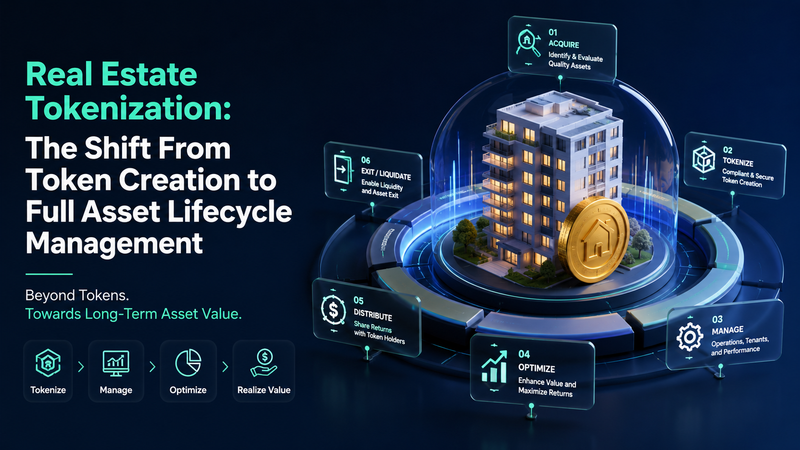
This shift is creating demand for systems that treat tokenized property as an asset that requires ongoing administration. The focus is gradually moving from real estate token development alone toward full asset lifecycle management, where property operations, investor activity, financial records, compliance, and token ownership work together.
Why Token Creation Is Only the Beginning
Creating a digital token for a property does not automatically create a functioning investment ecosystem. The token represents an interest connected to an underlying asset, but that asset continues to operate according to leases, regulations, maintenance requirements, financing arrangements, and market conditions.
For example, consider a commercial building represented by 100,000 digital tokens. Issuing those tokens may establish investor ownership records, but the building still produces rental income, pays maintenance costs, handles tenant agreements, and may require insurance or property management services.
A platform therefore needs processes for both the digital representation and the physical asset. The connection between these two sides becomes increasingly important as the number of properties and investors grows.
A real estate tokenization company working on such platforms must consider what happens after the token sale. This means planning for investor reporting, distributions, transfers, asset valuation, documentation, compliance, and eventual property exit.
The Real Estate Asset Lifecycle
A tokenized property generally passes through several stages. These stages can begin with asset selection and continue through due diligence, legal structuring, token issuance, fundraising, ownership management, income distribution, secondary transfers, refinancing, and eventual sale.
Each stage produces information that needs to remain connected. Property documents may be reviewed before issuance. Investor identities may be verified during onboarding. Token balances may change through transfers. Rental income may be distributed according to ownership records. Property expenses may affect investor returns.
The platform becomes more useful when these activities are handled within one connected environment. Instead of treating token issuance as the final objective, the system can treat it as one event within the wider property lifecycle.
This approach also changes how businesses evaluate real estate asset tokenization company offerings. The discussion is no longer limited to blockchain networks or token standards. Property administration, investor services, compliance processes, financial operations, and reporting now deserve equal attention.
Stage 1: Property Selection and Due Diligence
The lifecycle begins before any token is issued. Property owners or platform operators need to evaluate whether an asset is suitable for tokenization.
The assessment can include property type, location, ownership structure, valuation, rental income, liabilities, existing financing, legal documents, tenant information, and expected investor returns. Documents can be stored within the platform so authorized parties can review relevant information.
A due diligence workflow can also assign different responsibilities to legal teams, property managers, financial professionals, and compliance teams. Their findings can be recorded against the asset before the tokenization process moves forward.
For a real estate tokenization development company, this stage presents an opportunity to connect property data with later token records. The objective is to maintain a consistent information trail from the original property assessment through the investment period.
Stage 2: Legal Structuring and Token Design
Once a property passes its initial assessment, the ownership model needs to be established. A property might be represented through an entity that holds the asset, with tokens representing defined economic or ownership interests in that entity.
Token design then determines matters such as supply, investor rights, distribution rules, transfer conditions, and voting arrangements where applicable. Smart contracts can encode selected rules, while legal agreements define rights that cannot simply be represented through blockchain code.
Real estate tokenization development at this stage requires coordination between legal requirements and technical implementation. The token should reflect the intended ownership model rather than being treated as an isolated digital product.
The platform can also maintain records connecting the token to its associated property, legal documents, offering information, and investor eligibility requirements.
Stage 3: Token Issuance and Investor Onboarding
After the structure is prepared, tokens can be issued to eligible investors. This phase typically includes investor registration, identity verification, compliance checks, wallet setup, payment processing, allocation, and ownership recording.
The investor dashboard can provide access to portfolio information, token balances, distribution history, property documents, and transaction records. Different investor categories may receive different access depending on jurisdiction and regulatory requirements.
Real estate tokenization platform development therefore involves much more than writing a token contract. The surrounding application needs to manage investor interactions while keeping blockchain records connected with off-chain information.
A real estate tokenization platform development company may also integrate payment systems, identity verification services, document management tools, and compliance workflows into this part of the platform.
Stage 4: Property Operations After Issuance
This is where the lifecycle approach becomes particularly important. Once investors hold tokens, the property continues generating income and expenses.
Rental payments, maintenance costs, insurance, taxes, property management fees, vacancies, and capital expenditure can influence the financial performance of the asset. Investors need access to relevant information without becoming involved in every operational activity.
A lifecycle-focused platform can provide property managers with administrative tools while giving investors a separate view of financial and ownership information. Operational data can then feed into investor reporting and distribution calculations.
For example, if a property generates monthly rental income, the platform can record revenue, account for approved expenses, calculate the distributable amount, and determine investor allocations according to current ownership records.
Stage 5: Income Distribution and Financial Reporting
Tokenized real estate often depends on recurring income. This makes distribution management an important part of the platform.
The system can track income received from the property, applicable expenses, distribution schedules, investor holdings, and payments made to eligible participants. Smart contracts may automate certain distribution rules, while administrators retain controls for exceptions and required approvals.
Investors can receive statements showing distributions over time, current token holdings, transaction activity, and property-level financial information. This creates a more complete record of the investment rather than focusing only on token price or ownership percentage.
A platform designed around the complete lifecycle can also support tax-related records and financial exports where required. The exact reporting structure depends on the legal and regulatory framework of the market in which the property is offered.
Stage 6: Ownership Transfers and Secondary Trading
Token ownership does not necessarily remain unchanged after the initial offering. Investors may want to transfer or sell their holdings, subject to applicable restrictions.
A secondary market can provide a mechanism for eligible investors to trade tokens. However, the process needs to consider investor eligibility, transfer restrictions, transaction records, pricing, settlement, and compliance checks.
This is another area where lifecycle management differs from basic real estate token development. The platform needs to understand the current ownership position rather than simply recording an original token allocation.
When an approved transfer occurs, ownership records, investor dashboards, transaction history, and future distribution calculations may all need to reflect the change.
Stage 7: Property Valuation and Performance Monitoring
Property values can change over time. Rental income may increase or decrease, occupancy can fluctuate, and market conditions can affect the underlying asset.
A lifecycle platform can maintain valuation updates and performance information alongside token ownership records. Depending on the operating model, valuation data may come from professional appraisals, approved valuation providers, financial models, or other authorized sources.
Investors can then view information about the property alongside their token holdings. This creates a more complete investment record and helps platform operators manage assets throughout their operating period.
For the Best real estate tokenization companies, the ability to support ongoing asset administration can become an important differentiator because investors are interacting with a property investment rather than simply purchasing a digital token.
Stage 8: Compliance and Record Management
Compliance is not limited to the launch date. Investor eligibility, ownership restrictions, reporting obligations, transfer rules, and documentation requirements can continue throughout the asset lifecycle.
The platform can maintain investor verification records, transaction histories, permission rules, and required documents. Automated checks can be used where appropriate, while sensitive actions may require administrator approval.
A real estate tokenization platform also needs appropriate access controls because property information, investor records, financial data, and legal documents may have different confidentiality requirements.
This ongoing approach can reduce the risk of treating compliance as a single event. Instead, compliance becomes part of everyday platform operations.
Stage 9: Corporate Actions and Investor Communication
Tokenized property can involve events such as refinancing, property improvements, changes in management, amendments to agreements, or other decisions affecting investors.
The platform can provide workflows for announcements, voting where applicable, document updates, approvals, and investor notifications. If token holders have defined governance rights, those rights can be connected with the relevant digital records.
Investor communication is particularly important when an event affects income, ownership, property value, or exit plans. A centralized communication layer can keep investors informed while maintaining records of relevant notices and decisions.
This makes the platform more than a marketplace. It becomes an administrative environment for the property and its investor community.
Stage 10: Exit, Redemption, or Property Sale
Every property eventually reaches an exit stage. The asset may be sold, refinanced, redeemed, or transferred into another ownership structure.
The platform can record the event, calculate investor entitlements, process required approvals, update token status, and preserve historical records. If the property is sold, proceeds can be allocated according to the applicable ownership and distribution rules.
Token retirement or redemption may also be required depending on the legal structure. Keeping these activities connected with earlier records gives investors and administrators a complete history of the asset.
This lifecycle perspective can influence how businesses approach real estate tokenization platform development from the beginning. Instead of developing separate systems for issuance, administration, trading, and reporting, businesses can plan how these stages interact.
How Platform Architecture Is Changing
The move toward lifecycle management also affects technical architecture. A modern tokenization platform may include smart contracts, property management modules, investor dashboards, compliance systems, payment infrastructure, document storage, analytics, and administrative controls.
The blockchain layer can maintain token ownership and transaction records, while off-chain systems can handle documents, property operations, identity information, and other data that may not belong directly on-chain.
APIs can connect these components so that important events move between systems. For example, a confirmed property income event can feed into a distribution module, which can then reference investor ownership records before initiating payments.
This architecture gives a real estate tokenization company more room to manage the full journey without placing every operational function directly on a blockchain network.
What Businesses Should Look for in a Tokenization Partner
Businesses considering a tokenized property platform should assess more than token issuance features. They should examine how the proposed system handles property onboarding, investor verification, ownership records, distributions, reporting, transfers, compliance, document management, and asset exit.
They should also review the development team's experience with real estate workflows and financial applications. A company may have strong blockchain development capabilities while having limited knowledge of property administration.
When comparing Top real estate tokenization companies, businesses can therefore look at the complete service model rather than focusing only on token standards or marketplace interfaces. The right platform approach depends on the asset type, investor audience, jurisdictions, legal structure, and operating model.
Future Direction of Real Estate Tokenization
The future of real estate tokenization is likely to involve deeper connections between property operations and digital ownership. Investors may expect more frequent financial information, easier access to documents, simpler portfolio monitoring, and better visibility into property performance.
Platform operators may also place greater attention on automation for routine administrative tasks while retaining human oversight for legal, financial, and compliance decisions.
As tokenized property markets mature, the distinction between a token issuance platform and a property management system may become less pronounced. The digital token will remain important, but the surrounding lifecycle infrastructure may determine how useful the overall platform becomes.
Conclusion
Real estate tokenization is entering a stage where issuing digital tokens is only one part of the business model. Property due diligence, legal structuring, investor onboarding, income distribution, ownership transfers, reporting, compliance, property performance, investor communication, and asset exit all contribute to the long-term operation of a tokenized property. This shift makes lifecycle management an important consideration for businesses planning real estate tokenization development. Instead of treating a token as the final product, platforms can treat it as a digital record that remains connected to the property throughout its investment journey. Blockchain App Factory provides Real estate tokenization development services that can support businesses seeking to develop platforms around property token issuance, investor management, asset administration, and ongoing tokenized real estate operations.
FAQs
1. What is real estate tokenization?
Real estate tokenization is the process of representing ownership interests or economic rights connected to real estate through blockchain-based digital tokens. The exact rights attached to the tokens depend on the legal and financial structure of the offering.
2. Why is asset lifecycle management important in real estate tokenization?
Token issuance is only the starting point. A tokenized property continues to generate income, incur expenses, undergo valuation changes, and interact with investors. Lifecycle management helps coordinate these activities throughout the property's investment period.
3. What features should a real estate tokenization platform include?
Common features can include property onboarding, due diligence management, token issuance, investor verification, wallet integration, ownership tracking, payment processing, income distribution, reporting, compliance controls, document management, secondary transfers, and administrative dashboards.
4. How does real estate token development differ from lifecycle management?
Real estate token development focuses primarily on creating and implementing the digital token and its related smart contracts. Lifecycle management covers the wider operational journey of the property and investors after token issuance.
5. Can tokenized properties support secondary trading?
They can, depending on the legal structure, applicable regulations, investor eligibility requirements, and transfer restrictions. A platform can include secondary trading functionality where the operating model permits it.
6. What role does blockchain play after token issuance?
Blockchain can continue to record token ownership, transfers, transactions, and selected smart contract activities. Other property, financial, legal, and operational information can remain in connected off-chain systems.
7. What does a real estate tokenization development company typically provide?
Services may include platform architecture, smart contract development, investor dashboards, token issuance systems, compliance integrations, marketplace functions, payment integration, property management modules, and post-launch technical support.
8. How should businesses choose among real estate tokenization companies?
Businesses should compare providers based on blockchain expertise, real estate knowledge, regulatory considerations, platform architecture, investor management capabilities, lifecycle features, security practices, integration options, and ongoing support.







Top comments (0)