

Bricklaying requires accuracy, consistency, and an organised working environment. While bricks, trowels, spirit levels, and measuring tools often receive the most attention, the equipment used to prepare and hold mortar is equally important. A well-planned mortar station allows bricklayers to access materials conveniently, maintain a steady workflow, and spend more time concentrating on the quality of their work. Choosing the right mortar board bricklaying setup can therefore make a noticeable difference to productivity on both small domestic projects and larger construction sites.
Understanding the Role of a Mortar Board
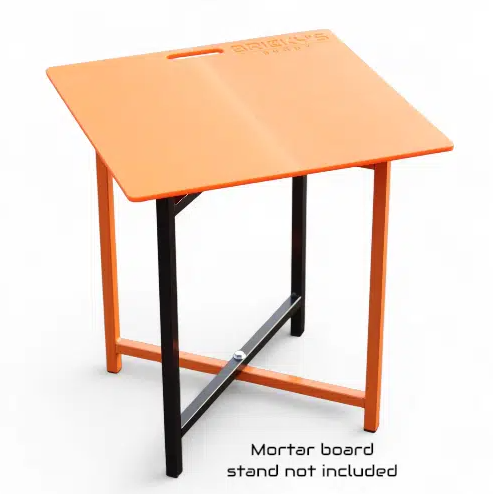
A mortar board provides a dedicated surface for holding mortar during masonry work. It gives bricklayers a convenient place to collect material with a trowel and transfer it to the bricks as construction progresses. Instead of repeatedly moving between a mixing area and the wall, workers can keep a manageable quantity of mortar close to their working position.
A suitable board should offer sufficient space for the amount of mortar required without becoming unnecessarily difficult to move. Its surface should also be practical to clean after use, helping prevent hardened material from interfering with future work.
The board's size, weight, durability, and compatibility with its support all influence how effectively it performs. Selecting equipment according to the scale of the job helps create a more comfortable and efficient working arrangement.
Why a Stable Stand Matters
A mortar board is only as practical as the support beneath it. Placing a board on an unsuitable surface can cause instability, awkward working positions, and unnecessary interruptions. A dedicated support helps position the mortar at a convenient height and keeps the work area better organised.
A reliable Spot Board Stand can provide a practical foundation for everyday masonry tasks. When properly positioned on firm, level ground, it helps keep the board accessible while reducing the need to bend repeatedly to reach materials.
Stability is particularly important when workers are handling mortar with a trowel. The support should be appropriate for the board's dimensions and intended load, with all legs and connections secured before work begins.
Bricklayers should also consider how easily the stand can be moved between work areas. A portable design can be useful when construction progresses along a wall or when equipment must be repositioned throughout the day.
Choosing the Right Mortar Board and Stand
Different construction projects create different demands, so there is no single setup suitable for every situation. A small garden wall may require less mortar and a compact working station, while an extensive building project may benefit from a larger board and a more robust support system.
When selecting a mortar board and stand, several practical considerations deserve attention.
Board dimensions: The board should accommodate a useful quantity of mortar without taking up excessive space. Its dimensions should suit the type of masonry being completed and the available working area.
Working height: A suitable height allows the bricklayer to reach the mortar comfortably. The correct position depends on the worker, the wall height, and the arrangement of the site.
Load capacity: The stand must safely support the board and its contents. Always follow the manufacturer's stated limits rather than estimating the maximum load.
Portability: Equipment that can be repositioned conveniently may help reduce unnecessary lifting and improve workflow as the project develops.
Durability: Construction equipment is exposed to mortar, moisture, dirt, and repeated handling. Strong materials and sound construction can help extend its useful life.
These factors should be considered together rather than choosing equipment based on price or appearance alone.
Exploring Different Mortar Board Stands
The term mortar board stands covers a range of support options designed for different working conditions. Some are intended for straightforward portability, while others prioritise strength and stability for demanding construction environments.
A lightweight stand may suit smaller jobs where equipment needs to be moved frequently. A heavier-duty option can be more appropriate for regular professional use, provided it remains compatible with the board and the conditions on site.
Before purchasing, bricklayers should check the stand's construction, locking arrangements, leg design, and compatibility with the intended board. Uneven ground may require the work area to be prepared before the equipment is positioned.
It is also worth considering storage. A stand that folds or dismantles conveniently can be easier to transport in a work vehicle and store between projects. However, convenience should never come at the expense of stability or the manufacturer's safety requirements.
Improving Workflow Through Better Organisation
An organised mortar station can make everyday bricklaying tasks more manageable. When mortar is placed within easy reach, workers can maintain a more consistent rhythm while laying bricks, checking alignment, and filling joints.
The board should be positioned so that it does not obstruct walkways, create a tripping hazard, or interfere with other trades. Bricks, tools, water containers, and other materials should be arranged thoughtfully to minimise unnecessary movement.
A properly planned mortar board bricklaying station can also support better housekeeping. Keeping mortar in a designated area reduces the likelihood of spills spreading across the site and makes it easier to identify when the board needs cleaning or replenishing.
Workers should avoid overloading the board or allowing mortar to accumulate around the edges. Regularly removing waste material helps maintain a usable surface and prevents dried mortar from becoming difficult to remove.
Maintaining the Board and Its Support
Routine maintenance helps preserve the condition and reliability of masonry equipment. After use, the board should be cleaned before mortar hardens. Suitable cleaning methods depend on the board's material, so manufacturer guidance should be followed.
The support should also be inspected periodically. Check for loose fasteners, bent components, damaged joints, and signs of corrosion where applicable. Any defective equipment should be taken out of service until it has been repaired or replaced appropriately.
Before each use, confirm that the stand is fully assembled, positioned on stable ground, and secured according to its instructions. The board should sit correctly on the support, with no unexpected movement during normal use.
Storing equipment in a dry, suitable location can help protect it from unnecessary weather exposure and make it easier to prepare for the next job.
Finding Equipment That Suits Professional Needs
For bricklayers who work regularly on different projects, choosing dependable equipment is an investment in day-to-day efficiency. A suitable Bricklayer Mortar Board arrangement should balance practicality, stability, portability, and durability rather than focusing on one feature alone.
Suppliers such as Bricky’s Buddy provide a point of reference for professionals exploring bricklaying tools and accessories. Before selecting any product, buyers should compare its specifications with their working requirements and confirm that the board and support are designed to work together.
It is equally important to consider the conditions in which the equipment will be used. Indoor preparation areas, outdoor building sites, and confined domestic projects may each require a different arrangement.
The most useful setup is one that fits the task, supports a safe working position, and remains straightforward to maintain over time.
Conclusion
A well-designed mortar station contributes to a more organised and consistent bricklaying process. The right board provides convenient access to mortar, while a compatible stand supports stability and a comfortable working height. Together, these components can reduce unnecessary movement and help workers concentrate on accurate masonry.
By assessing board dimensions, stand capacity, portability, maintenance requirements, and site conditions, professionals can choose equipment that suits their needs. A carefully selected mortar board bricklaying setup is a practical addition to a well-organised construction site and can support more efficient working habits across a variety of masonry projects.
Frequently Asked Questions
1. What is a mortar board used for in bricklaying?
A mortar board provides a convenient surface for holding mortar close to the bricklayer's working area. It allows workers to collect mortar with a trowel while laying bricks and completing joints.
2. Why should a mortar board be used with a stand?
A compatible stand raises the board to a more convenient working height and helps keep it stable. This arrangement can improve access to mortar and support a more organised workspace.
3. What should be considered when choosing a Spot Board Stand?
Important factors include stability, load capacity, working height, portability, construction quality, and compatibility with the board. The stand should always be used according to the manufacturer's instructions.
4. How can mortar board stands be maintained?
Clean the board after use, remove mortar before it hardens, and inspect the stand for loose fasteners, damage, or corrosion. Store the equipment appropriately and replace defective components before using it again.
5. How do bricklayers choose the right mortar board setup?
Bricklayers should consider the project's size, available working space, required mortar quantity, preferred working height, and frequency of equipment movement. The selected board and stand should be compatible and suitable for the intended load and site conditions.





Top comments (0)