

Biomass briquettes are compressed biofuels made from materials such as sawdust, wood waste, rice husk, groundnut shells, and other agricultural residues. Their quality depends not only on raw materials and production methods but also on how they are stored and handled after manufacturing. Biomass briquette storage and handling are important for maintaining fuel quality, reducing material losses, and protecting briquettes from moisture and physical damage.
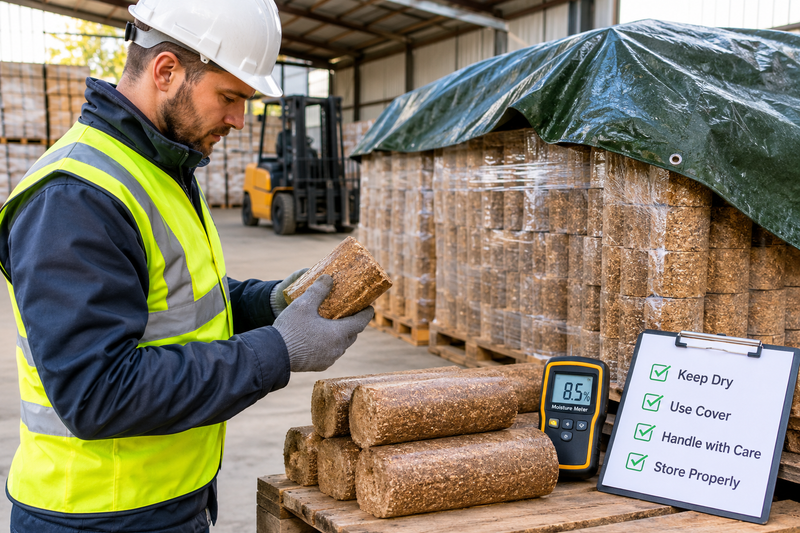
Proper storage practices help keep briquettes dry, strong, clean, and ready for use. In this guide, we will explain how to store biomass briquettes, prevent moisture damage, reduce breakage, and manage storage areas effectively.
Why Is Biomass Briquette Storage Important?
Biomass briquettes are compressed to create a solid fuel with a consistent shape and density. However, they can still be damaged by unsuitable storage conditions, especially when exposed to water, high humidity, poor ventilation, or excessive pressure.
Proper storage is important for several reasons:
- Protects fuel quality: Helps maintain the briquettes' shape, size, and combustion properties.
- Prevents moisture absorption: Reduces exposure to rain, damp floors, and humid conditions.
- Reduces breakage: Prevents unnecessary cracking during stacking and movement.
- Minimizes material waste: Keeps broken pieces and dust from increasing.
- Improves customer satisfaction: Helps deliver a more consistent product to buyers.
- Supports inventory management: Makes it easier to organize, inspect, and use stored stock. For biomass fuel manufacturers and distributors in Rajkot, India, good storage practices are especially useful during monsoon conditions and when briquettes are stored before dispatch.
How to Store Biomass Briquettes Properly?
The best way to store biomass briquettes is in a clean, dry, covered warehouse with good airflow and protection from rain, ground moisture, and excessive stacking pressure. Briquettes should be kept on pallets or raised platforms instead of directly on the floor.
- Choose a dry storage area Select a warehouse or covered storage space that is protected from rainwater, leaks, and dampness. Check the roof, walls, doors, and drainage system before storing large quantities.
The storage area should have:
- A waterproof roof
- Dry floors
- Proper drainage
- Protection from direct rain and water splashes
- Enough space for movement and inspection
- Controlled exposure to outside humidity where possible Avoid storing briquettes in open areas where changing weather can damage the fuel.
- Keep briquettes above the ground Do not place biomass briquettes directly on concrete floors, soil, or damp surfaces. Ground moisture can move into the packaging and gradually affect the briquettes.
Use:
- Wooden pallets
- Plastic pallets
- Raised platforms
- Suitable moisture-resistant storage bases Keeping bags or bundles elevated helps reduce contact with floor moisture and makes warehouse cleaning easier.
- Use suitable packaging Packaging acts as a protective layer against dust, moisture, and physical damage. Choose packaging based on the briquette type, storage duration, transportation method, and customer requirements.
Common options include:
- Woven polypropylene (PP) bags
- Moisture-resistant bags
- Bulk bags for larger quantities
- Protective wrapping for palletized stock Packaging should be strong enough to handle lifting and movement. If bags are torn or damaged, replace or repair them promptly to reduce exposure. How to Prevent Moisture in Biomass Briquettes?
Moisture is one of the major challenges in biomass briquette storage. Briquettes may absorb water when exposed to rain, humidity, damp surfaces, or wet packaging. Excess moisture can affect their burning performance and make handling more difficult.
Practical biomass briquette moisture prevention methods
- Store briquettes indoors whenever possible.
- Keep doors and windows protected from rain entry.
- Repair roof leaks immediately.
- Use waterproof covers for temporary outdoor storage.
- Ensure covers do not trap condensation.
- Keep briquettes away from wet raw materials and water sources.
- Check stored stock after heavy rain or humid weather.
- Make sure briquettes are adequately dried and cooled before packaging or stacking. Why should moisture be controlled? Moisture can lead to different quality problems depending on the raw material and briquette composition. Moisture-related problem Possible effect Water absorption Increased moisture content and weight Swelling Loss of shape or size consistency Cracking Weakened briquette structure Poor combustion Reduced useful heat and more energy used to evaporate water Mold risk Possible growth in damp conditions with prolonged exposure Packaging damage Softening, tearing, or weakening of some bags
Keep in mind that moisture tolerance varies depending on the biomass material, binder, density, and production process. Inspect your briquettes regularly rather than relying only on storage duration.
How to Prevent Biomass Briquettes from Breaking?
Briquette breakage can happen during stacking, loading, unloading, packaging, or transportation. Although some breakage may occur naturally, careful handling can reduce unnecessary damage and help preserve the product's physical quality.
- Avoid excessive stacking pressure Stacking too many bags or bundles on top of each other can put extra pressure on the lower layers. This may cause briquettes to crack, crush, or lose their shape.
Follow these practices:
- Use stable, properly aligned stacks.
- Avoid placing excessive weight on the bottom layer.
- Follow the packaging or supplier's recommended stacking limit.
- Do not make stacks too high or unstable.
- Leave space between stacks for inspection and safe movement.
- Handle bags carefully during loading and unloading Throwing, dropping, or dragging bags can increase breakage. Operators should lift and place bags carefully instead of allowing them to fall from heights.
Good handling practices include:
- Avoid dropping bags from trucks or warehouse platforms.
- Use suitable material-handling equipment for heavy loads.
- Keep the loading area clean and free from obstacles.
- Avoid dragging bags across rough floors.
- Train workers in safe lifting and handling procedures.
- Use suitable transportation methods Transportation can cause briquettes to rub against each other, shift, or experience repeated impacts. Proper arrangement inside vehicles helps reduce unnecessary movement.
- Load briquettes evenly.
- Keep bags tightly arranged but not excessively compressed.
- Use suitable protective sheets where needed.
- Secure loads to prevent shifting during travel.
- Avoid placing heavy materials on top of briquette bags.
- Check packaging before dispatch. What Are the Proper Storage Conditions for Biomass Briquettes? The proper storage conditions for biomass briquettes depend on the raw material, packaging, moisture level, and expected storage period. However, some general warehouse practices can help maintain product quality. Storage factor Recommended practice Location Covered, dry warehouse Floor Dry, clean, raised pallet storage Rain protection Prevent direct water exposure and leakage Ventilation Allow suitable airflow without exposing stock to rain Stacking Stable stacks within safe height limits Packaging Strong, suitable bags or protective wrapping Inspection Regular checks for dampness, damaged bags, and breakage Stock rotation Use older stock first when quality is maintained
Avoid assuming that all briquettes have the same storage life. Some types may remain stable for longer periods under dry conditions, while others may be more sensitive to humidity or packaging damage.
Biomass Briquette Handling During Storage and Transportation
Proper biomass briquette handling is important from the production area to the warehouse and finally to the customer. The goal is to prevent unnecessary impact, friction, pressure, and moisture exposure at every stage.
Handling practices for biomass businesses
During packaging
- Allow briquettes to cool adequately before packing.
- Ensure packaging is clean and dry.
- Check bags for holes or weak seams.
- Avoid filling bags beyond their suitable capacity. During warehouse movement
- Use pallets or suitable handling equipment.
- Keep aisles clear and clean.
- Avoid frequent shifting of the same stock.
- Move bags carefully to prevent friction and impact. During dispatch
- Inspect the packaging before loading.
- Keep the vehicle clean and dry.
- Use appropriate covers during transit.
- Protect briquettes from rain and road splash.
- Arrange loads to minimize movement. These steps can help biomass business owners improve product consistency and reduce losses during delivery. How to Manage Biomass Briquette Inventory in a Warehouse? Good inventory management helps businesses keep track of stock quality, quantity, and storage time. It also reduces the chance of older material being left behind or damaged without being noticed. Follow a simple inventory system
- Record incoming stock: Note the production date, quantity, batch, and briquette type.
- Inspect packaging: Check for torn bags, wet patches, or visible breakage.
- Organize stock: Keep different types and batches in separate, clearly marked areas.
- Use FIFO: Follow First In, First Out, where appropriate, so older stock is dispatched first.
- Schedule inspections: Check the warehouse regularly, especially after rain or humid weather.
- Record damaged stock: Track broken, wet, or unusable material and investigate the cause. A simple inventory register can help identify whether breakage occurs during production, storage, or transportation. Common Biomass Briquette Storage Mistakes to Avoid Common mistake How to avoid it Storing bags directly on the floor Use pallets or raised platforms Leaving briquettes uncovered outdoors Use covered storage and protective packaging Stacking bags too high Maintain stable, safe stacking heights Ignoring damaged packaging Repair or replace bags promptly Loading bags by throwing them Use careful lifting and placement Storing stock near leaks Fix leaks and move stock to dry areas Not inspecting old stock Create a regular inspection schedule Mixing broken and good briquettes Separate and assess damaged stock
Avoiding these mistakes can help preserve briquette strength, reduce waste, and improve customer experience.
How Can Biomass Businesses Improve Briquette Storage Quality?
Biomass businesses can improve storage quality by combining proper packaging, warehouse organization, worker training, and regular quality checks. A well-managed storage system is not only about keeping products dry; it is also about protecting the briquettes from physical damage and maintaining consistency between batches.
Businesses can follow this checklist:
- Check briquette quality before packaging.
- Ensure briquettes are sufficiently cooled and dried.
- Use suitable bags and packaging materials.
- Store products on raised pallets.
- Keep the warehouse clean and dry.
- Train staff to avoid rough handling.
- Inspect bags and stacks regularly.
- Maintain batch-wise stock records.
- Protect stock during loading and transportation. For manufacturers and plant operators, these practices can become part of a routine quality-control process. Shree Khodiyar Engineering Works understands the importance of reliable biomass processing equipment and consistent production practices in helping biomass businesses achieve better operational results. Also Read: Related Biomass Guides Internal links help readers discover related information on your website and help search engines understand how your content is connected. Add relevant links to other blogs or product pages using natural anchor text within the article.
Frequently Asked Questions (FAQs)
- How should biomass briquettes be stored? Biomass briquettes should be stored in a dry, covered, well-maintained warehouse. Keep them on raised pallets, away from water, damp floors, and direct rain. Use suitable packaging to protect them from moisture and physical damage.
- How can moisture damage biomass briquettes? Moisture can increase the water content of briquettes, causing swelling, cracks, reduced combustion efficiency, and possible mold growth during prolonged damp storage. Keeping them dry helps maintain their fuel quality.
- How to prevent biomass briquettes from breaking during transportation? Use strong packaging, avoid dropping bags, arrange loads evenly, prevent excessive stacking pressure, and secure briquettes properly inside the vehicle. Careful loading and unloading also help reduce breakage.
- What is the best packaging for biomass briquettes? Woven PP bags, suitable bulk bags, and moisture-resistant packaging are common choices. The best option depends on briquette size, storage duration, transport conditions, and buyer requirements.
- How long can biomass briquettes be stored? Biomass briquettes can be stored for different periods depending on their composition, initial moisture content, packaging, and warehouse conditions. Dry, protected storage helps extend their usable storage period, but stock should be inspected regularly for moisture and damage.
Conclusion
Proper biomass briquette storage and handling are essential to protect fuel quality, minimize breakage, and reduce material waste. Keeping briquettes away from moisture, using suitable packaging, storing them on raised pallets, avoiding excessive stacking, and handling bags carefully can make a significant difference to storage performance.
For biomass business owners, a well-organized warehouse and a simple inspection routine can help protect inventory from avoidable damage. Whether briquettes are being stored for a few days or longer before dispatch, the right practices help maintain product quality from production to delivery.
At Ronak Engineering, efficient biomass processing and reliable machinery are important parts of supporting biomass fuel businesses. Combining consistent production with proper storage and handling practices helps businesses maintain quality and build stronger customer relationships.





Top comments (0)