

India is strengthening its position in the global semiconductor industry through investments in chip manufacturing, research, innovation, and skill development. Semiconductors are essential components of smartphones, computers, electric vehicles, medical equipment, artificial intelligence systems, and modern communication technologies. As demand for advanced electronic devices continues to grow, developing a skilled semiconductor workforce has become an important national priority.
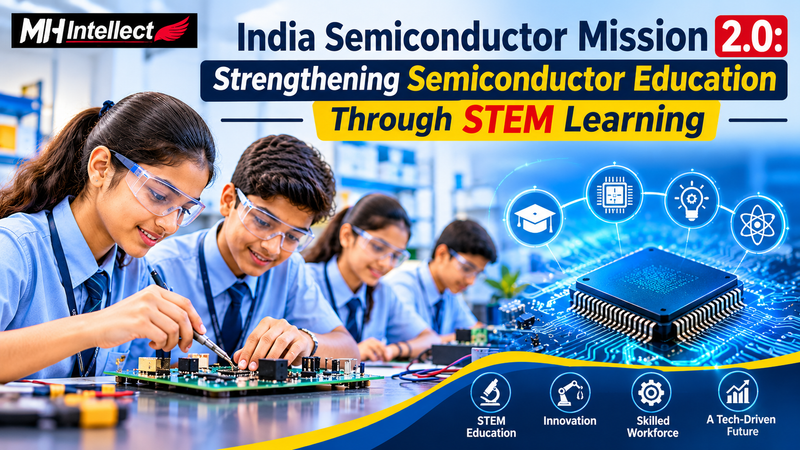
India's semiconductor initiatives create opportunities not only for industries but also for educational institutions to prepare students for future technology careers.
Understanding India Semiconductor Mission 2.0
India's semiconductor development strategy focuses on building a strong domestic semiconductor ecosystem. The India Semiconductor Mission supports semiconductor manufacturing, display technologies, research, and the development of advanced electronics capabilities.
The emphasis on India Semiconductor Mission 2.0 education highlights the importance of developing technical knowledge and industry-ready skills. Educational institutions can contribute by introducing students to electronics, engineering principles, chip design concepts, and emerging technologies.
Early exposure to these subjects can help learners understand the technologies behind modern electronic products and encourage them to explore careers in semiconductor engineering.
Why Semiconductor Education in STEM Matters
STEM education combines science, technology, engineering, and mathematics to develop practical knowledge and problem-solving abilities. These subjects provide the foundation for understanding semiconductor devices and electronic systems.
Semiconductor education in STEM introduces students to essential concepts such as electrical circuits, electronic components, sensors, microcontrollers, and digital systems. Through hands-on experiments and project-based activities, learners can connect classroom concepts with real-world applications.
This approach encourages curiosity, logical thinking, creativity, and technical confidence. It also helps students understand how semiconductor technology supports innovations in robotics, automation, artificial intelligence, and renewable energy.
The Role of STEM Semiconductor Learning in Future Careers
The semiconductor industry requires professionals with knowledge of electronics, materials science, computer engineering, programming, and manufacturing processes. Building these skills begins with strong educational foundations.
STEM semiconductor learning provides students with opportunities to explore electronic systems through practical learning experiences. Activities involving circuit building, coding, robotics, and electronic projects can help learners develop an understanding of engineering concepts.
Schools that integrate technology-focused STEM programmes can encourage students to think creatively and develop skills relevant to future industries. Such learning experiences also help bridge the gap between theoretical education and practical technological applications.
The Future of Semiconductors and Technological Innovation
Semiconductor technology continues to evolve through artificial intelligence, advanced chip manufacturing, electric mobility, and high-performance computing. New materials and innovative chip architectures are helping create smaller, faster, and more energy-efficient electronic devices.
The Future of Semiconductors will depend on continued research, technological innovation, and skilled professionals who can develop next-generation electronic solutions.
As India's semiconductor ecosystem expands, students with strong STEM foundations will have more opportunities to understand and participate in emerging technology fields.
How MH Intellect Supports Future-Ready STEM Education
Preparing students for a technology-driven world requires more than textbook knowledge. Practical learning, experimentation, and innovation help learners understand how scientific and engineering concepts work in real-life situations.
MH Intellect promotes STEM-focused learning experiences that encourage students to explore science, technology, engineering, and mathematics through hands-on activities. By introducing learners to robotics, electronics, coding, and engineering concepts, STEM education can help build the technical foundation needed for future innovation.
Conclusion
India's semiconductor ambitions highlight the growing importance of technical education and workforce development. Integrating semiconductor concepts into STEM learning can help students develop essential skills, understand emerging technologies, and prepare for future career opportunities.
By combining practical education with technological awareness, schools and STEM learning providers can contribute to building a skilled generation ready to support India's growing semiconductor ecosystem.





Top comments (0)