

Biomass pellet manufacturing is an important part of converting agricultural waste, wood residues, and other organic materials into useful renewable fuel. However, running a biomass pellet plant efficiently is not always easy. Manufacturers often face problems related to raw material availability, moisture content, machine performance, electricity consumption, pellet quality, and production costs. Understanding these biomass pellet manufacturing challenges is important for businesses that want to maintain consistent production and reduce unnecessary losses.
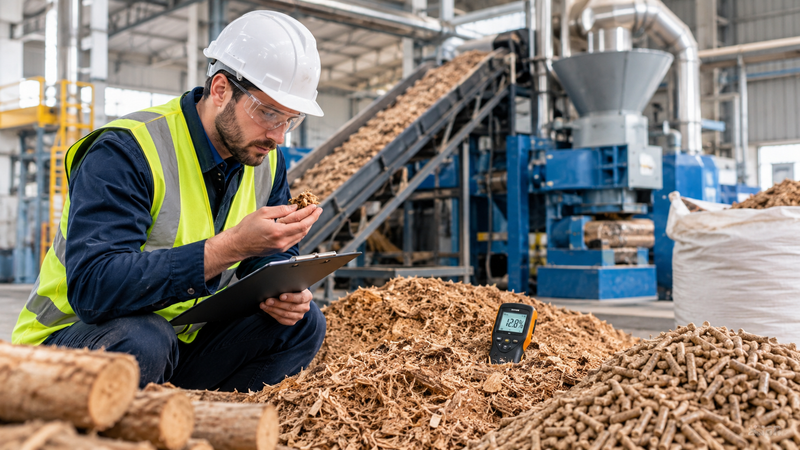
The quality of biomass pellets depends on several factors, including feedstock selection, particle size, drying, conditioning, compression, cooling, and storage. A problem at any stage can affect the final product and create difficulties during transportation or use.
For biomass business owners, identifying these challenges early can help improve plant efficiency, manage operating expenses, and produce pellets that meet customer requirements. In this guide, we will discuss the major challenges in biomass pellet manufacturing and practical ways to manage them.
What Are the Major Biomass Pellet Manufacturing Challenges?
The major biomass pellet manufacturing challenges include inconsistent raw materials, seasonal feedstock shortages, high moisture content, uneven particle size, machine wear, pellet breakage, production downtime, and rising operational costs.
Each challenge can affect a different part of the manufacturing process. Some problems begin before the raw material reaches the plant, while others develop during drying, grinding, pelletizing, cooling, or packaging.
| Manufacturing challenge | Impact on production |
|---|---|
| Raw material shortage | Interrupts continuous production |
| High moisture content | Increases drying requirements and energy costs |
| Uneven particle size | Affects feeding and pellet formation |
| Machine wear | Increases maintenance and downtime |
| Weak pellet formation | Causes breakage and more fines |
| High electricity consumption | Raises operating expenses |
| Poor storage | Damages raw materials and finished pellets |
| Inconsistent fuel quality | Creates customer complaints or rejection risks |
Managing these issues requires proper planning, suitable equipment, routine maintenance, and regular quality checks.
1. Raw Material Availability and Quality
Raw material is the foundation of biomass pellet production. Common materials include sawdust, rice husk, groundnut shells, mustard stalks, cotton stalks, agricultural residues, wood waste, and other biomass materials.
However, manufacturers may not receive the same raw material quality throughout the year. Different suppliers can provide materials with different moisture levels, particle sizes, ash content, and physical properties. This variation makes it difficult to maintain a consistent production process.
Why does raw material supply become a challenge?
- Agricultural residues are available mainly during specific harvesting seasons.
- Some raw materials are already used for animal feed, compost, or other industries.
- Transportation costs can increase when materials are sourced from distant locations.
- Wet or contaminated materials may require additional processing.
- The quality of raw materials can change between suppliers and batches.
How can manufacturers manage raw material problems?
- Build relationships with multiple reliable suppliers.
- Plan seasonal procurement before feedstock becomes scarce.
- Inspect incoming materials before accepting deliveries.
- Store raw materials in covered, dry areas.
- Separate materials according to type, moisture, and quality.
- Evaluate local feedstock availability before expanding production.
A reliable supply chain helps reduce unexpected shutdowns and supports stable production throughout the year.
2. High Moisture Content in Biomass
Moisture control is one of the most important biomass pellet manufacturing challenges. Raw biomass may contain a significant amount of water, especially when collected after rainfall or stored in open areas.
Excess moisture makes biomass harder to process and can affect pellet strength, formation, and quality. It may also increase the amount of energy required for drying, raising production costs.
How does excess moisture affect pellet production?
- Increases the load on drying equipment.
- Raises fuel or thermal energy consumption.
- Makes feeding and grinding less consistent.
- Can produce soft or weak pellets.
- May cause cracking or deformation after cooling.
- Increases the risk of storage-related quality problems.
How to manage biomass moisture?
Manufacturers should measure the moisture content of raw materials before processing and adjust drying based on feedstock conditions.
Practical methods include:
- Pre-drying: Use natural drying when weather and space permit.
- Mechanical drying: Use suitable dryers when natural drying is insufficient.
- Covered storage: Protect raw materials from rain and damp conditions.
- Moisture monitoring: Check moisture at different stages of production.
- Dryer maintenance: Keep hot-air systems, material flow, and discharge working properly.
The required moisture level varies with biomass type, machine design, and process conditions. Avoid using one fixed setting for every material without testing.
3. Uneven Particle Size and Grinding Problems
Biomass materials come in different shapes and sizes. Large pieces, fibres, chips, and coarse particles may not feed smoothly into a pellet machine.
Grinding and size reduction help prepare biomass for uniform feeding and compression. However, incorrect grinding can create either oversized particles or excessive fine powder.
Common grinding problems
- Large particles that block feeding systems.
- Uneven material flow into the pellet machine.
- Excessive fine powder and dust.
- Increased electricity consumption during grinding.
- Irregular pellet size and density.
How to improve particle size consistency?
Use an appropriate hammer mill or grinding system with a suitable screen size. Inspect screens regularly and replace damaged parts. Select the grinding size based on the feedstock and pellet machine requirements rather than assuming all biomass needs the same particle size.
Uniform material preparation helps create more consistent pellets and supports stable machine operation.
4. Difficulty Maintaining Pellet Quality
Producing pellets that look uniform is not enough. Biomass pellets should also have suitable strength, durability, moisture content, density, and combustion properties for their intended application.
When feedstock changes or machine settings are unsuitable, pellets may become soft, cracked, too short, too long, or inconsistent.
Factors affecting biomass pellet quality
| Factor | Effect on pellets |
|---|---|
| Raw material composition | Influences binding and fuel properties |
| Moisture content | Affects compression, strength, and formation |
| Particle size | Influences uniformity and pellet structure |
| Die and roller condition | Affects compression and pellet formation |
| Temperature and conditioning | Influences material binding behavior |
| Cooling process | Helps pellets stabilize after production |
Ways to improve pellet quality
- Use consistent feedstock wherever possible.
- Maintain suitable moisture levels.
- Avoid sudden changes in material composition.
- Inspect the die and rollers regularly.
- Monitor pellet size, strength, and fines.
- Allow pellets to cool properly before packaging.
Regular testing helps manufacturers identify quality problems before large quantities are produced.
5. Biomass Pellet Machine Wear and Maintenance
Biomass pellet machines operate under pressure, friction, and continuous material flow. Over time, important parts such as dies, rollers, bearings, screens, and drive components can wear out.
Certain biomass materials contain abrasive substances such as silica, which can increase wear on processing equipment.
Common machine-related problems
- Die-hole blockage
- Roller wear
- Bearing overheating
- Unusual vibration or noise
- Motor overload
- Reduced production output
- Frequent stoppages
How can machine downtime be reduced?
- Follow the manufacturer's maintenance schedule.
- Inspect rollers, dies, bearings, and lubrication systems.
- Keep feed material free from stones and metal.
- Install and maintain suitable magnetic separators.
- Monitor unusual vibration, temperature, and noise.
- Replace worn parts before they cause major breakdowns.
Preventive maintenance is usually more manageable than waiting for equipment failure during production.
6. High Energy Consumption and Production Costs
Biomass pellet manufacturing requires energy for drying, grinding, feeding, compression, cooling, and material handling. Electricity and thermal energy costs can affect the profitability of the plant.
Wet feedstock may increase drying requirements, while unsuitable particle size can increase grinding demand. Machine wear or incorrect operating conditions may also reduce output and increase energy consumption per tonne of finished pellets.
What increases biomass pellet manufacturing costs?
- Raw material purchase prices
- Feedstock transportation
- Drying fuel consumption
- Electricity usage
- Labour expenses
- Maintenance and spare parts
- Packaging and storage
- Production waste and rejected pellets
How to control production expenses?
Businesses should monitor energy usage, raw material wastage, machine downtime, and output regularly. Comparing electricity consumption per tonne can help identify inefficient stages of production.
Improving the quality of incoming material, maintaining machines, and reducing avoidable stoppages can help control operating costs.
7. Seasonal Production and Biomass Storage
Biomass availability often changes throughout the year. Agricultural residues may be easy to collect during harvest periods but harder to obtain during other seasons. Rain and humidity can further affect collection, drying, and storage.
If manufacturers do not plan raw material storage, production may slow down or stop when feedstock supply becomes limited.
How can manufacturers manage seasonal supply?
- Estimate annual raw material requirements.
- Procure suitable materials during availability periods.
- Create a covered storage area.
- Use proper stacking and ventilation.
- Monitor stored material for moisture and deterioration.
- Organize inventory using batch records and stock rotation.
Proper storage planning helps keep production running when fresh raw materials are less available.
8. Production Downtime and Material Flow Problems
A biomass pellet plant includes several connected stages. If one stage operates slower than the others, it can affect the entire production line.
For example, if the dryer cannot supply enough prepared material, the pellet machine may remain idle. If the grinder produces inconsistent material, the pelletizing stage may experience feeding problems.
Common causes of production downtime
- Dryer capacity limitations
- Grinder blockages
- Irregular feeding
- Pellet machine overload
- Electrical interruptions
- Worn components
- Poor coordination between equipment
Ways to improve production flow
- Match equipment capacity across different stages.
- Maintain steady raw material feeding.
- Inspect conveyors and transfer systems.
- Keep a record of downtime causes.
- Schedule preventive maintenance.
- Train operators to identify early warning signs.
A balanced production line can help reduce bottlenecks and improve the use of available machinery.
9. Pellet Breakage, Dust, and Fines
Pellet breakage is another common issue in biomass manufacturing. Pellets may crack or produce fines when the raw material is poorly prepared, moisture is unsuitable, compression is inconsistent, or pellets are handled before they are properly cooled.
Excessive fines may affect product quality, increase material losses, and create dust-related housekeeping and safety concerns.
How to reduce pellet breakage?
- Maintain consistent feedstock particle size.
- Adjust moisture according to the material.
- Inspect the pellet machine's die and roller condition.
- Avoid excessive or insufficient compression.
- Allow adequate cooling after pelletizing.
- Use careful handling and suitable packaging.
- Screen finished pellets when required.
Manufacturers should identify where breakage occurs—during production, cooling, packaging, or transportation—before making process changes.
10. How to Choose the Right Equipment for Biomass Pellet Manufacturing?
Selecting suitable equipment is essential for handling different raw materials and achieving the desired production capacity. A machine that works well with one biomass material may not deliver the same results with another.
Before choosing machinery, businesses should consider the type of raw material, moisture level, particle size, required output, available power, space, and budget.
Important equipment selection factors
| Equipment | What to evaluate |
|---|---|
| Hammer mill | Grinding capacity, screen size, and material compatibility |
| Biomass dryer | Moisture removal capacity and energy requirement |
| Pellet machine | Feedstock suitability, capacity, die design, and compression |
| Conveyor system | Material flow and handling capacity |
| Pellet cooler | Cooling capacity and finished product stability |
| Screening system | Separation of fines and oversized material |
A properly planned plant should have equipment that works together as a complete production system, not just individual machines selected by rated capacity.
How Can Biomass Manufacturers Improve Overall Production Efficiency?
Improving biomass pellet production requires attention to the entire process, from raw material procurement to finished pellet storage.
Here are practical steps manufacturers can follow:
- Inspect raw materials: Check moisture, cleanliness, and particle characteristics before processing.
- Prepare feedstock properly: Dry and grind materials according to process requirements.
- Maintain consistent feeding: Avoid irregular material flow into the pellet machine.
- Monitor operating conditions: Track production output, machine temperature, current, and pellet quality.
- Maintain equipment: Inspect parts and carry out scheduled maintenance.
- Reduce material losses: Monitor dust, fines, rejected pellets, and spillages.
- Improve storage: Protect raw materials and finished pellets from rain and moisture.
- Train operators: Help workers understand machine operation and troubleshooting.
Small improvements across several production stages can make a meaningful difference to plant performance over time.
Why Choose Shree Khodiyar Engineering Works for Biomass Processing Solutions?
Choosing suitable machinery and understanding the biomass processing requirements are important steps for establishing or improving a pellet manufacturing operation.
Shree Khodiyar Engineering Works focuses on biomass processing machinery and solutions designed around material preparation, size reduction, and biomass fuel production needs.
When planning a biomass processing setup, manufacturers should evaluate:
- Raw material type and availability
- Required production capacity
- Moisture handling and drying needs
- Grinding and material preparation requirements
- Equipment compatibility
- Maintenance and operational requirements
A well-planned machinery setup can help businesses process biomass more efficiently and develop a reliable production workflow.
Frequently Asked Questions (FAQs)
1. What are the main biomass pellet manufacturing challenges?
The main challenges include raw material availability, moisture control, particle size variation, machine wear, energy consumption, pellet breakage, production downtime, and maintaining consistent product quality.
2. Why is moisture control important in biomass pellet production?
Moisture affects material feeding, compression, binding, pellet strength, drying energy requirements, and final quality. Excessive moisture may produce weak pellets, while overly dry feedstock may increase friction and processing difficulties.
3. Which raw materials are used for biomass pellet manufacturing?
Common raw materials include sawdust, rice husk, groundnut shells, wood waste, mustard stalks, cotton stalks, and other agricultural residues. Suitability depends on material properties and the required pellet quality.
4. How can biomass pellet manufacturers reduce production costs?
Manufacturers can reduce costs by improving raw material sourcing, controlling moisture, maintaining equipment, reducing downtime, monitoring electricity consumption, and minimizing fines and rejected products.
5. How can biomass pellet quality be improved?
Pellet quality can be improved through consistent raw material preparation, suitable moisture content, uniform particle size, proper machine settings, routine maintenance, adequate cooling, and regular quality checks.
Conclusion
Biomass pellet manufacturing offers opportunities to convert agricultural residues and other biomass materials into useful fuel. However, manufacturers must manage several challenges to maintain stable production and product quality.
Raw material shortages, moisture variations, grinding problems, machine wear, energy costs, and pellet breakage can affect daily operations. By improving feedstock planning, moisture control, machine maintenance, production monitoring, and storage practices, biomass businesses can reduce avoidable losses and improve overall efficiency.
Shree Khodiyar Engineering Works aims to support biomass processing businesses with machinery and production solutions that help turn biomass resources into valuable fuel products.





Top comments (0)