
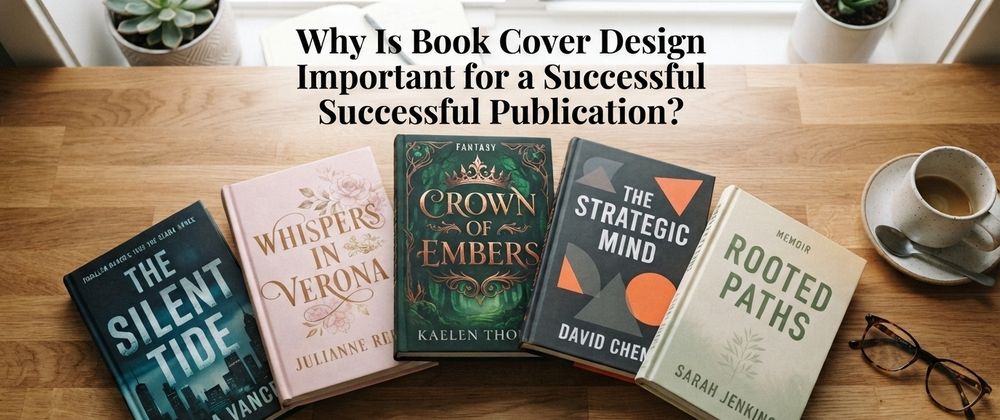

Book cover design is important because the cover is the first thing a reader judges, often in a few seconds and at thumbnail size. A well-designed cover signals genre, communicates quality, builds trust, and pushes a browsing reader toward the "Look Inside" button. That is why many authors invest in professional book cover design services before they invest in advertising.
What Does a Book Cover Actually Do?
A book cover does four jobs at once:
- Attracts attention in crowded spaces like Amazon, Kobo, Apple Books, and bookstore shelves
- Signals genre so the right readers recognize your book instantly
- Builds credibility by showing the book was produced with care
- Supports the sales pitch by working alongside the title, subtitle, and description. Think of the cover as your book's handshake. Readers form an impression before they read a single word of your blurb.
Why First Impressions Drive Book Sales
Readers browse quickly. Online, your cover often appears as a small image in search results, "also bought" carousels, and ads. If it is cluttered, generic, or unreadable at that size, most people scroll past.
Retail listings work the same way across major platforms, including Amazon KDP, IngramSpark, and Barnes & Noble Press. The cover earns the click, and the description and reviews finish the job. A weak cover can hide a strong manuscript.
Does a Professional Cover Really Affect Sales?
Yes, though the exact effect varies by genre, pricing, and marketing. A cover cannot rescue a poorly written book, but it strongly influences whether a reader gives a good book a chance. Many publishers and self-published authors treat the cover as a core part of their marketing, not a finishing touch.
Genre Signals: Speaking the Reader's Visual Language
Every genre has visual conventions. Romance often uses warm tones and expressive typography. Thrillers lean on dark palettes and bold, high-contrast titles. Fantasy tends toward illustrated scenes or emblematic symbols. Nonfiction and business books usually favor clean layouts and clear, confident type.
Ignoring these conventions can confuse readers about what the book is. Following them too rigidly can make a book look like everything else. The best creative book cover solutions balance both: familiar enough to be understood at a glance, distinctive enough to be remembered.
What Makes a Book Cover Design Effective?
Effective covers share several qualities:
- Legibility at thumbnail size. The title should be readable even when the image is about the size of a postage stamp.
- A clear focal point. One strong image or idea beats several competing ones.
- Typography that fits the tone. Fonts carry emotion; a playful script suits a cozy mystery, not a legal guide.
- Consistent color and mood. The palette should match the book's promise.
- Print and digital readiness. Files must meet trim size, bleed, spine width, and resolution requirements for both ebook and print. That last point is where DIY covers often fail. A design that looks fine on screen can print with cropped text, muddy colors, or a misaligned spine.
The Cover as a Branding Tool for Authors
For authors writing more than one book, cover design is also brand design. Consistent layouts, fonts, and color systems help readers recognize a series or an author's body of work at a glance. This is especially valuable in series-driven genres like fantasy, mystery, and romance, where readers often buy in sequence.
Nonfiction authors benefit too. A cohesive cover builds authority for consultants, coaches, and speakers who use their book as a credibility asset.
Signs You Need Professional Book Cover Design Services
Consider hiring a professional designer if:
- Your cover looks similar to a template used by many other books
- Your title is hard to read as a thumbnail
- You are publishing in both print and ebook formats
- You are launching a series and need a consistent visual system
- You are unsure which conventions your genre expects Professional designers bring market awareness, typography skills, and technical knowledge of print specifications. At Spark Leaf Publishing, we approach cover design as a collaboration: understanding the story, the audience, and the market before a single concept is drawn.
How to Choose a Book Cover Designer
Before you commit, look for:
A relevant portfolio. Check that they have designed in your genre.
A clear process. Good designers explain their briefing, concept, revision, and delivery stages.
Technical competence. Ask whether they supply print-ready files with correct bleed and spine dimensions.
Transparent rights and licensing. Confirm who owns the final artwork and how stock imagery or fonts are licensed.
Honest communication. A designer should explain their choices, not just follow trends.
**Common Book Cover Mistakes to Avoid
- Using too many fonts or effects
- Choosing low-resolution or unlicensed images
- Putting small text on busy backgrounds
- Copying a bestseller so closely that your book looks derivative
- Skipping the back cover, spine, and blurb layout
FAQs
How much does professional book cover design cost?
Prices vary widely depending on the designer's experience, whether custom illustration is involved, and whether you need ebook, paperback, and hardcover versions. Request quotes from several designers and compare what each package includes, such as revisions, formats, and file types.
How long does book cover design take?
Most custom projects take from one to several weeks, depending on the briefing, revision rounds, and complexity. Allow extra time if you need illustration or a series-wide design system.
Can I design my own book cover?
You can, and some authors do it well. However, self-designed covers often struggle with typography, thumbnail legibility, and print specifications. If you go this route, study bestselling covers in your genre and test your design at small sizes.
Does the cover matter more than the title?
They work together. The cover attracts attention, and the title and subtitle explain the promise. A strong cover with a confusing title, or the reverse, weakens both.
What file formats do I need for a book cover?
Ebooks typically need a high-resolution JPEG or PNG front cover. Print books need a full wrap PDF including front, spine, and back, sized to your printer's exact specifications. Always check your platform's current guidelines.
Should I redesign my cover if sales are slow?
Possibly. If your book is well reviewed but not converting browsers into buyers, the cover, title, or description may be the issue. Comparing your cover with top sellers in your category is a good first diagnostic step.
Final Thoughts
A book cover is more than decoration. It is a marketing asset, a genre signal, and a trust builder rolled into one image. Whether you publish independently or through a traditional route, investing in professional book cover design services gives your manuscript the best chance of reaching the readers it deserves.
If you are exploring creative book cover solutions for your next release, the team at Spark Leaf Publishing can help you shape a cover that fits your story, your genre, and your goals.







Top comments (0)