
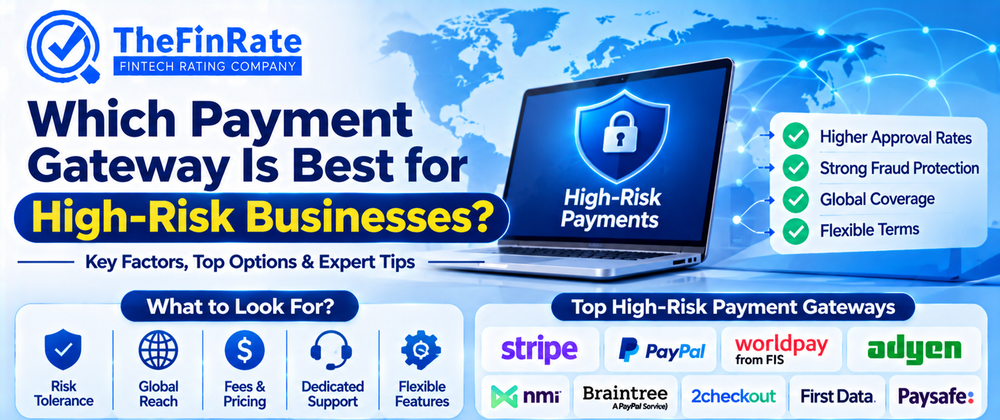

Finding the right payment gateway for high-risk businesses is harder than choosing a standard checkout tool. Many mainstream providers decline or later close accounts in industries with high chargebacks, regulatory pressure or fraud exposure. So which gateway is actually best? There is no single winner. The best option is the one that accepts your exact business model, prices transparently, keeps your funds stable and can scale with your volume.
This guide explains why some businesses are labelled high risk, which types of gateways serve them, the criteria that matter most, and the mistakes to avoid. For a ranked list of providers, see TheFinRate's high-risk merchant account providers guide.
Quick Answer
The best high-risk payment gateway is a provider that explicitly underwrites your industry, ideally owns or has a direct acquiring relationship, states its reserves and fees in writing, and offers strong chargeback and fraud tools. Most merchants should shortlist three to five providers, compare total cost rather than headline rates, and keep a backup gateway in place.
Why Some Businesses Are Considered High Risk
Acquiring banks and payment providers assess risk using industry, chargeback history, refund rates, business age, geography and the type of product sold. Sectors commonly treated as high risk include:
Forex, trading and investment platforms
Online gaming, betting and iGaming
Adult content and dating
CBD, vape and supplements
Travel, ticketing and subscriptions with recurring billing
Crypto-related services
Telemedicine, debt collection and some digital services
Being high risk does not mean a business is illegal. It means the provider expects higher losses from chargebacks, fraud or regulatory exposure, and prices and underwrites accordingly.
Types of Payment Gateways for High-Risk Merchants
Specialist high-risk processors
These providers focus on restricted industries and have bank relationships that accept them. Approval is usually faster than at mainstream providers, but pricing is higher and reserves are common.
Direct acquirers with their own gateway
Providers that hold their own acquiring licence and run their own gateway can underwrite and manage risk in-house. This often means fewer middlemen and clearer decisions on approvals and holds.
Payment orchestration and white-label gateways
Orchestration platforms route traffic across several acquirers and use cascading to retry declined payments. They suit larger merchants that want redundancy and control over approval rates.
Crypto payment gateways
Some merchants add crypto acceptance as an alternative rail. Legal and compliance requirements differ by country, so check them first. TheFinRate's guide to crypto payment gateways for high-risk businesses explains the options.
Criteria That Matter Most
Criteria What to check Why it matters
Industry acceptance Written confirmation that your exact model is accepted Avoids sudden closure after onboarding
Fees and pricing Rates, setup, monthly, chargeback, payout and currency fees Total cost is often higher than the headline rate
Reserves and settlement Rolling reserve terms and payout timing Affects cash flow directly
Chargeback tools Alerts, dispute management, 3D Secure support Helps keep ratios within card network limits
Approval and routing Cascading, multiple acquirers, local methods Improves approval rates and resilience
Compliance PCI DSS, licences, KYC process Protects you from regulatory and fund-freeze risk
How to Choose the Best Option for Your Business
Define your industry, monthly volume, average ticket size, chargeback rate and target countries.
Shortlist providers that name your industry in their accepted business list.
Ask for written pricing and the full contract, including reserve, termination and fund-holding clauses.
Check how the provider handles chargebacks and what tools you get.
Test the integration in a sandbox and review support quality before going live.
Add a second gateway as a backup once volume grows.
You can compare providers by region and business type in TheFinRate's payment gateway reviews.
Common Mistakes to Avoid
Choosing a general provider that later closes the account because the industry was not disclosed.
Trusting ranking pages without checking who wrote them. Many are produced by providers promoting themselves.
Comparing only the percentage rate and ignoring reserves, chargeback fees and payout terms.
Relying on a single gateway with no backup plan.
Letting chargebacks climb without a prevention process.
Frequently Asked Questions
What is the best payment gateway for high-risk businesses?
It depends on your industry, location and volume. The best fit is a provider that accepts your model, has clear pricing and reserves, and offers solid chargeback tools.
Why are high-risk gateways more expensive?
Providers carry more exposure to chargebacks, fraud and compliance issues, so they charge higher fees and may hold a reserve.
What is a rolling reserve?
A percentage of your sales is held back for a set period to cover possible chargebacks or refunds, then released over time.
Can I switch gateways later?
Yes, but plan for contract terms, reserve release periods and re-integration. Keeping a backup provider makes switching easier.
Do high-risk merchants need a merchant account?
Often yes, either a dedicated account or one provided through a PSP. Requirements vary by provider and industry.
Are crypto gateways a safe alternative?
They can work for some businesses, but legal status, volatility and compliance requirements vary. Check local rules before using one.
Final Verdict
The best payment gateway for high-risk businesses is the one that fits your industry, charges transparently and keeps your account stable as you grow. Compare total costs, verify claims on official provider pages, and keep a backup option ready. A little extra diligence up front costs far less than a frozen account later.
Ready to compare providers? Explore independent listings, reviews and guides on TheFinRate to build your shortlist.







Top comments (0)