

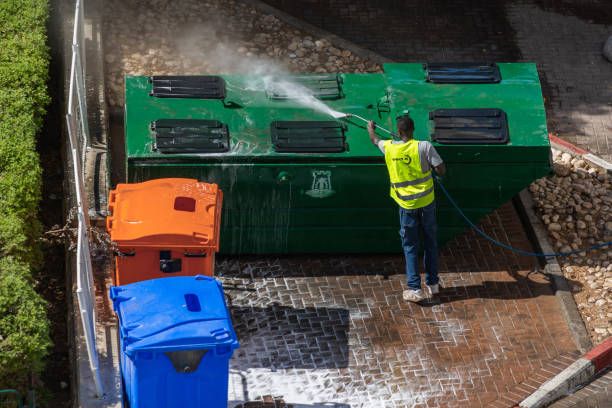
You can't see it from the street. But you can smell it from the parking lot, and so can everyone walking past. A sour, sweet, rotten odor drifts off the bins on warm afternoons. Staff stop taking their breaks outside. Customers wrinkle their noses. Pests move in. Most of the time, the real cause isn't the trash itself. It's the slab it sits on.
What Soaks Into a Dumpster Pad
Bins leak. Liquid from food waste, grease and old drinks runs out the bottom and sinks into concrete. Each spill feels small. Over months, the pores fill up with sticky waste that never dries. Heat wakes it up again and again.
Mopping doesn't touch it. Bleach covers the smell for a day. The mess stays right where it was.
Pests Love a Dirty Pad
Flies lay eggs in the damp film. Rats follow the scent trail. Roaches slip in from cracks. Birds scatter bags looking for scraps. A single greasy corner can feed all of them for weeks.
Owners often spend money on traps and sprays. Cleaning the food source is cheaper, and it works better.
Hot Water and Degreaser
Cold water just moves grease around. Hot water melts it. That's the heart of a proper bin-area wash. A crew pre-treats the pad with a degreaser, waits for it to break things down, then blasts it with heated pressure and a flat surface tool. Dirty water gets caught, not left to run into the street.
The black ring around each bin often fades to plain gray in a single visit.
Apply The Pressure on Site
Apply The Pressure delivers driveway pressure washing with professional pressure washing expertise to clean away grime and improve your property's appearance. The same crew skills carry over to bin areas, where tight corners and stubborn grease call for patience, not brute force.
Rules You May Not Know About
Many towns limit what can flow into storm drains. Wash water from a dumpster pad can carry fats, oils and bacteria, and fines for dirty runoff can get steep. A careful crew plugs drains, collects the rinse and disposes of it the right way.
Ask any company how they handle runoff. If the answer is a shrug, keep looking.
Pick the Right Frequency
A busy restaurant plaza might need a visit every month. An office building with light waste might do fine with two or three a year. Watch the signs. Fresh stains, new smells, buzzing flies. Those are your cues. Write the dates on the calendar so cleaning doesn't depend on a bad week.
A Real Cost of Doing Nothing
Skip the wash and the stain grows. Grease sinks deeper each month. Eventually the slab smells even after a rinse, and replacing it costs far more than cleaning ever did.
Small Habits That Help
Keep lids shut. Line bins with thick bags. Swap cracked bins quickly. Place a drip pan under any known leaker. Tell staff not to dump grease near the pad. Sweep loose litter daily. None of it takes long, and all of it stretches the time between washes.
Where to Look for Help
Searching for a crew that does dumpster pad cleaning is easy. Finding a good one takes a little more work. Ask about hot water gear, insurance, runoff plans and written quotes. A short test on one corner of the pad tells you a lot before you sign.
When the Garage Is Next Door
Many shopping plazas and office blocks share a parking deck with the bin area. Leaks from cars and trucks drift toward the pad, and grease from the pad drifts back. Regular parking garage cleaning keeps both spaces fresh and stops the smell from spreading ramp to ramp.
Do the Sniff Test
Walk to the back lot on a warm afternoon. Stand ten feet from the bins and breathe in. Then ask yourself: would I eat lunch here? If not, your customers and staff feel the same way. Fixing it might be the easiest win on your list this month.






Top comments (0)