
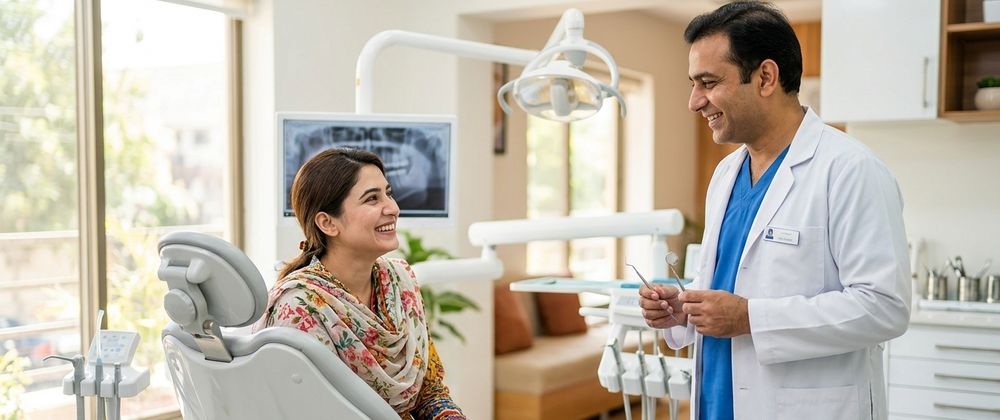

Quick answer: Most people should see a dentist every six months for a check up and cleaning. Some with healthy teeth and gums can safely go once a year, while others with gum disease, a high decay risk, or ongoing treatment may need to go every three to four months. The right interval is set by your dentist based on your own risk, not a fixed rule for everyone.
Almost everyone has heard that you should see a dentist twice a year, but few know why, or whether it really applies to them. The honest answer is that six months is a sensible default for most people, but the ideal interval is personal. Regular dental check ups are about catching small problems early, while they are cheap and painless to fix, rather than waiting for pain to force you in.
Why every six months?
The six month interval is not random. It is roughly how long it takes for problems to develop to a point where a dentist can catch and treat them before they become serious. In a check up the dentist looks for early decay, gum disease, and other issues you cannot see or feel yet, and a cleaning removes the hardened tartar that builds up over those months. Six months is frequent enough to stay ahead of most problems for an average person, without being more often than needed.
Who can go just once a year?
Not everyone needs two visits a year. People with consistently healthy teeth and gums, a good cleaning routine, a low sugar diet and no history of dental trouble may be safe seeing a dentist once a year, if their dentist agrees. The key is that this is a decision the dentist makes after seeing that your mouth is genuinely low risk, not something to assume on your own. Stretching the gap too far on your own guess is how a small cavity becomes a root canal.
Who needs to go more often?
Some people genuinely need to be seen more frequently, often every three to four months. This includes anyone with active gum disease, a high rate of cavities, diabetes, a weakened immune system, or who smokes, as well as people in the middle of treatment such as braces. If you suffer ongoing tooth pain or bleeding gums, that is a sign to be seen sooner rather than waiting for your next routine visit. More frequent care for higher risk mouths prevents small issues turning into lost teeth.
• People with gum disease or frequent cavities.
• Smokers and people with diabetes.
• Anyone having ongoing treatment such as braces.
• Pregnant women, who are more prone to gum problems.
What happens at a check up?
Knowing what to expect makes the visit less daunting. The dentist examines your teeth and gums, checks for decay and gum disease, and may take an X ray now and then to see between and inside the teeth. This is usually followed by a scaling and cleaning to remove plaque and tartar. The dentist also screens for other problems in the mouth and gives advice on your cleaning. It is a short, routine appointment, and most of the time it simply confirms that all is well, which is exactly the point.
What if you are nervous about the dentist?
Many people stretch the gap between visits not out of laziness but because they feel anxious, and it is worth naming that honestly. Dental anxiety is common and nothing to be embarrassed about, but avoiding the dentist makes things worse, because the small problems that a regular visit would catch grow into the bigger treatments people fear most. The way out of that cycle is gentle and gradual. Telling the dental team you feel nervous lets them go slower, explain each step, and agree a signal to pause. Starting with a simple check up and cleaning, rather than waiting until something hurts, keeps visits short and painless and slowly rebuilds confidence. Booking a morning appointment, when you have less time to dread it, helps too. The goal is to make the dentist a routine, low stress habit rather than a rare, stressful event, and regular short visits are exactly what turns it into one. The simplest rule to remember is that the dentist you see twice a year for a quick check is the one you rarely need for anything painful, because the routine visit is what keeps the painful ones away.
Do children need check ups too?
Children need regular dental visits just as much as adults, and starting early sets up a lifetime of healthy habits. The general guidance is for a child to see a dentist around their first birthday or when the first teeth appear, then regularly after that, so problems are caught early and the child grows up comfortable in the chair rather than fearful. Baby teeth matter more than people think, because decay in them can be painful, affect eating, and harm the adult teeth forming underneath. Regular check ups let the dentist watch development, apply preventive treatments, and guide brushing as the child grows. For children, the routine visit is as much about building confidence and good habits as about treatment, which is why a gentle, positive early experience is so valuable. Parents who bring children for short, regular visits usually find their children never develop the anxiety that keeps so many adults away. Making the dentist a normal, unremarkable part of life from the start is one of the kindest things you can do for a child long term health.
Do not wait for pain
The single most important habit is not to use pain as your signal to visit. By the time a tooth hurts, a small problem has often become a big one, and what could have been a quick cleaning or filling may now need a root canal or extraction. Regular check ups are the cheapest dentistry there is, because they stop expensive problems before they start. If it has been more than a year, do not wait for a twinge. You can book an appointment for a routine check and keep small problems small.
Medical disclaimer: This article is for general information only and is not a substitute for professional dental advice, diagnosis or treatment. Every mouth is different, so please see a qualified dentist for advice on your own situation.
Frequently Asked Questions
How often should I see a dentist?
Most people every six months. Some low risk people can go yearly, while those with gum disease or high decay risk may need every three to four months.
Why is six months the usual advice?
It is about how long problems take to develop to a catchable stage. Six months lets a dentist find and fix issues early for most people.
Can I go to the dentist only once a year?
Possibly, if your dentist confirms your mouth is low risk. It should be their decision after an exam, not an assumption on your own.
Who needs more frequent dental visits?
People with gum disease, frequent cavities, diabetes, those who smoke, and anyone having ongoing treatment such as braces.
Should I only see a dentist when a tooth hurts?
No. By the time a tooth hurts, the problem is often advanced. Regular check ups catch issues early when they are cheap and simple to fix.






Top comments (0)