
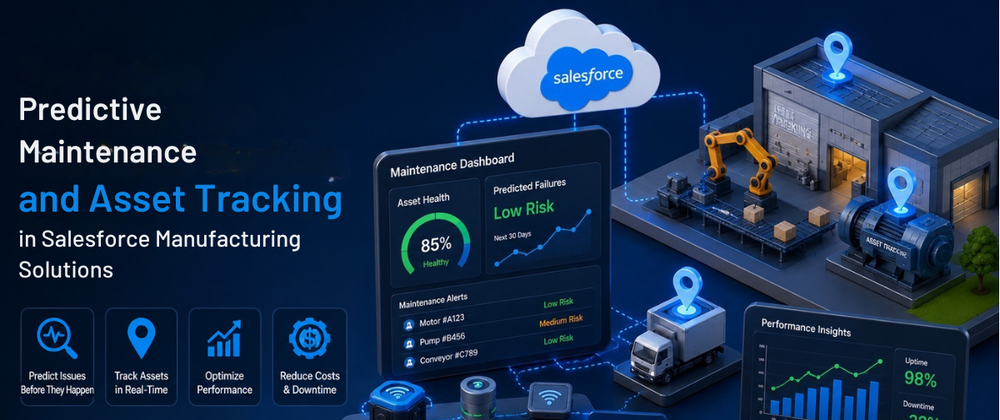

Industrial plants often lose critical resources due to unexpected equipment failures. In fact, unplanned downtime costs global manufacturers approximately $50 billion every year. Traditional maintenance methods rely on fixed schedules or reactive repairs. These methods fail to address real-time equipment conditions.
Today, modern industrial companies utilize data-driven strategies to monitor their factory floors. Salesforce Manufacturing Cloud offers a robust architecture to manage assets. By combining Internet of Things (IoT) data with customer relationship management (CRM) systems, companies turn sensor readings into fast service actions.
The Core Architecture of Asset Tracking
Tracking industrial assets requires a unified data framework. Manufacturers have physical assets spread across multiple geographic locations. These assets include production robots, CNC machines, and commercial HVAC units.
1. Enterprise Data Ingestion
The process begins at the edge layer. Physical assets contain sensors that measure performance metrics. These metrics include:
- Internal temperature variations
- Vibrational frequency shifts
- Acoustic noise emissions
- Hydraulic pressure levels Field devices transmit this telemetry data via protocols like MQTT or HTTP. The data goes directly into Salesforce Data Cloud for Manufacturing. Data Cloud acts as a high-scale ingestion engine. It handles millions of event data points every second without lowering system performance.
2. Data Model Normalization
Once the raw telemetry data enters the system, Salesforce maps the information to the standard manufacturing data model. The core object in this structure is the Asset object. Salesforce connects the Asset record to several operational records:
- AssetWarranty: Tracks coverage terms and expiration dates.
- WorkOrder: Contains historical repair records for the specific machine.
- Product2: Defines the baseline manufacturing specifications of the equipment. This structural mapping links real-time machine behavior to account histories. Engineers view a single source of truth for every machine in operation.
How Predictive Maintenance Functions
Predictive maintenance uses real-time data to forecast asset failure points. Rather than repairing a broken component, the system identifies small anomalies before a total shutdown occurs.
1. Real-Time Condition Monitoring
Salesforce Connected Assets software visualizes the telemetry data streaming from factory machines. Engineers establish normal operating baselines for every piece of equipment. For example, a heavy-duty stamping press might have a normal operating temperature range between 60°C and 85°C.
When a sensor detects a temperature spike to 98°C, the system triggers an automated response. This immediate detection relies on MuleSoft integrations. MuleSoft moves data between local programmable logic controllers (PLCs) and the cloud.
2. Automated Case Creation
When an alert occurs, Salesforce Einstein AI analyzes the data pattern. If the pattern matches historical failure trends, the platform automatically creates a record in the Case object. The case record includes the specific asset ID, fault code, and error location.
Optimizing Field Service Workflows
Generating a service ticket is only the first step. The system must coordinate field technicians to perform the actual physical repair before the machine fails.
1. Smart Service Routing
Salesforce Field Service integrates directly with Salesforce Manufacturing Cloud Solutions. When a predictive case generates, the core platform assesses available field technicians. The dispatch engine analyzes several parameters:
- The location of the closest certified technician
- The inventory levels of required replacement parts in the technician's vehicle
- The current workload and schedule availability of local teams The system assigns the task to the ideal worker. The technician receives an automated notification on a mobile device. This notification contains the complete service history of the asset and the real-time sensor logs.
2. Reducing Second Trips
Traditional service calls often fail because technicians arrive without the correct tools or parts. Predictive systems solve this issue. Because the IoT data identifies the exact failing component, the work order explicitly lists the required inventory items.
This precision increases first-time fix rates by 20% to 30% based on industrial benchmarks. Technicians replace the degrading bearing or seal during planned off-hours. This approach prevents a sudden production stoppage.
Business Value and Industrial Metrics
Implementing predictive workflows provides measurable financial and operational advantages to heavy industrial businesses.
1. Minimizing Asset Downtime
Unplanned downtime interrupts supply chains and reduces factory efficiency. Moving to a predictive model reduces total maintenance costs by up to 10% to 20%. It also improves overall equipment effectiveness (OEE).
Instead of pausing production during peak shifts, managers schedule short maintenance windows during night shifts. This tactical approach keeps the primary assembly line running during normal business hours.
2. Extending Equipment Lifespan
When parts operate under high friction or extreme temperatures, they cause secondary damage to surrounding components. Catching a minor issue early protects the entire machine block.
Overcoming Legacy System Isolation
Many manufacturing facilities utilize legacy Enterprise Resource Planning (ERP) databases. These systems isolate critical machinery data from the main business teams.
1. Bridging IT and OT Data
Operational Technology (OT) refers to the hardware and software on the shop floor. Information Technology (IT) refers to the business networks used by managers. Salesforce Manufacturing Cloud functions as an integration layer between these two separate worlds.
By connecting factory SCADA (Supervisory Control and Data Acquisition) systems to the CRM data model, sales teams view actual production capacities. If a key production line requires emergency service, the sales application automatically updates customer delivery timelines. This connectivity reduces friction between sales promises and factory floor realities.
2. Managing Extended Warranties
Manufacturers often lose money by performing free service on expired warranties, or by charging clients for items covered under active agreements. The asset tracking architecture resolves this problem.
When an asset flags an incoming repair alert, the platform checks the AssetWarranty database. The platform confirms the warranty coverage status before generating the billing information for the field service order. This verification step prevents revenue leakage.
Long-Term Data Analytics
Predictive asset management creates a continuous feedback loop of operational data. Over months of tracking, these telemetry records yield long-term engineering insights.
1. Product Quality Engineering
Design engineers use asset history analytics to improve future product generations. If a specific component model consistently throws vibration errors after 800 hours of use, the engineering team analyzes the defect trend in Tableau.
They modify the product blueprints to address the weak point. This integration between field performance data and design teams improves long-term product durability.
2. Optimizing Inventory Levels
Carrying excess spare parts in regional warehouses ties up corporate capital. Salesforce analytics tracking allows companies to transition to a just-in-time inventory model for service teams.
The system tracks historical parts consumption based on predictive alerts. It forecasts which components will require replacement over the next quarter. This forecasting allows procurement managers to negotiate better bulk pricing with suppliers without overstocking warehouse shelves.
Technical Summary of Connected Assets
Deploying asset tracking inside Salesforce Manufacturing Cloud Solutions transforms industrial service centers from cost burdens into profit centers. The application of IoT ingestion, automated workflow generation, and field service coordination creates a responsive service model.
Manufacturers eliminate random equipment failures. They optimize workforce scheduling and prolong the functional operational lifespan of expensive plant equipment. The concrete connection between raw machinery telemetry and customer accounts provides a sustainable operational advantage for modern industrial enterprises.
Conclusion
Transitioning from a reactive maintenance model to a predictive framework is an operational necessity for modern industrial enterprises. Unplanned machinery downtime directly erodes corporate profitability, compromises supply chain commitments, and increases emergency labor expenses. By centralizing machine telematics within a unified digital environment, companies gain total visibility over their operational footprint.
Salesforce Manufacturing Cloud provides the technical infrastructure required to link real-time factory conditions with customer management systems. The platform ingests continuous sensor feeds, normalizes the data against standard asset objects, and triggers automated repair workflows before failures occur. Furthermore, Salesforce Manufacturing Cloud Solutions coordinate field service technicians, optimize spare parts inventory, and eliminate costly communication barriers between plant floors and business suites.





Top comments (0)