
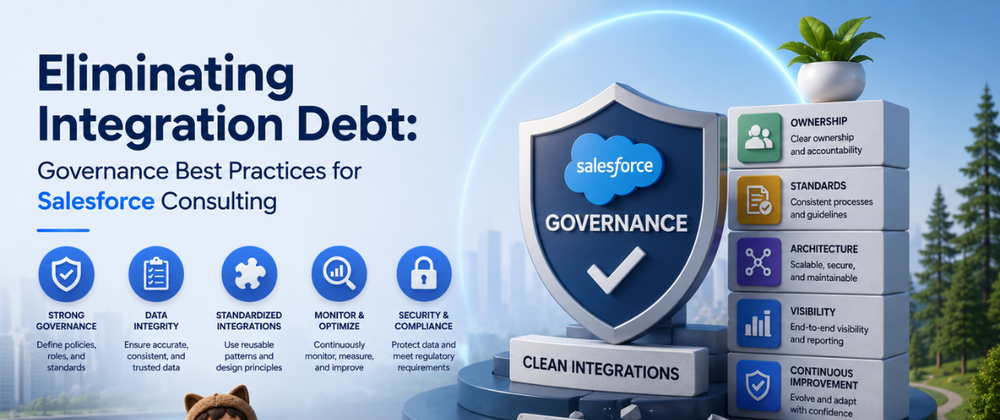

Enterprise software landscapes grow more complex every year. To keep pace with modern customer expectations, corporations continuously add new applications to their digital footprints. However, building rapid, point-to-point connections between these platforms creates a dangerous architectural vulnerability.
This challenge is known as integration debt. It occurs when engineering teams build short-term, ungoverned data links to meet tight project deadlines. Over time, these disorganized connections break, slow down system performance, and create massive maintenance burdens.
To prevent system downtime, organizations must shift from loose, ad-hoc connectivity to structured data governance. This transformation requires clear architectural frameworks, automated security controls, and specialized platform monitoring.
This comprehensive guide examines how professional Salesforce Consulting helps enterprise organizations eliminate technical debt. We will analyze the core governance principles, technical structures, and deployment workflows that Salesforce Consulting Services use to build stable, scalable digital networks.
The Compounding Costs of Ungoverned Connectivity
Many IT departments manage system connectivity as a series of isolated projects. When a business unit requires data from an external platform, developers build a custom code bridge to link the systems directly. This point-to-point approach functions initially, but it breaks down quickly as the enterprise grows.
This disorganized architecture creates severe operational friction across the enterprise:
Brittle Code Dependencies: Modifying a single database field in an on-premises ERP system can cause unexpected validation failures inside connected front-office customer registries.
Redundant Data Pathways: Independent engineering teams frequently build duplicate API routes to extract identical customer information, wasting computing power and storage budgets.
Opaque Security Boundaries: Untracked integration points lack uniform authorization checks, making it difficult for compliance officers to prevent data leaks.
Industry statistics highlight the true scale of this structural challenge. The 2026 MuleSoft Connectivity Benchmark Report reveals that the average enterprise now manages 957 distinct computer applications. Shockingly, only 27% of these platforms actively connect with each other.
Furthermore, 95% of IT leaders report facing significant integration obstacles when deploying new digital services. These integration bottlenecks cause major project delays, consuming valuable developer bandwidth that teams should instead use for core business innovation.
Core Pillars of an Integration Governance Framework
Eliminating integration debt requires a complete shift in how an enterprise designs, deploys, and maintains data connections. Organizations must establish a centralized management model to oversee their entire technology footprint.
Certified Salesforce Consulting Services guide institutions through building a reliable framework based on three foundational technical pillars.
1. API-Led Connectivity Architecture
Rather than building open-ended, point-to-point connections, engineers should organize digital assets into three structured microservice layers. This design pattern isolates core data and prevents frontend changes from disrupting backend systems
System Layer: This foundational tier handles direct data extraction from core systems of record, such as SAP ERP databases or legacy mainframes. It shields upper software environments from complex backend database schemas.
Process Layer: This intermediate tier executes specific business logic and combines data across multiple system sources. For example, it can merge historical sales files with live shipment status logs.
Experience Layer: This public-facing tier formats the processed data to meet the unique delivery requirements of end-user applications, including mobile apps, customer web portals, or internal employee dashboards.
2. The Center for Enablement (C4E) Operating Model
Traditional IT models use a centralized team to build every integration request manually, which often creates severe delivery delays. Modern governance replaces this bottleneck with a Center for Enablement (C4E).
The C4E operates as an internal support organization. Instead of building individual connections, this cross-functional team creates reusable asset templates, defines security standards, and builds shared code components.
This approach shifts the role of the central IT department from rigid operational delivery to strategic architectural support. Front-line software developers can then use these pre-approved templates to build connections independently, reducing deployment timelines while ensuring compliance with global corporate security policies.
3. Automated Policy Enforcement and Guardrails
Manual compliance audits are too slow to keep pace with modern software release cycles. Organizations must embed automated validation guardrails directly into their continuous integration and deployment pipelines.
Testing tools should scan interface definition files automatically the moment a developer commits code to a source repository. If an engineer omits required security scopes, fails to include proper data encryption tags, or introduces custom code patterns that cause system lag, the automated deployment pipeline blocks the update.
This proactive verification eliminates human auditing bottlenecks and ensures all digital assets comply with corporate security standards before entering production environments.
Technical Integration with Modern Salesforce Architectures
Modern enterprise deployment strategies have moved past heavy, data-duplicating ETL (Extract, Transform, Load) synchronization routines. Strategic Salesforce Consulting implementations utilize real-time, event-driven data frameworks to maintain clean system boundaries.
Deploying Zero-Copy Architecture via Data Cloud
Historically, displaying external warehouse data inside a CRM required physically duplicating those data records into local custom objects. This replication increased data storage costs, introduced synchronization delays, and created massive technical debt.
Instead of moving large data files across networks, Data Cloud uses secure federated queries to read information directly from external data lakes like Snowflake, Databricks, or Google BigQuery.
The data remains securely inside its original storage system, but Salesforce can access and read the records instantly. This architecture eliminates the need for complex, high-maintenance data synchronization pipelines, lowering IT maintenance overhead and ensuring absolute data accuracy.
Event-Driven Orchestration with Pub/Sub APIs
When systems must exchange transactional data instantly, organizations use event-driven architectures instead of legacy batch transfers. The Salesforce Pub/Sub API provides a high-performance framework to manage these real-time data flows.
External applications subscribe to this bus and listen for relevant updates. When the event appears, the connected systems ingest the data packet and trigger their respective backend actions simultaneously, such as generating an invoice or preparing a shipping label.
This publish-subscribe model decouples your enterprise systems completely, ensuring that a performance slowdown in an external app will not interrupt core CRM operations.
Overcoming Complex System Transition Hurdles
Migrating away from legacy, point-to-point integration webs requires navigating real-world operational challenges. Engineering teams must apply careful data mitigation strategies to safeguard production environment stability.
1. Mitigating API Rate Limit Failures
Enterprise cloud environments enforce strict concurrency limits to protect multi-tenant infrastructure from processing overloads. High-volume integrations can easily exhaust these platform limits, causing severe system errors and interrupting live business operations.
The gateway architecture includes a protective proxy layer that monitors platform capacity in real time. When incoming traffic spikes occur, the proxy stores the excess data payloads within a secure cache queue, distributing the requests to Salesforce in a controlled flow that stays safely below platform concurrency thresholds. This buffering process prevents system drops and maintains service continuity during heavy usage periods.
2. Resolving Identity Mismatches Across Applications
A significant cause of integration failure is data fragmentation across different corporate business units. A single enterprise customer often exists under slightly different identifiers across separate billing records, support files, and marketing databases.
The system uses advanced matching rules to analyze data attributes, evaluating combinations like email addresses, phone numbers, and normalized company names to resolve variations automatically. The engine links these fragmented records together under a single, verified global identification profile, providing an accurate, 360-degree view of customer data across all connected corporate platforms.
Real-World Case Study: Financial Enterprise Modernization
Consider a major multinational financial services institution operating across multiple global markets.
1. The Original Technology Footprint
The banking group managed a heavily customized Salesforce ecosystem connected to three legacy core banking systems and two external loan origination databases. The bank utilized over 150 individual point-to-point Apex integration code packages to move data between platforms.
Because the systems lacked unified governance, making a single database modification required weeks of manual code updates and expensive regression testing. This complex integration debt delayed new product rollouts and caused regular system dropouts during peak processing hours.
2. Rebuilding with Professional Advisory Services
The institution partnered with a certified Salesforce Consulting firm to overhaul their integration model and remove their technical debt.
Architecture Layering: The implementation team removed the direct Apex code hooks and replaced them with an API-led framework, grouping endpoints into clear System, Process, and Experience layers.
C4E Establishment: The consulting group helped the bank organize an internal Center for Enablement. This team built 20 reusable integration assets, standardizing authorization and data mapping across all divisions.
Data Cloud Deployment: Engineers installed Salesforce Data Cloud to look up historical customer data via zero-copy federated queries, eliminating the need for high-maintenance data replication routines.
Automated Policy Auditing: The technical leads added automated schema validation rules to the corporate deployment process, blocking any new code update that failed to meet established security standards.
3. Quantifiable Operational Improvements
The transition to a governed, API-led framework delivered substantial performance improvements across the bank's digital channels. The organization cut their custom code maintenance overhead by 40%, allowing development teams to redirect their focus to consumer feature updates.
Furthermore, data from global technology research indicates that enterprises utilizing a structured integration strategy save between 30% and 50% on total project costs compared to organizations that bolt on unmanaged connections later. The bank validated these findings by reducing new application deployment timelines from several months to less than two weeks, allowing them to scale their services safely while maintaining strict regulatory compliance.
Aligning Governance Frameworks for Agentic AI Expansion
The rapid rise of autonomous artificial intelligence is changing how enterprises design and manage their digital integration networks. Modern businesses are moving away from traditional, click-based user interfaces, using autonomous digital assistants to manage complex operational workflows.
Recent platform studies highlight the scale of this technological shift. The 2026 MuleSoft Connectivity Benchmark Report notes that 88% of enterprise organizations are actively moving toward partial or full agentic transformation.
However, 86% of IT executives warn that without deep data integration, autonomous agents add more complexity than value. An unmanaged AI assistant operating without strict data governance can quickly overwhelm backend systems with high request volumes or leak sensitive operational data.
Conclusion
Eliminating integration debt is an essential prerequisite for sustaining enterprise growth and scaling digital infrastructure safely. Building unmanaged, point-to-point code bridges to meet short-term deadlines creates a rigid, fragile architecture that limits operational agility and leaves systems vulnerable to downtime.
By collaborating with experienced Salesforce Consulting partners, organizations can transition away from brittle legacy codebases and establish structured, automated governance frameworks. Implementing API-led layered architectures, organizing a dedicated Center for Enablement, and utilizing modern real-time integration tools like zero-copy data clouds allows enterprises to reduce technical debt, lower system maintenance costs, and build a highly secure, scalable foundation for future AI expansion.




Top comments (0)