
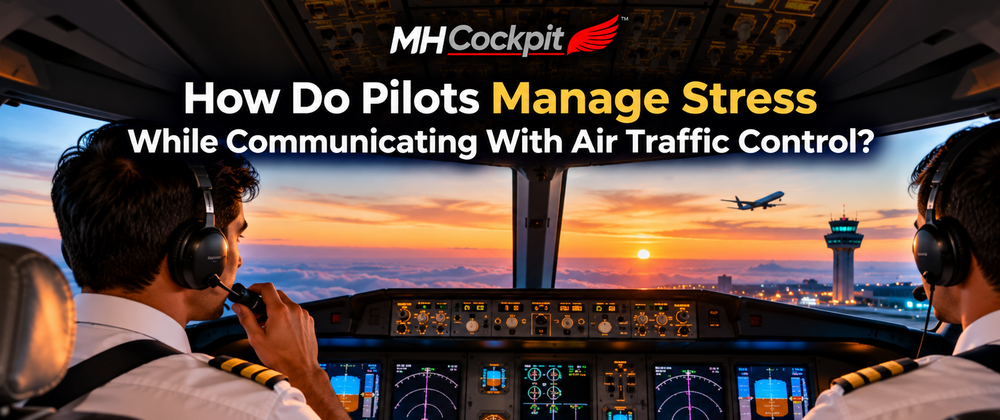

Flying an aircraft requires constant attention, quick decision-making, and clear communication. One task that can challenge student pilots is responding to Air Traffic Control (ATC) while simultaneously managing the aircraft. Although this may seem overwhelming to someone new to aviation, pilots learn to handle these responsibilities through structured training and repeated practice.
Understanding how pilots manage this workload offers a useful look into the mental skills required for a career in aviation.
Why Can ATC Communication Be Stressful for Pilots?
Pilots must monitor several things during a flight, including altitude, airspeed, heading, navigation, weather conditions, and aircraft performance. At the same time, they must listen to ATC instructions and respond accurately.
For student pilots, these tasks can be particularly demanding because they are still developing their flying skills and learning standard radio phraseology. An unfamiliar instruction or a busy radio frequency can add to the pressure.
The challenge is not simply speaking over the radio. It is processing information, understanding the instruction, deciding what action is required, and carrying it out without losing awareness of the aircraft's condition.
- Prioritising Aircraft Control
A fundamental principle in pilot training is maintaining control of the aircraft. Communication is important, but it must be managed alongside the aircraft's immediate operational needs.
Pilots learn to assess the situation and allocate attention according to the level of urgency. A routine radio call during stable cruise flight may require less attention than an unexpected instruction during a demanding phase of flight.
When workload increases, pilots follow their training and operating procedures rather than rushing to complete every task simultaneously.
- Using Standard Radio Phraseology
Aviation communication follows standard phraseology designed to make messages clear and reduce misunderstandings.
Instead of creating a response from scratch, pilots practise common instructions and acknowledgements until the wording becomes familiar.
For example, ATC might instruct a pilot to climb to a specified altitude. The pilot reads back the instruction using standard terminology so that the controller can confirm it has been understood correctly.
This structured approach reduces unnecessary conversation and helps pilots communicate accurately, even when they are managing other cockpit tasks.
- Managing Cockpit Workload
Pilots must continually decide where their attention is most needed. They monitor instruments, check navigation information, assess weather, complete checklists, and communicate with ATC.
Experience helps them recognise which tasks require immediate action and which can be handled later. They also learn to anticipate upcoming radio calls, prepare for expected instructions, and avoid unnecessary distractions.
When an instruction is unclear, pilots can request clarification. If workload becomes too high for an immediate response, they can communicate that they need time, while maintaining aircraft control and following the applicable procedures.
In a multi-pilot cockpit, duties may also be divided between the pilot flying and the pilot monitoring, according to the aircraft's procedures and the situation.
- Practising Under Pressure During Flight Training
Radio communication becomes easier when pilots practise it regularly. During flight training, students learn to combine aircraft handling with navigation, communication, and procedural tasks.
Simulator sessions can also help pilots prepare for situations involving multiple demands. Instructors can introduce changing conditions and communication scenarios, allowing students to practise decision-making in a controlled environment.
At first, a student might concentrate heavily on remembering the correct words for a radio call. With practice, standard phraseology becomes more familiar, leaving more attention available for flying the aircraft.
The aim is not to remove every feeling of stress. It is to develop the ability to manage workload and make sound decisions despite that pressure.
- Learning When to Ask for Clarification
Good communication does not mean pretending to understand every instruction immediately. Pilots are trained to request a repeat or clarification when necessary.
This is especially important when a message is unclear, a clearance has not been fully understood, or the pilot needs to confirm an instruction before acting on it.
Clear communication helps prevent misunderstandings and supports coordination between the cockpit and air traffic controllers.
How Can Aspiring Pilots Develop These Skills?
Students preparing for a commercial pilot career can begin developing these habits during their early training. Learning aviation terminology, practising radio communication, understanding flight procedures, and building confidence with aircraft instruments all contribute to better workload management.
In India, aspiring commercial pilots must also understand the applicable Directorate General of Civil Aviation (DGCA) requirements and the stages involved in pilot training. Ground studies, examinations, medical requirements, and practical flight training each form part of the wider pathway.
Training providers such as MH Cockpit Aviation Academy in Chennai support aspiring pilots through Commercial Pilot Licence (CPL) ground training and DGCA exam preparation. Students should assess their training options carefully and confirm the requirements that apply to their intended route.
Final Thoughts
Managing ATC communication while flying is a skill developed through training, repetition, and sound decision-making. Pilots learn to prioritise aircraft control, use standard phraseology, manage their workload, and ask for clarification when needed.
For student pilots, feeling some pressure during early radio calls is not unusual. Consistent practice and a clear understanding of procedures help make communication more familiar over time.
These habits prepare pilots to manage cockpit responsibilities more effectively while keeping flight safety at the centre of every decision.







Top comments (0)