
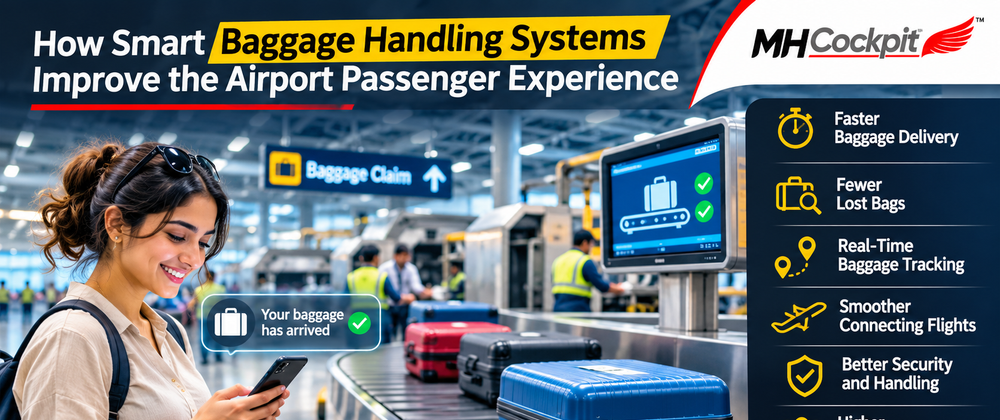

Air travel is not just about getting passengers from one destination to another. The overall experience begins when travellers enter the airport and continues until they collect their luggage at their destination. Among the many airport operations that influence passenger satisfaction, baggage handling plays an important role.
Long waiting times at baggage carousels, misplaced suitcases, damaged luggage and delayed baggage transfers can affect how passengers perceive an airline or airport. As passenger traffic grows and airports handle more flights, efficient baggage management has become an important part of airport operations.
Modern baggage handling systems are helping airports address these challenges through automation, digital tracking and improved coordination.
- Faster Baggage Processing and Delivery
Waiting for checked luggage after a long flight can be frustrating. Passengers often expect their bags to arrive shortly after reaching the baggage collection area.
Modern baggage handling systems use automated conveyor belts, sorting equipment and scanning technology to move luggage through different airport sections. These systems help reduce manual processing and improve the movement of bags from check-in counters to aircraft loading areas.
At arrival terminals, efficient baggage delivery processes can reduce unnecessary waiting and help passengers leave the airport sooner.
For business travellers, families and passengers with connecting journeys, faster baggage collection can make a noticeable difference.
- Reducing Lost and Misplaced Luggage
Misrouted baggage remains a concern for airlines and airports. A suitcase may be transferred incorrectly, loaded onto the wrong aircraft or separated from its passenger during a connecting journey.
Barcode scanning and Radio Frequency Identification (RFID) technology help airport teams identify and track luggage throughout its journey.
These technologies allow baggage information to be recorded at different handling points. When a bag is scanned, its movement can be updated in the baggage management system.
Better identification and tracking help airlines and ground handling teams locate luggage, investigate handling errors and reduce the risk of misrouting.
- Real-Time Baggage Tracking for Passengers
Passengers increasingly expect access to information throughout their journey. Flight status notifications, online check-in and mobile boarding passes have already changed how travellers interact with airlines.
Baggage tracking is another area where digital technology can improve the passenger experience.
When baggage tracking information is integrated with airline applications or digital platforms, passengers may receive updates about their checked luggage.
This can provide greater visibility into the baggage journey and reduce uncertainty, particularly for travellers making connecting flights.
For airlines, better tracking information can also support customer service teams when passengers report delayed or missing luggage.
- Improving Baggage Transfers Between Connecting Flights
Connecting flights create additional challenges for baggage handling teams. Luggage must be identified, sorted and transferred to the correct aircraft within the available connection time.
A delay in any part of this process can result in baggage arriving later than the passenger.
Automated sorting systems and coordinated baggage transfer procedures help airport teams manage these movements more effectively.
Airlines, airport operators and ground handling companies need to work together to ensure that baggage is transferred correctly.
Efficient coordination is particularly important at busy international airports where passengers and luggage may move between multiple terminals and aircraft.
- Better Baggage Security and Handling Accuracy
Passenger satisfaction also depends on the condition in which luggage arrives.
Poor handling can result in damaged suitcases, broken wheels or missing personal belongings. Improved conveyor systems, automated sorting and baggage monitoring can help reduce unnecessary handling and improve operational accuracy.
Baggage screening systems also play an important role in airport security. Checked luggage must pass through the required security screening processes before being loaded onto an aircraft.
Technology can support these procedures, but trained personnel and proper operating practices remain essential.
- Why Airport Staff and Technology Must Work Together
Automation alone cannot solve every baggage handling problem.
Airports require trained ground handling personnel, regular equipment maintenance, clear operating procedures and coordination between different departments.
For example, baggage handling teams must communicate effectively with airline operations, check-in staff, ramp personnel and aircraft loading teams.
Airport management also needs to monitor operational performance, identify bottlenecks and plan improvements based on passenger traffic and baggage volumes.
This is why knowledge of airport operations and management is important for people interested in building careers in the aviation industry.
Students interested in this area can learn more about airport management education through programmes such as the MBA in Aviation & Airport Management at MH Cockpit.
- The Future of Baggage Handling Systems
Airport baggage operations are expected to continue adopting digital technologies and automation.
Artificial intelligence, advanced scanning systems, RFID identification and improved baggage information platforms can support better tracking and operational planning.
However, successful implementation depends on airport infrastructure, investment, staff training and coordination between airlines and service providers.
The objective is not simply to move luggage faster. It is to create a baggage handling process that is accurate, reliable and convenient for passengers.
Conclusion
Baggage handling is an important part of the airport passenger experience. Faster baggage delivery, accurate tracking, secure handling and efficient transfers can reduce common travel frustrations.
As airports continue to modernise their infrastructure, baggage management systems will remain an important part of improving operational performance and passenger satisfaction.
Ultimately, a successful airport experience does not end when an aircraft lands. It ends when passengers collect their belongings and complete their journey with confidence.
How Smart Baggage Handling Systems Are Improving the Airport Passenger Experience
Air travel is not just about getting passengers from one destination to another. The overall experience begins when travellers enter the airport and continues until they collect their luggage at their destination. Among the many airport operations that influence passenger satisfaction, baggage handling plays an important role.
Long waiting times at baggage carousels, misplaced suitcases, damaged luggage and delayed baggage transfers can affect how passengers perceive an airline or airport. As passenger traffic grows and airports handle more flights, efficient baggage management has become an important part of airport operations.
Modern baggage handling systems are helping airports address these challenges through automation, digital tracking and improved coordination.
- Faster Baggage Processing and Delivery
Waiting for checked luggage after a long flight can be frustrating. Passengers often expect their bags to arrive shortly after reaching the baggage collection area.
Modern baggage handling systems use automated conveyor belts, sorting equipment and scanning technology to move luggage through different airport sections. These systems help reduce manual processing and improve the movement of bags from check-in counters to aircraft loading areas.
At arrival terminals, efficient baggage delivery processes can reduce unnecessary waiting and help passengers leave the airport sooner.
For business travellers, families and passengers with connecting journeys, faster baggage collection can make a noticeable difference.
- Reducing Lost and Misplaced Luggage
Misrouted baggage remains a concern for airlines and airports. A suitcase may be transferred incorrectly, loaded onto the wrong aircraft or separated from its passenger during a connecting journey.
Barcode scanning and Radio Frequency Identification (RFID) technology help airport teams identify and track luggage throughout its journey.
These technologies allow baggage information to be recorded at different handling points. When a bag is scanned, its movement can be updated in the baggage management system.
Better identification and tracking help airlines and ground handling teams locate luggage, investigate handling errors and reduce the risk of misrouting.
- Real-Time Baggage Tracking for Passengers
Passengers increasingly expect access to information throughout their journey. Flight status notifications, online check-in and mobile boarding passes have already changed how travellers interact with airlines.
Baggage tracking is another area where digital technology can improve the passenger experience.
When baggage tracking information is integrated with airline applications or digital platforms, passengers may receive updates about their checked luggage.
This can provide greater visibility into the baggage journey and reduce uncertainty, particularly for travellers making connecting flights.
For airlines, better tracking information can also support customer service teams when passengers report delayed or missing luggage.
- Improving Baggage Transfers Between Connecting Flights
Connecting flights create additional challenges for baggage handling teams. Luggage must be identified, sorted and transferred to the correct aircraft within the available connection time.
A delay in any part of this process can result in baggage arriving later than the passenger.
Automated sorting systems and coordinated baggage transfer procedures help airport teams manage these movements more effectively.
Airlines, airport operators and ground handling companies need to work together to ensure that baggage is transferred correctly.
Efficient coordination is particularly important at busy international airports where passengers and luggage may move between multiple terminals and aircraft.
- Better Baggage Security and Handling Accuracy
Passenger satisfaction also depends on the condition in which luggage arrives.
Poor handling can result in damaged suitcases, broken wheels or missing personal belongings. Improved conveyor systems, automated sorting and baggage monitoring can help reduce unnecessary handling and improve operational accuracy.
Baggage screening systems also play an important role in airport security. Checked luggage must pass through the required security screening processes before being loaded onto an aircraft.
Technology can support these procedures, but trained personnel and proper operating practices remain essential.
- Why Airport Staff and Technology Must Work Together
Automation alone cannot solve every baggage handling problem.
Airports require trained ground handling personnel, regular equipment maintenance, clear operating procedures and coordination between different departments.
For example, baggage handling teams must communicate effectively with airline operations, check-in staff, ramp personnel and aircraft loading teams.
Airport management also needs to monitor operational performance, identify bottlenecks and plan improvements based on passenger traffic and baggage volumes.
This is why knowledge of airport operations and management is important for people interested in building careers in the aviation industry.
Students interested in this area can learn more about airport management education through programmes such as the MBA in Aviation & Airport Management at MH Cockpit.
- The Future of Baggage Handling Systems
Airport baggage operations are expected to continue adopting digital technologies and automation.
Artificial intelligence, advanced scanning systems, RFID identification and improved baggage information platforms can support better tracking and operational planning.
However, successful implementation depends on airport infrastructure, investment, staff training and coordination between airlines and service providers.
The objective is not simply to move luggage faster. It is to create a baggage handling process that is accurate, reliable and convenient for passengers.
Conclusion
Baggage handling is an important part of the airport passenger experience. Faster baggage delivery, accurate tracking, secure handling and efficient transfers can reduce common travel frustrations.
As airports continue to modernise their infrastructure, baggage management systems will remain an important part of improving operational performance and passenger satisfaction.
Ultimately, a successful airport experience does not end when an aircraft lands. It ends when passengers collect their belongings and complete their journey with confidence.







Top comments (0)