
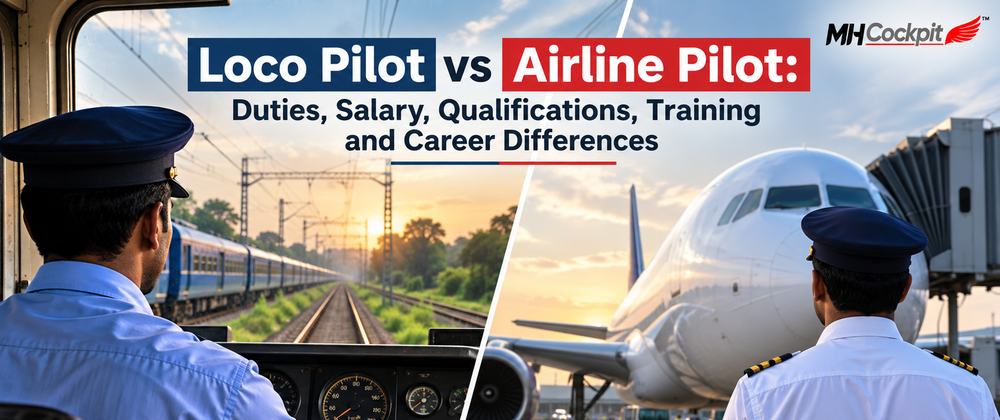

A Loco Pilot and an Airline Pilot are both responsible for operating vehicles safely, but their careers are quite different. One works on the railway network while the other operates aircraft. Both professions require concentration, technical knowledge, discipline and the ability to make safe decisions under pressure.
For students and young professionals considering either career, it is useful to understand the differences in duties, qualifications, training, salary, skills, work nature and employee benefits before making a decision.
Duties of a Loco Pilot
A Loco Pilot is responsible for operating a train safely according to railway rules, signals, speed restrictions and route conditions. Depending on their role, they may operate passenger or freight trains.
The job involves monitoring railway signals, controlling the locomotive, maintaining the required speed and responding to changes in track, weather and operating conditions. Loco Pilots also need to remain alert throughout the journey because railway operations can change quickly.
The role requires close coordination with other railway staff, including the Assistant Loco Pilot and railway control teams. Safety is the main responsibility throughout the journey.
Duties of an Airline Pilot
An Airline Pilot operates an aircraft and is responsible for the safety of passengers, crew and the aircraft. The work starts before the aircraft leaves the airport.
Pilots review flight plans, weather information, aircraft status and operational requirements before departure. During the flight, they operate the aircraft, communicate with air traffic control, monitor aircraft systems and respond to changing weather or other situations.
Airline pilots also have to follow aviation regulations and standard operating procedures. They regularly train for abnormal and emergency situations so that they can respond appropriately when required.
Qualifications and Training
The qualification routes for these two careers are very different.
A person entering the Loco Pilot career generally follows the railway recruitment route, beginning with the Assistant Loco Pilot position. Candidates need to meet the prescribed educational or technical requirements, pass the relevant selection process and satisfy railway medical standards. Training then covers locomotive operation, railway rules, signalling and safety procedures.
The Airline Pilot route involves aviation-specific education, medical requirements, theoretical examinations and flight training. In India, candidates pursuing flight crew licences other than a Private Pilot Licence generally need Physics and Mathematics at the 10+2 level or an equivalent qualification under DGCA requirements.
After completing the required examinations and flying experience, candidates can progress through the applicable pilot licensing stages. Airline pilot training can therefore require a considerable financial investment before a candidate reaches an airline cockpit.
Salary Differences
Salary is one of the areas where people often make broad comparisons, but actual earnings depend on several factors.
A Loco Pilot's income is based on the railway pay structure, experience, position and applicable allowances. Earnings can increase as an employee progresses through different responsibilities and gains experience.
Airline pilot salaries can vary widely between airlines and positions. A newly employed First Officer will generally have a different salary from an experienced Captain. Aircraft type, seniority, airline, flying duties and whether the pilot operates domestic or international routes can also affect overall compensation.
Therefore, it is difficult to say that one career always pays more. Airline pilots can reach high levels of income as they gain experience, but the initial cost of pilot training is also an important consideration.
Skills Required
Both professions require excellent concentration, discipline and safety awareness, but their technical skills are specific to their operating environment.
A Loco Pilot needs knowledge of railway signals, locomotive systems, train handling, railway rules and route conditions. The ability to remain alert during long journeys and react quickly to unexpected situations is particularly important.
An Airline Pilot needs knowledge of aircraft systems, navigation, meteorology, aviation regulations and flight procedures. Communication, decision-making, situational awareness and crew coordination are also important parts of the job.
In both careers, technical ability alone is not enough. The person must be able to follow procedures consistently and remain calm when dealing with difficult situations.
Work Nature and Lifestyle
The working lifestyle is another major difference.
Loco Pilots can work long-distance routes and may have duties during nights, weekends and public holidays. Their work is closely connected to railway schedules and operational requirements. They may also spend considerable periods away from their home base depending on their duties.
Airline pilots can also have irregular schedules. Early morning departures, late-night flights, weekends and time away from home are common aspects of airline operations. Pilots may travel between several cities or countries depending on their airline and assigned routes.
Neither career should be viewed as a conventional nine-to-five job.
Benefits and Perks
Loco Pilots working within Indian Railways receive benefits according to railway service rules. These can include applicable allowances, leave provisions, medical facilities and other employee benefits.
Airline pilots receive benefits based on their employer's policies. Depending on the airline, these can include travel benefits, medical insurance, accommodation or layover arrangements and other employment-related benefits.
The actual package can vary considerably between organisations, so candidates should check the terms offered by a particular employer rather than relying on general salary figures found online.
Which Career Should You Choose?
The better option depends on what kind of career you want.
Someone interested in railways, locomotives, technical operations and a structured railway career may find the Loco Pilot route suitable. Someone who has a strong interest in aviation and wants to operate aircraft may prefer the Airline Pilot route.
For students researching aviation as a career, Mh Cockpit can be used as a reference when learning about pilot training and aviation career paths. However, licensing, medical and examination requirements should always be checked against the latest information provided by DGCA.
Ultimately, both careers involve a high level of responsibility. The right choice should be based not only on salary, but also on training costs, working conditions, career progression, personal interests and the type of work environment in which you see yourself building a long-term career.






Top comments (0)