
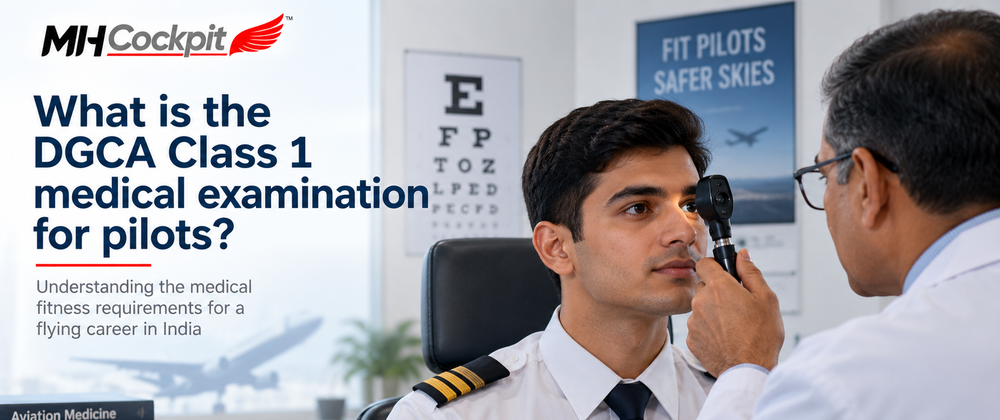

Becoming a commercial pilot involves more than learning how to fly an aircraft. Before beginning or progressing through professional flight training, aspiring pilots in India must also meet specific medical fitness standards. One of the most important requirements for those planning a professional flying career is the DGCA Class 1 Medical Examination.
For many aspiring pilots, the medical process can initially seem confusing. There are different medical classifications, approved examination centres, and several health checks involved. Understanding the purpose of the Class 1 medical examination before investing heavily in flight training can help students plan their aviation journey more confidently.
What Is the DGCA Class 1 Medical?
The DGCA Class 1 Medical Examination is a medical fitness assessment for pilots who intend to hold or maintain licences for commercial flying operations in India.
DGCA refers to the Directorate General of Civil Aviation, the authority responsible for regulating civil aviation in India. The Class 1 medical assessment is designed to determine whether a pilot is medically fit to safely perform professional flying duties.
Commercial pilots operate in an environment that requires sustained concentration, good physical health, appropriate vision and hearing, and the ability to respond to changing situations. The medical examination is therefore intended to identify health conditions that could affect a pilot's ability to perform these responsibilities safely.
The assessment is more detailed than the Class 2 medical examination that many aspiring pilots complete during the earlier stages of their aviation journey.
Why Is the Class 1 Medical Important?
A person may be highly motivated to become a pilot and successfully complete the required theoretical subjects and flying training, but medical fitness remains an important part of the licensing process.
This is why many aviation professionals recommend understanding the medical requirements early.
The Class 1 medical assessment can identify certain medical issues that may require further evaluation or treatment. In some situations, a condition may not necessarily prevent a person from becoming a pilot, but additional reports or specialist assessments could be required.
Because aviation training can involve a substantial investment of time and money, knowing your medical status early can help you make informed decisions about your training plans.
What Tests Are Included in the DGCA Class 1 Medical Examination?
The exact examinations and tests can vary depending on factors such as a person's age, medical history, and individual health condition. However, a DGCA Class 1 medical assessment may involve several areas of evaluation.
Vision Examination
Good vision is important for pilots, although this does not always mean that a person must have naturally perfect eyesight. Vision standards and acceptable corrections are assessed according to the applicable medical requirements.
The examination may include checks related to:
- Distance vision
- Near vision
- Colour perception
- General eye health
- Visual correction requirements, where applicable
Colour vision is also assessed because pilots need to correctly identify various aviation lights, displays, and signals.
Hearing Assessment
Pilots must be able to communicate effectively with Air Traffic Control and other crew members. Hearing assessments help determine whether a person meets the required standards for aviation communication.
Cardiovascular Checks
The examination can include assessments related to heart health. Depending on the individual requirements, tests such as an ECG and other cardiovascular evaluations may be included.
This is important because flying can involve long periods of concentration and responsibility, and pilots must be medically capable of performing their duties without an unacceptable health risk.
Blood and Urine Tests
Laboratory tests may be conducted as part of the overall medical assessment. These tests can help identify certain health conditions that may require further investigation.
General Physical Examination
A doctor may also review general physical health, including medical history, previous illnesses, medications, and other factors that could be relevant to aviation medical fitness.
In some cases, additional specialist examinations may be requested if the medical assessment identifies an issue that requires further evaluation.
Where Is the DGCA Class 1 Medical Conducted?
The Class 1 medical examination must be completed through the appropriate DGCA-approved medical process and facilities.
Aspiring pilots should make sure they follow the latest official DGCA procedures, as medical requirements and administrative processes can change over time. It is always better to confirm the current requirements before booking an examination.
Students should also keep their medical records organised and be prepared to provide relevant information about previous medical conditions or treatments when required.
Class 1 Medical and Class 2 Medical: What Is the Difference?
One of the most common questions from aspiring pilots is the difference between a Class 1 and Class 2 medical examination.
In simple terms, the Class 2 medical is often part of the earlier medical process for aspiring pilots, while the Class 1 medical involves a more detailed assessment for those moving towards professional commercial flying.
The exact medical pathway can depend on the licence a person is pursuing and the current DGCA requirements. This is why students should avoid relying only on outdated information from forums or social media.
When Should an Aspiring Pilot Get a Medical Examination?
Many students prefer to understand their medical eligibility before making major commitments to flight training.
If you are planning a career as a commercial pilot, getting proper guidance about the medical and training pathway at an early stage can help avoid confusion later.
Aviation training organisations such as MH Cockpit can help aspiring pilots understand the general process involved in becoming a pilot, including the stages of flight training and the importance of meeting medical requirements. However, medical certification itself must always be completed through the official DGCA-approved process.
Final Thoughts
The DGCA Class 1 Medical Examination is an important part of the journey towards becoming a commercial pilot in India. It is not simply another formality. It helps ensure that pilots meet the medical standards required for the responsibilities involved in professional flying.
Aspiring pilots should take the medical process seriously, understand the current requirements, and complete the necessary examinations through approved channels. By checking medical eligibility early and planning their training carefully, students can approach their aviation career with a clearer understanding of what lies ahead.







Top comments (0)