
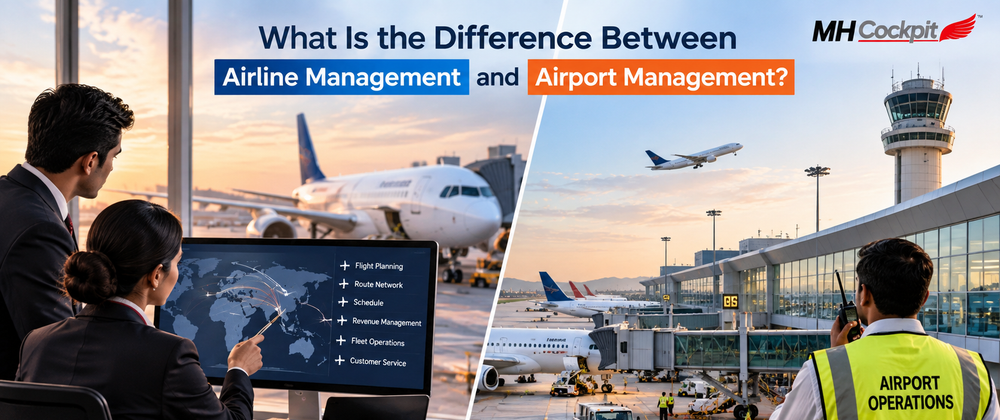

The aviation industry is much bigger than simply flying an aircraft from one destination to another. Behind every flight, there are different teams responsible for planning, coordinating, and managing operations. Two areas that are often confused are airline management and airport management.
Although both are part of the aviation industry, they focus on different parts of how aviation works. In simple terms, airline management is about managing an airline and its flight operations, while airport management is about managing the airport and the facilities where airlines operate.
Understanding the difference can also help students choose the right aviation career path.
What Is Airline Management?
Airline management focuses on the operations and business activities of an airline. Airlines have to manage aircraft, employees, passengers, schedules, routes, and many other activities every day.
People working in airline management may be involved in areas such as:
• Flight scheduling
• Route planning
• Passenger services
• Ticketing and reservations
• Revenue management
• Crew coordination
• Airline operations
• Customer service
• Handling delays and disruptions
For example, when an airline plans to operate a new route between two cities, several factors need to be considered. The airline needs to understand passenger demand, aircraft availability, operating costs, schedules, competition, and airport availability.
This type of planning is part of the airline management side of aviation.
Airline operations also involve handling unexpected situations. Weather changes, technical issues, delays, and changes in passenger schedules can affect daily operations. Different departments need to work together to keep flights operating as smoothly as possible.
In short, airline management is focused on how an airline runs as a business and how it manages its flights and passengers.
What Is Airport Management?
Airport management focuses on running and maintaining an airport.
An airport is not just a runway and a terminal building. It is a large operational environment where airlines, passengers, ground handling companies, security agencies, retailers, maintenance teams, and government authorities work together.
Airport management can involve:
• Terminal operations
• Passenger flow
• Airport facilities
• Ground services
• Baggage operations
• Security coordination
• Airport maintenance
• Emergency planning
• Commercial activities
• Coordination with airlines and service providers
For example, during a busy travel period, an airport needs to manage thousands of passengers moving through check-in areas, security checkpoints, boarding gates, baggage areas, and other facilities.
Airport management teams help ensure that these operations are properly coordinated.
They may also be involved in planning future development, such as expanding terminals, adding new gates, improving passenger facilities, or preparing the airport for increased traffic.
The Main Difference Between Airline and Airport Management
The easiest way to understand the difference is to think about what each one is responsible for.
An airline operates the aircraft and provides air transportation to passengers and cargo customers.
An airport provides the facilities and infrastructure that allow aircraft and passengers to operate.
For example, an airline is responsible for operating a flight between Chennai and Delhi. The airline manages the aircraft, crew, passengers, and flight schedule.
The airport, however, provides the runway, terminal, gates, passenger facilities, and other infrastructure needed for the flight to operate.
Both organizations work closely together, but they have different responsibilities.
Which Career Path Is Better?
There is no single answer because it depends on what type of work interests you.
Someone interested in airline schedules, passenger services, route planning, and airline operations may prefer airline management.
Someone interested in airport terminals, ground operations, infrastructure, and coordinating different services may prefer airport management.
Both areas can offer opportunities in the wider aviation industry.
Students can work in operations, customer service, administration, commercial departments, ground services, and other aviation-related roles depending on their qualifications and experience.
Skills That Can Be Useful in Both Fields
Although airline management and airport management are different, some skills can be useful in both areas.
Good communication is important because aviation involves coordination between many people and departments. Problem-solving can also be useful because operational situations may change quickly.
Other helpful skills include:
• Communication
• Teamwork
• Time management
• Customer service
• Basic business knowledge
• Problem-solving
• Attention to operational procedures
Students interested in aviation management can also benefit from understanding how different parts of the aviation industry work together.
Choosing the Right Aviation Course
Before selecting a course, it is useful to look at the subjects covered and the type of careers related to the program.
Some aviation management courses provide an introduction to both airline and airport operations, while others may focus more heavily on one area.
Students should think about whether they are more interested in airlines, airports, passenger services, operations, or the business side of aviation.
Learning platforms and aviation education providers such as MH Cockpit can also help students understand the different areas of aviation and the career options connected to them.
Final Thoughts
Airline management and airport management are closely connected, but they are not the same.
Airline management focuses on operating and managing an airline, including flights, passengers, routes, and airline operations. Airport management focuses on managing the airport, its facilities, passenger services, and the many operations that take place on the ground.
Both fields are important to the aviation industry and offer different career directions.
For students considering a future in aviation, understanding this difference is a good starting point when deciding which area matches their interests and career goals.







Top comments (0)