
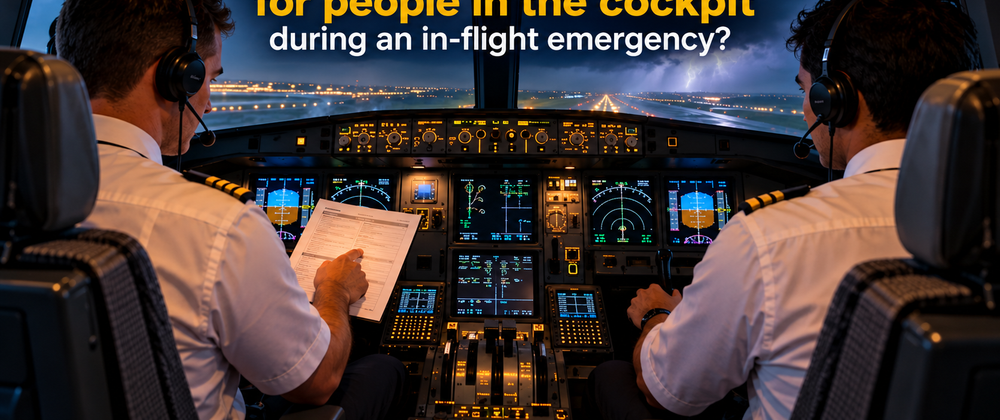

Training for an in-flight emergency is an essential part of becoming and working as a commercial pilot. Pilots do not simply learn how to fly an aircraft under normal conditions. They also undergo regular training to handle situations such as engine failure, cabin depressurisation, severe turbulence, fire warnings and medical emergencies.
Most of this training takes place in flight simulators, where pilots can practise responding to emergencies without putting passengers or an actual aircraft at risk. The aim is to help pilots make sound decisions, communicate clearly and follow established procedures when something unexpected happens.
During training, pilots practise handling different emergency scenarios, including engine failures, hydraulic system problems, electrical failures and smoke or fire warnings. They learn how to identify warning indications, refer to the aircraft's emergency checklists and coordinate with the other pilot. For example, if an engine fails during flight, pilots must maintain control, assess the aircraft's condition, complete the relevant procedures and decide whether a diversion or emergency landing is necessary.
Another important part of emergency training is crew resource management (CRM). An emergency is rarely handled by one person working alone. The captain and first officer must communicate effectively, divide responsibilities and cross-check each other's actions. CRM training helps pilots manage their workload, avoid communication errors and make decisions under pressure.
Cabin crew members also receive specific emergency training. They learn how to respond to onboard fires, sudden cabin depressurisation, turbulence, medical emergencies and emergency evacuations. Pilots and cabin crew must coordinate their actions, particularly when an emergency requires an unscheduled landing or passenger evacuation.
Simulator sessions also include scenarios in which several problems occur at once. For example, pilots might have to manage an aircraft system failure while dealing with difficult weather conditions. These exercises help them practise prioritising tasks, following procedures and communicating with air traffic control.
Medical emergencies are another part of operational preparation. Pilots learn how to coordinate with cabin crew, communicate with air traffic control and request medical assistance on the ground. Depending on the situation, they may need to consider diverting to a suitable airport.
Emergency training does not end after a pilot receives a commercial pilot licence. Airline pilots undergo recurrent simulator training and periodic proficiency checks to maintain their skills. The frequency and exact content depend on the applicable aviation regulations, the airline and the aircraft type.
At MH Cockpit, we often discuss the difference between learning to fly and preparing for real airline operations with aspiring pilots. Understanding emergency procedures is an important part of that preparation because flying involves not only aircraft control but also sound judgement, teamwork and the ability to respond calmly when conditions change.
Ultimately, in-flight emergency training prepares cockpit crews to manage unexpected situations through regular practice, clear communication and established procedures. While pilots cannot predict every emergency, their training helps them respond systematically rather than relying on improvisation.







Top comments (0)