
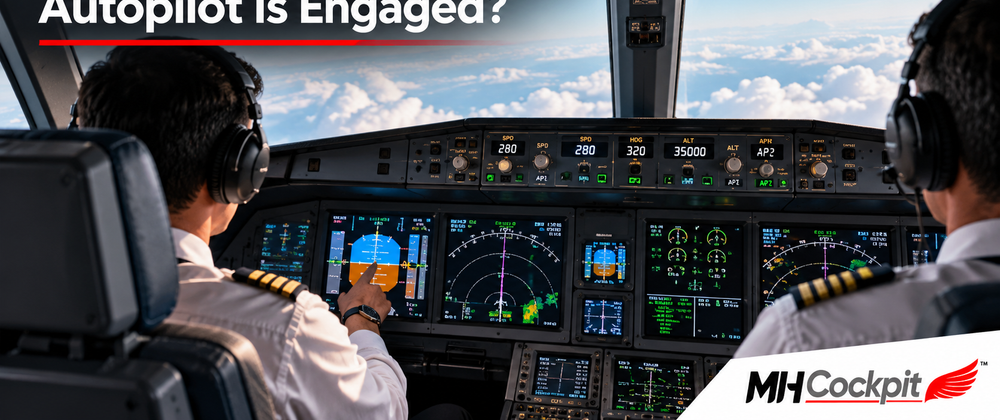

Autopilot has become an important part of modern aviation, helping pilots maintain an aircraft's heading, altitude, speed, and flight path. However, even when autopilot is engaged, pilots must continue monitoring the aircraft and making decisions throughout the flight.
The reason is simple: autopilot can control many aspects of flight, but it cannot replace a pilot's responsibility for safety and decision-making.
- Changing Weather Conditions
Weather conditions can change rapidly during a flight. Thunderstorms, wind shear, severe turbulence, and icing may require pilots to change altitude, adjust their route, or take other safety measures.
Although onboard systems can provide weather information and assist with flight control, pilots must interpret the available information and decide how to respond. Their decisions help ensure that the aircraft remains on a safe flight path.
- Monitoring Autopilot Systems
Autopilot operates according to selected modes, programmed instructions, and aircraft system inputs. If an incorrect heading or altitude is selected, the aircraft may follow that command unless the system's protections or other procedures prevent it.
Pilots must therefore monitor flight instruments, confirm the active autopilot mode, and check that the aircraft is following the intended route. Understanding how automation works is just as important as knowing how to fly manually.
- Responding to Technical Problems
Aircraft automation systems have operating limits and can disconnect when certain conditions arise. Technical problems may also require pilots to change their approach to controlling the aircraft.
Pilots train to identify these situations, follow the appropriate procedures, and take manual control when necessary. Their ability to respond calmly and correctly is an important part of flight safety.
- Making Decisions During an Emergency
Consider an aircraft approaching its destination when weather conditions deteriorate or the runway becomes unavailable. Autopilot may assist with navigation or an instrument approach, depending on the aircraft and system capabilities, but the pilots must determine the safest course of action.
They may need to perform a go-around, hold while conditions improve, or divert to an alternate airport. These decisions depend on weather, fuel reserves, aircraft performance, air traffic control instructions, and operational requirements.
- Understanding the Limits of Automation
Modern aircraft use different levels of automation, and each has specific capabilities and limitations. Pilots must understand which functions are active and when intervention may be necessary.
Automation can reduce workload, but excessive dependence on it can make it harder to notice unexpected changes if monitoring becomes less effective. This is why pilot training includes both automated flight operations and manual flying practice.
For aspiring pilots, learning about aircraft systems, flight instruments, operational procedures, and decision-making is an important part of training. Those interested in this career can read this guide on how to become a commercial pilot in India.
Conclusion
Autopilot plays an important role in modern aviation, but it does not remove the need for pilots to remain alert. Weather changes, technical issues, incorrect settings, and unexpected operational situations can all require human judgement.
Safe flight operations depend on effective teamwork between pilots and automated systems. Pilots must know when automation is appropriate, monitor its performance, and be ready to intervene when conditions require it.






Top comments (0)