
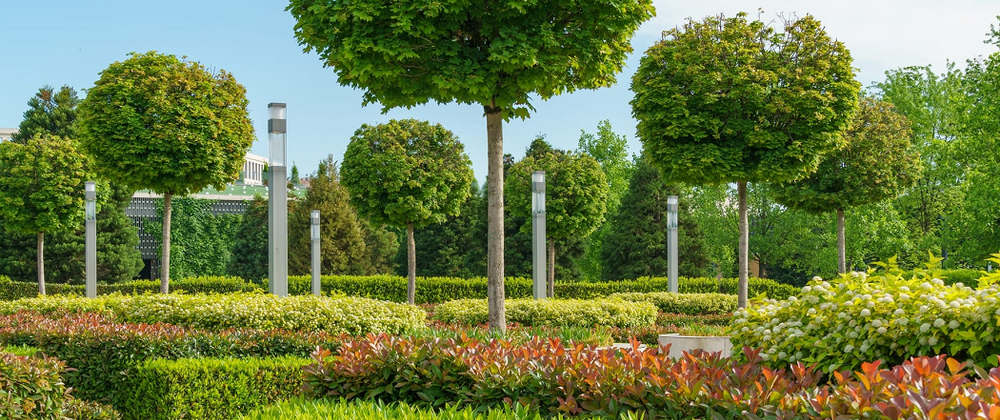

Evergreen plants can provide structure and privacy in residential landscapes, particularly when they are selected with mature growth and maintenance requirements in mind. Some varieties are suited to formal hedges, while others are better appreciated as standalone ornamental trees. Understanding the growth habits of a Ficus Indian laurel before installing it can help prevent future space and upkeep problems.
Understanding the Plant's Growth Habit
Ficus nitida, commonly sold as Indian laurel fig or Chinese banyan, is an evergreen tree widely used in warm-climate landscaping. It has dense foliage and can be shaped through regular pruning, making it suitable for privacy hedges and managed landscape screens.
The plant can become a substantial tree if allowed to grow without regular control. Plant Clearance notes that Indian laurel can reach significant heights in open spaces, while managed specimens can be maintained at smaller sizes through pruning.
This makes it important to decide whether the intended use is a clipped hedge, a boundary screen, or a larger ornamental feature.
Choose a Site With Adequate Space
Before planting, consider the mature height and spread. A young specimen may look compact in a nursery container, but its eventual size can be much larger.
Avoid planting too close to buildings, driveways, underground utilities, and other structures. Roots and branches need adequate room, and a large tree may require ongoing maintenance to prevent interference with nearby features.
The site should also provide suitable sunlight. Ficus nitida generally grows well in bright conditions and can tolerate some partial shade, although growth and density may vary with exposure.
Prepare the Soil and Plant Carefully
Good drainage supports healthy root development. Before planting, assess whether the soil holds excessive water or dries out too quickly.
Loosen compacted soil and remove competing weeds from the planting area. Dig a hole wide enough to accommodate the root ball without burying the trunk flare. After positioning the plant, backfill with suitable soil and water thoroughly to settle the roots.
Avoid planting too deeply, as this can contribute to poor establishment. A layer of mulch can help retain soil moisture, but keep it away from direct contact with the trunk.
Water According to Establishment and Weather
New plants need regular watering as they develop roots beyond the original container. The frequency depends on temperature, rainfall, drainage, and soil composition.
Once established, Ficus Indian laurel can tolerate some periods of reduced rainfall. However, extended drought may affect growth and foliage quality. Deep watering during dry periods can help maintain plant health.
For container-grown specimens, monitor moisture more frequently because pots generally dry faster than garden soil. Ensure that containers have adequate drainage holes.
Use Pruning to Control Size
One of the plant's practical advantages is its ability to respond to shaping. Regular trimming can maintain a dense hedge and create a defined boundary.
For a formal screen, prune lightly and consistently rather than allowing excessive growth before making a major cut. Remove damaged, crossing, or poorly positioned branches, and use clean tools to reduce the risk of spreading disease.
If the plant is intended to develop as a tree, avoid treating it like a hedge. Selectively maintain its structure while allowing the canopy to develop.
Consider Root Growth and Placement
A large ficus should not be treated as a small ornamental shrub. Its mature root system and canopy can affect the suitability of nearby structures and paved areas.
Before planting near a building, pool, driveway, or underground service, consider the available space and consult a local landscape professional if necessary. Appropriate placement at the beginning can reduce the need for disruptive maintenance later.
Conclusion: Build a Landscape That is Easy to Maintain
Ficus nitida can provide dense evergreen screening when grown in a suitable location and maintained according to its growth habit. For gardeners comparing nursery-grown trees and hedge options, Plant Clearance provides a collection to explore. Its success depends on proper spacing, watering, drainage, and pruning rather than simply planting it and leaving it unattended. When selecting Ficus Indian laurel, consider whether you have enough space for its mature size and whether regular trimming fits your maintenance plans.







Top comments (0)