
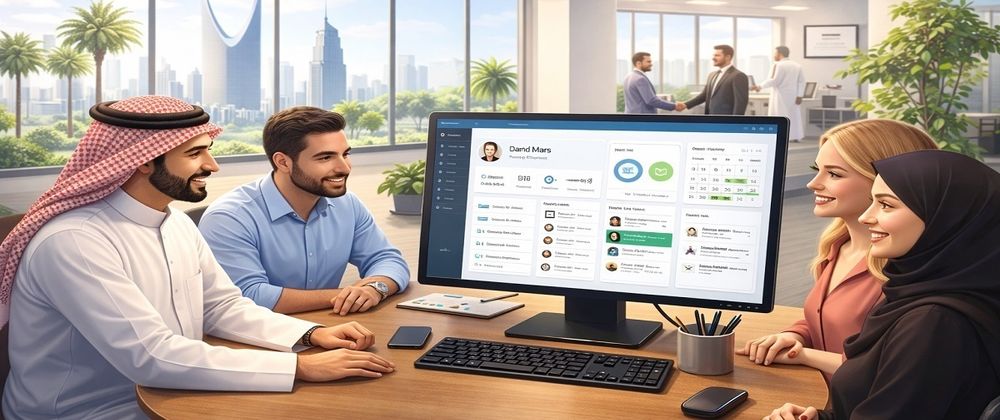

Businesses across Saudi Arabia are redefining workforce management as digital transformation becomes a core business strategy. Organizations of every size are investing in نظام إدارة الموارد البشرية (HRMS) في الرياض to automate HR operations, improve employee experiences, ensure regulatory compliance, and support long-term growth. In 2026, modern HRMS platforms have become an essential part of building efficient and competitive organizations.
Why نظام إدارة الموارد البشرية (HRMS) في الرياض Is Gaining Widespread Adoption
The demand for نظام إدارة الموارد البشرية (HRMS) في الرياض continues to rise because companies need a centralized solution for managing recruitment, employee records, payroll, attendance, leave requests, performance evaluations, and compliance. Instead of relying on manual spreadsheets and disconnected systems, businesses now prefer integrated HR platforms that improve efficiency while reducing administrative workload.
As organizations expand, managing employees through digital systems becomes increasingly important for maintaining productivity and delivering a positive employee experience.
The Growing Importance of Human Resource Technology
Human resources has evolved far beyond hiring and maintaining employee files. Modern HR departments contribute directly to business success by improving workforce planning, employee engagement, and operational efficiency.
Organizations need accurate workforce data to make informed decisions. HRMS software provides real-time insights that help leaders manage talent more effectively while supporting business objectives.
Saudi Arabia's focus on digital innovation has accelerated the adoption of advanced HR technologies across multiple industries.
Small Businesses Choose HRMS for Simplicity
Small businesses often operate with limited HR staff. Administrative tasks such as maintaining employee records, tracking attendance, and processing leave requests consume valuable time.
An HRMS simplifies these responsibilities through automation.
Business owners gain more time to focus on growth while employees benefit from faster HR services.
Digital processes also reduce paperwork and improve overall efficiency.
Medium-Sized Companies Improve Workforce Management
As organizations grow, managing larger teams becomes increasingly complex.
Employee information expands rapidly.
Attendance tracking requires greater accuracy.
Performance reviews become more structured.
Modern HRMS platforms centralize every HR function into one system.
Managers gain greater visibility while improving communication across departments.
Large Enterprises Need Centralized HR Operations
Enterprise organizations often manage thousands of employees across multiple offices.
Without integrated software, HR operations become difficult to coordinate.
A centralized HRMS enables consistent policies, standardized reporting, and unified employee records.
Executives receive comprehensive workforce insights while maintaining operational control across all locations.
Healthcare Organizations Improve Staff Administration
Hospitals, clinics, and healthcare providers rely on skilled professionals working around the clock.
Scheduling, attendance, certifications, and employee documentation require careful management.
HRMS software automates administrative tasks while helping healthcare organizations maintain workforce readiness.
Employees receive better support through faster HR processes.
Retail Companies Streamline Employee Management
Retail businesses frequently experience seasonal hiring and varying work schedules.
Managing shift assignments manually often leads to scheduling conflicts.
HRMS software simplifies employee scheduling, attendance tracking, and payroll preparation.
Store managers can focus more on customer service rather than administrative responsibilities.
Manufacturing Businesses Enhance Productivity
Manufacturing companies employ workers across multiple departments and shifts. Accurate attendance records are essential for payroll accuracy and operational planning. Modern HRMS platforms integrate attendance systems with payroll and workforce analytics. This automation reduces errors while improving labor management.
Educational Institutions Modernize HR Operations
Schools, colleges, and universities manage academic staff, administrative employees, and support personnel.
HRMS software centralizes contracts, attendance, leave management, payroll, and employee evaluations. Educational institutions improve administrative efficiency while maintaining organized employee records.
Faculty members also benefit from self-service HR portals. Hospitality
Businesses Improve Workforce Coordination
Hotels, restaurants, and tourism businesses require flexible workforce scheduling.
Employee availability changes frequently depending on customer demand.
HRMS software helps managers assign shifts efficiently while monitoring attendance and labor costs.
Better workforce coordination supports higher service quality.
Construction Companies Manage Mobile Workforces
Construction firms often supervise employees across multiple project locations. Managing attendance and employee documentation manually becomes challenging. Cloud-based HRMS systems allow managers to monitor workforce activities remotely. Real-time information improves planning while reducing administrative delays.
Government Contractors Strengthen Compliance
Organizations working with government projects must maintain detailed workforce documentation.HRMS software organizes employee records, contracts, certifications, and payroll information. Automated reporting supports regulatory compliance while reducing administrative risk. Accurate documentation becomes easier to maintain throughout every project.
Human Resource Teams Benefit Most
HR professionals are among the primary users of HRMS software.
Instead of spending hours processing paperwork, they focus on talent development, employee engagement, and strategic workforce planning.
Automation eliminates repetitive administrative tasks. HR departments become more valuable contributors to organizational success.
Employees Enjoy Better Workplace Experiences
Modern HRMS platforms include employee self-service portals.
Staff members can update personal information, request leave, view payslips, monitor attendance, and submit documents without visiting the HR office. Digital access empowers employees throughout their careers.
Managers Make Better Workforce Decisions
Business managers require accurate information to lead effectively.
HRMS dashboards provide insights into attendance trends, employee performance, turnover, recruitment progress, and workforce productivity.
Real-time analytics support informed management decisions.
Organizations become more agile and responsive.
Recruitment Becomes Faster and Smarter
Hiring talented employees remains a competitive priority.
HRMS software streamlines job postings, application management, interview scheduling, and candidate evaluations.
Recruiters identify qualified candidates more efficiently.
Faster hiring improves organizational competitiveness.
Performance Management Encourages Growth
Continuous employee development strengthens business performance.
Modern HRMS platforms simplify performance evaluations through measurable goals and structured feedback.
Managers identify strengths and development opportunities more effectively.
Employees gain clearer career progression while organizations improve productivity.
Payroll Integration Reduces Administrative Work
Payroll processing involves attendance records, overtime calculations, leave balances, deductions, and compliance requirements.
Integrated HRMS platforms automatically transfer workforce data into payroll systems.
Automation minimizes manual calculations while improving payroll accuracy.
Employees receive timely and accurate compensation.
Cloud-Based HRMS Supports Remote Management
Business leaders increasingly require access to workforce information from any location. Managers review reports, approve leave requests, and monitor workforce performance remotely.
This flexibility supports modern hybrid work environments.
Data Security Protects Employee Information
Employee records contain confidential personal and financial information.
Modern HRMS software includes encrypted databases, role-based access controls, automated backups, and activity monitoring.
These security measures protect sensitive information while ensuring compliance with organizational policies. Trust in digital systems continues to grow.
Supporting Saudi Arabia's Digital Transformation
Saudi Arabia continues investing heavily in digital innovation across both public and private sectors.
Organizations adopting advanced HR technology contribute to greater efficiency, transparency, and workforce development.
Modern HR systems align with national initiatives that encourage technology-driven business growth.
Digital workforce management has become a competitive necessity.
Choosing the Right HRMS Solution
Selecting the right platform requires careful evaluation.
Businesses should consider scalability, ease of use, cloud accessibility, payroll integration, employee self-service features, reporting capabilities, security, compliance support, and implementation flexibility. A future-ready solution supports organizational growth while adapting to changing workforce needs. The right investment delivers long-term operational value.
In 2026, نظام إدارة الموارد البشرية (HRMS) في الرياض is no longer limited to large enterprises. Small businesses, healthcare providers, retailers, manufacturers, educational institutions, hospitality companies, and government contractors all benefit from modern HR technology. By automating routine tasks, improving workforce visibility, enhancing employee experiences, and supporting compliance, HRMS software enables organizations across Saudi Arabia to build stronger, more efficient, and future-ready workplaces.
## FAQs
What is نظام إدارة الموارد البشرية (HRMS) في الرياض?
It is a digital HR solution that manages employee records, attendance, payroll, recruitment, and performance.
Can small businesses use HRMS software?
Yes. HRMS platforms are designed for businesses of all sizes.
Does HRMS improve payroll accuracy?
Yes. It automates payroll calculations using attendance and employee data.
Is cloud-based HRMS secure?
Yes. Modern systems use encryption, secure access controls, and regular backups.
Why is HRMS important in 2026?
It improves efficiency, employee management, compliance, and business growth through digital automation.







Top comments (0)