
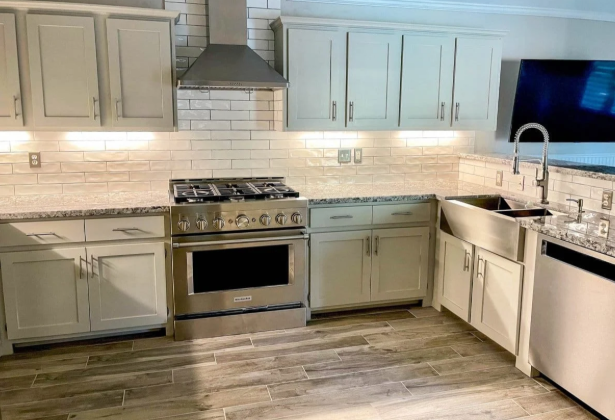

Kitchen ventilation does not always require a duct running through a wall, ceiling, attic, or roof. For apartments, condos, remodeled kitchens, and homes where exterior venting is impractical, ductless wall mount range hoods offer an alternative approach. Instead of sending cooking air outdoors, these systems capture airborne grease and odors, filter the air, and return it to the kitchen.
Understanding how this process works is important before choosing a ventilation system. Ductless operation can simplify installation, but it also creates different maintenance requirements and performance expectations compared with exterior-vented systems.
What Are Ductless Wall Mount Range Hoods?
Ductless wall mount range hoods are wall-mounted ventilation appliances that do not require an external exhaust duct. They are positioned above a range or cooktop and use internal filtration to process cooking air.
The basic process is straightforward. Air containing smoke, grease, steam, and odors is drawn toward the hood. Grease filters capture larger grease particles, while activated charcoal filters help reduce cooking odors and certain airborne contaminants. The filtered air is then released back into the kitchen rather than being exhausted outdoors.
This arrangement can be useful where installing ductwork would require substantial construction or is prohibited by a building's design.
How Does a Ductless Range Hood Work?
A recirculating hood relies primarily on two filtration stages.
The first stage generally involves a grease filter. Depending on the design, this may be a baffle or mesh filter. Its purpose is to capture grease and larger particles before they reach the blower and other internal components.
The second stage uses activated charcoal or carbon filtration. Charcoal is designed to adsorb odor-causing compounds from the air. After passing through the filters, the air is returned to the kitchen.
Our current information for recirculating wall-mounted models describes a combination of charcoal and baffle filtration for capturing smoke, grease, and odors.
When Are Ductless Wall Mount Range Hoods Useful?
There are several situations where ductless wall mount range hoods can make practical sense. Apartments and condominiums may have restrictions that prevent residents from creating new exterior duct routes. Older homes can also present structural challenges, particularly when the desired cooking area is located far from an exterior wall.
They can also be considered during kitchen remodeling when installing new ductwork would require significant changes to walls, ceilings, or cabinetry.
A ductless configuration can reduce the construction involved because there is no need to route an exhaust pipe to an exterior termination point. Proline's current buyer's guide specifically describes ductless operation as an option when exterior ductwork is not feasible.
Are Ductless Hoods as Effective as Ducted Hoods?
Ductless and ducted systems work differently, so they should not be evaluated as though they provide identical ventilation.
A ducted hood physically removes kitchen air and exhausts it outdoors. This means heat, moisture, and cooking odors can be transported outside. A ductless hood instead filters the air and returns it to the room.
For this reason, our guidance generally treats exterior venting as preferable when practical, particularly for kitchens where substantial heat, moisture, smoke, or high-temperature cooking is produced. Ductless systems can nevertheless provide useful filtration when external venting is not a realistic option.
The distinction is particularly important for households that use high-BTU cooking appliances or frequently perform high-heat cooking.
Why Are Charcoal Filters Important?
Charcoal filters are central to the operation of ductless wall mount range hoods. Without an appropriate odor-absorbing filter, a recirculating system cannot provide the same level of odor control.
Activated charcoal works through adsorption, meaning odor-related molecules adhere to the surface of the carbon material. Over time, the filter becomes less effective as its capacity is used.
How Often Should Ductless Hood Filters Be Cleaned?
Grease filters require regular cleaning because cooking deposits accumulate during normal use. A heavily used kitchen may require more frequent cleaning than a kitchen used occasionally.
Our current ductless guidance recommends regular grease-filter cleaning and scheduled charcoal-filter replacement. One published guide suggests cleaning grease filters as frequently as every two weeks for regular use, while charcoal filters may need replacement every few months depending on the model and cooking conditions.
The important point is consistency. A filter that is overloaded with grease can restrict airflow and reduce the hood's ability to capture cooking emissions.
What Size Ductless Hood Do You Need?
Although a ductless hood does not require an exhaust duct, its physical size still matters. The hood should provide suitable coverage for the cooking surface.
Our buyer's guide identifies range width and mounting location as two of the primary factors when selecting a hood.
A hood that is too narrow may not capture emissions from the outer areas of the cooking surface effectively. Homeowners should therefore compare the width of the range with the hood's capture area and follow the manufacturer's recommendations for the specific model.
Cooking style is another consideration. Frequent frying, searing, grilling, and high-temperature cooking can generate more airborne contaminants than low-temperature cooking.
Does a Ductless Hood Remove Heat and Moisture?
This is one of the most important limitations to understand. Because ductless wall mount range hoods return filtered air to the kitchen, they do not remove heat and moisture from the building in the same way as an exterior-vented hood.
If a cooking process generates substantial steam, the moisture remains within the indoor environment unless another ventilation method removes it.
This difference is one reason ducted systems are generally preferred when suitable exterior venting is available. Our current range hood guidance explains that ducted hoods completely remove cooking air from the home, whereas recirculating systems filter and return it.
What Should You Consider Before Buying?
Before selecting ductless wall mount range hoods, consider the cooking surface, available wall space, ceiling height, filter requirements, airflow capacity, noise level, and electrical setup.
Also determine whether exterior ducting is genuinely impossible or simply more complicated. If a suitable duct route can be created, an exterior-vented hood may offer different performance characteristics.
If ductless operation is the appropriate choice, check whether the hood requires a dedicated recirculating kit or model-specific charcoal filters. Some convertible models are shipped as ducted systems and require the appropriate components to operate in recirculating mode.
How Can You Get Better Performance From a Ductless Hood?
Proper operation and maintenance can improve the usefulness of a recirculating system. Turn the hood on before or at the beginning of cooking so the airflow is already established when smoke and odors are produced.
Use a higher fan setting for high-heat cooking and keep the hood operating for several minutes after cooking. Regularly clean grease filters and replace charcoal filters according to the manufacturer's schedule.
The surrounding kitchen can also benefit from other ventilation practices. Opening windows or using an appropriate whole-home ventilation system, where practical, can provide additional air exchange.
Conclusion
Ductless wall mount range hoods provide an alternative for kitchens where exterior ductwork cannot reasonably be installed. They use grease and charcoal filtration to capture cooking particles and reduce odors before returning filtered air to the room. Their main advantages include flexible installation and reduced structural modification, while their limitations include the inability to exhaust indoor heat and moisture outdoors. At Proline Range Hoods, we encourage homeowners to evaluate their cooking habits, kitchen layout, filtration requirements, and available ventilation options before making a decision. We also recommend following model-specific instructions for filter maintenance and replacement. With appropriate expectations and regular care, a recirculating system can be a practical ventilation option for kitchens where traditional ducted installation is not feasible.





Top comments (0)